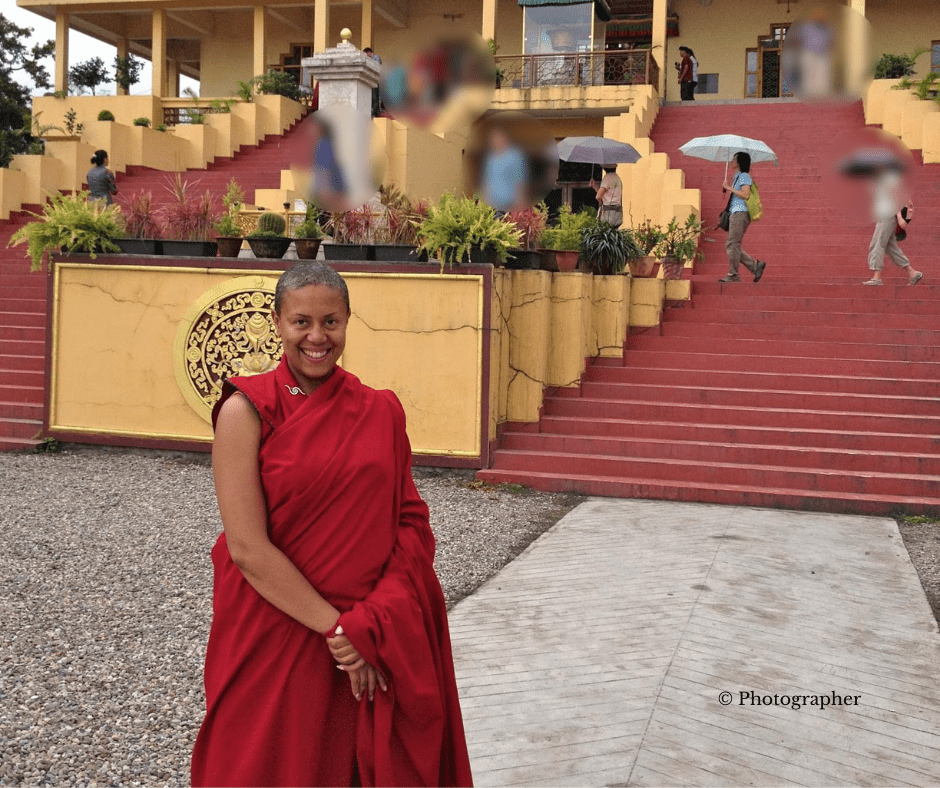
I was still a child when I first felt the tug toward renunciation—though I didn’t have the full language for it then. I had already encountered Buddhism, just enough to sense that life is shaped by causes and conditions, by samsara’s looping patterns, and by the quiet power of choosing differently. Something in me understood—instinctively—that I could renounce one small thing and shift the direction of my own mind.
Do you like what you are reading? Sign up below for more blog posts.
So one afternoon, without hesitation or ceremony, I decided to become a vegetarian.
I walked into the kitchen where my mother was elbow-deep in preparations for Christmas—three weeks to go, the counters crowded with ingredients for dishes that were, by tradition, decidedly meat-based. I made my announcement with the kind of innocent confidence that adults find either admirable or simply confusing.
Do you like what you are reading? Sign up below for more blog posts.
My mother paused, exhaled, nodded once, and carried on. Consent by understatement. Adaptation by instinct. Mothers are skilled at that.
Renunciation and the Mind
I didn’t think of it as giving something up. It felt more like placing something down. Later, as I deepened my Buddhist practice, I recognized that early instinct for what it was. Renunciation isn’t the punishing act some imagine—it’s not about self-imposed penance, dramatic gestures, or living in deprivation. It’s quieter. More precise. More personal.
It is the simple act of letting go.
We all move through the world collecting habits the way Christmas tree burrs stick to our sleeves—because they cling easily, because we move quickly, because we don’t notice until later. Renunciation is the slow, thoughtful removal of what scratches against the mind: habitual reactions, cravings, worn-out identities, or the need to be entertained, validated, or right. Everyone has something. Meat just happened to be mine.
Do you like what you are reading? Sign up below for more blog posts.
And truly, renunciation is never about the object itself. It’s about the space that appears when we stop grasping.
A Gentle Practice of Release
Buddhism teaches that the mind isn’t tamed through force. It’s steadied through release—through allowing desire to rise and then fade away, through not acting on every impulse simply because it appears, through choosing presence over habit. You don’t need to abandon the Christmas roast to start. (Though if you ever do, may your mother be as gracious as mine.)
Do you like what you are reading? Sign up below for more blog posts.
Try a small, intentional renunciation: a moment of silence where you would normally react, a breath before following a habitual impulse, a gentle refusal to feed irritation, a pause instead of distraction.
Renunciation, in the Buddhist sense, isn’t loss. It’s permission to let go—permission to step back, release, and see clearly. To create space for clarity, compassion, and steadiness.
Do you like what you are reading? Sign up below for more blog posts.
Sometimes it begins with a child in a warm kitchen in December, announcing a private revolution while the world continues—unaware that freedom has quietly begun to take root.
A story from the Jataka Tales — the early Buddhist tradition of teaching through past-life stories
The Jataka Tales are among the oldest narrative teachings in Buddhism. They describe the Buddha’s previous lives—not as a distant figure, but as someone cultivating wisdom, compassion, clarity, and responsibility over countless lifetimes.
One of these stories is the Mahakapi Jataka, often called The Great Monkey King.
The Story
In a forest along a quiet river lived a tribe of monkeys led by a strong and perceptive leader. High above them grew a mango tree that bore the sweetest fruit they knew. They tended the tree with care, aware that their wellbeing was intertwined with it.
One day, a ripe mango drifted downriver and was found by a human king. Curious—and threatened by the idea that someone else enjoyed this treasure—he followed the river upstream with his army until he reached the forest.
Do you like what you are reading? Sign up below for more blog posts.
When he saw the monkeys eating the fruit, he ordered his soldiers to attack.
The monkey king understood the danger instantly. There was no time to hesitate. He climbed to the highest branch, leapt across the river, and used his own body as a living bridge so his tribe could escape. One by one they crossed over his back to safety. When the last monkey reached the far bank, the king’s strength gave out and he fell.
Witnessing this, the human king was shaken. He saw a form of leadership he had never encountered—rooted in service, not dominance; in clarity, not fear. He ordered his soldiers to stand down.
The mango tree remained untouched.
Why This Story Belongs to Buddhism
In Buddhism, the Jataka tales aren’t merely moral fables. They illustrate how awakening is cultivated through lived experience, through choices made again and again across many lifetimes.
The monkey king is understood as a past life of the Buddha, developing what the tradition calls paramitas—the perfections of generosity, ethical conduct, courage, patience, and wisdom.
Do you like what you are reading? Sign up below for more blog posts.
His act in the story is not about martyrdom. It is about alignment: seeing clearly, acting responsibly, and offering what the moment requires—even when it costs something.
This is the essence of Buddhist practice: not grand gestures, but a steady refinement of intention.
What the Tale Offers Us Today
Most of us will never face a moment where we have to become a bridge across a river. Yet we encounter smaller versions of this story all the time:
choosing responsibility over avoidance
leading without needing recognition
acting from clarity instead of pressure
seeing the whole picture rather than reacting
supporting others without losing ourselves
The monkey king’s strength mattered. But it was his clarity that changed everything.
A Question for Quiet Reflection
Where in your life are you relying on sheer effort—pushing, enduring, trying harder—when what’s really needed is a moment of clarity?
What might shift if you led yourself the way the monkey king led his tribe: with steadiness, vision, and grounded responsibility?
Do you like what you are reading? Sign up below for more blog posts.
In that shift, something opens. Not in theory, but in the texture of daily life.
There are mornings when the world seems to pause just long enough to remind us what matters. The air is quiet, the light soft, and even familiar paths feel charged with possibility. My last day at Gyuto Monastery was one of those mornings. It was not an ending, but a threshold—a moment that calls for attention, for gratitude, for recognition of the gifts present in ordinary time. Gratitude for teachers, for timing, for the chance to practice what is learned in the quiet of the heart.
Receiving the Gift of Compassionate Presence
The day before my departure was one of the weekdays when His Holiness regularly gave a public audience. The security procedures were rigorous, as always. By then, we had all grown accustomed to the rhythm. Yet, this day carried a different energy. It was a simple awareness that it was a final opportunity to receive guidance before moving on.
Do you like what you are reading? Sign up below for more blog posts.
In the temple, I stepped forward with a silk katha, (a traditional ceremonial scarf) head lowered. “I’m leaving now,” I whispered. He silently took note and returned the katha by placing it around my neck, as customary. It was a heartfelt and special moment—a reminder that gratitude lives in the simplest gestures.
Later, on the upper terrace overlooking the small village of Sidhbari, the quiet lingered. Then the mobiles around us began to beep. The message: the Gyalwa Karmapa was inviting a core group of Western disciples to return for a teaching the next morning. It was unusual, and the timing exact. Gratitude appears in these openings, waiting to be noticed, ready to be received.
The Heartfelt Transmission of Buddha Chenrezig
The next morning, the temple was prepared with care. His favorite armchair was placed at the front, and rose petals traced the path he would walk. More people arrived than he had intended, yet everyone was welcomed. Generosity shaped the room before a single word was spoken.
Do you like what you are reading? Sign up below for more blog posts.
He spoke of the practice of Chenrezig: “It all comes down to develop the compassion this practice is pointing to. What we call compassion is the desire to protect sentient beings from suffering. We can call it a sense of determination, a sense of courage or resolve. It’s not merely something intellectual, but rather it is a powerful, heartfelt quality, one that must be sincere.”
Compassion is gratitude in motion. To carry compassion into the world requires acting with care and courage. It means wishing to relieve the suffering of others. This is the living practice. It is the gift that travels beyond the walls of any monastery.
Gratitude in Motion — Carrying the Lesson Forward
Life offers thresholds often—moments when ordinary routines shift, when quiet openings appear, when something asks for our full attention. Standing at these thresholds, we can allow gratitude to move through us: for teachers, for clarity, for timing that allows a lesson to unfold. Gratitude does not require ceremony or applause. It lives in attention, in presence, and in the commitment to bring compassion into the world.
Do you like what you are reading? Sign up below for more blog posts.
The practice of gratitude is inseparable from the practice of compassion. To notice, receive, and carry forward what is given, to bring kindness and courage into the ordinary moments of life—that is the gift to share.
Outside, snow falls steadily, folding the world into white. Sound softens, muffled by trees and rooftops. Frost gathers on branches and windowsills, bending the light into subtle patterns. Each breath carries a quiet stillness, a gentle weight in the chest that draws attention inward.
The first snow offers a pause, a threshold between what has been and what is arriving. It asks for noticing, for settling, for letting the body and mind find their own rhythm with the world. The hush of falling flakes invites presence. It offers a chance to attend fully to this quiet. It lets you embrace this glittering whiteness. You can savor this fleeting perfection.
The Invitation of Winter
Snow drapes the familiar in new light. Branches, rooftops, and windowsills shimmer under its weight, edges softened, contours muted. Awareness opens our bodies, steadies our minds, and allows care to ripple outward from our core to everyone everywhere.
Do you like what you are reading? Sign up below for more blog posts.
The first snow reminds us that attention itself is a way of cultivating warmth. Between seeing the snow and responding, presence emerges. A gentle word, a pause, and a deliberate act become small hearths in the cold. They carry heat quietly into the world.
Coziness as a Way of Being
Warm hands around a cup. The slow glow of a candle. The hush of snow outside the window. Each invites settling, noticing, and attending fully to life within and around us. The first snow shows how everything changes: frost appears, melts, light tilts, the world shifts.
Do you like what you are reading? Sign up below for more blog posts.
Warmth lives in each gesture, each pause, each deliberate choice. It flows from attention, from care, from the conscious noticing of life. Even in the coldest weather, warmth is available — discovered, nurtured, and shared.
The Subtle Work of Loving-Kindness
Winter reveals ordinary tensions: fatigue, impatience, the weight of small frustrations. Each invites reflection. Each offers the chance to practice care. Every deliberate gesture — a kind word, a pause, an attentive presence — carries warmth into the day. It carries warmth into our interactions. It carries warmth into shared spaces.
Do you like what you are reading? Sign up below for more blog posts.
Snow softens the earth, muffles noise, and opens a field of quiet. In this stillness, attention gathers. Between stimulus and response, clarity and warmth arise. Connection forms naturally, carried by awareness and deliberate care.
Practical Ways to Cultivate Warmth This Season
Pause: notice breath, body, sensations. Let warmth gather in attention.
Create small rituals: a warm drink, slow mindful steps, a candle lit with intention.
Dedicate a reflective corner: a cushion, a book, soft light.
Extend care: a kind message, attentive listening, deliberate gestures.
Observe impermanence: light, sound, movement, and allow them to guide attention and presence.
Reflections on the First Snow
The first snow teaches us that clarity arises in ordinary moments. Fleeting, yet enough. Warmth lives in attention, in deliberate care, in presence extended to self and others.
It reminds us that even in the coldest season, warmth can be found. It begins in noticing, in pausing, in attending fully. It flows from within, carried outward into the world. Winter invites us to discover it, to tend it, and to share it quietly, steadily, profoundly.
Do you like what you are reading? Sign up below for more blog posts.
May you, in this season or the next, notice the quiet gifts the snow brings. May you feel warmth gather in your chest, in your gestures, in your presence. May each breath, each small act of care, be a way of attending to life — yours and others’ — with clarity, tenderness, and steady attention. May the stillness outside and within open space for connection, for reflection, and for gentle presence to guide your days.
We live in a moment when our world is not only asking to survive, but quietly—and sometimes urgently—hoping to flourish. In such times, the subtle play of illusion that moves through our collective life becomes easier to notice. It is not as something “out there.” It does not belong to a particular group of leaders. Rather, it is an expression of the same mind-stream we all share.
Do you like what you are reading? Sign up below for more blog posts.
Illusions are not mistakes. They are movements of mind—projections arising from fear, hope, habit, and the deep longing to feel safe. When these projections meet responsibility, influence, or power, their effects become more visible. But the root is always the same: when we cling to appearances, we lose sight of what is most real.
When Our Narratives Start to Feel Like Identity
As human beings, we all build internal narratives about who we need to be — strong, capable, unshakeable. In leadership roles—whether in families, communities, organizations, or nations—these narratives gain a larger stage. When we feel these narratives are threatened, we cling to them. The illusion can become rigid. It shapes decisions and actions without our conscious awareness.
Do you like what you are reading? Sign up below for more blog posts.
We all know this. We have all felt the pull to appear certain, in control, and confident.
But these patterns are not flaws—they are human tendencies. Recognizing them allows us to act from clarity rather than habit, from care rather than fear.
The Veil and the Possibility Beneath
What might sincerely touch us, when we pause and look honestly, is that beneath our patterns, fears, and projections, there is the possibility of acting with care, clarity, and presence. Even if the world does not always seem to seek honesty, even if we do not always know the right path, there is space to choose awareness over habit, compassion over reactivity.
Do you like what you are reading? Sign up below for more blog posts.
When we lose connection to the natural clarity of the mind, our actions arise from fragmentation—and fragmentation naturally creates more of itself. Policies, decisions, conversations, and relationships shaped from confusion tend to mirror that confusion. This is not a failure of leadership; it is a reminder that inner conditions shape outer outcomes. We are interdependent all the way down.
What Healthy Leadership Could Look Like
Healthy leadership is not about holding power; it is about holding presence. Not about being the one who knows, but the one who is willing to see. Leadership in all its forms could become an expression of care rather than defense, clarity rather than confusion.
Do you like what you are reading? Sign up below for more blog posts.
Whether we guide nations, organizations, families, or simply our own days, we can embody qualities that bring clarity into the shared field.
A healthy leader cultivate:
1. The willingness to see their own illusions.
Not with judgment, but with curiosity. Recognizing projections allows us to act from clarity rather than fear.
2. Intention grounded in genuine care.
A steady wish to reduce suffering and to support others. Quiet. Unforced. Reliable.
3. Truthfulness without performance.
Honesty that does not need applause. Words aligned with inner integrity. Actions aligned with the words.
4. Accountability as part of the path.
Not a threat, but a practice—a way of staying awake within responsibility.
5. An embodied understanding of interdependence.
Knowing that nothing we do stands alone. Every decision touches countless lives and conditions.
6. Respect for collective wisdom.
Wise leadership listens. It invites many perspectives, recognizing that no single perception can hold the whole.
A Shared Invitation
The illusions we see in the world are not separate from those that arise within our own hearts. They are invitations—not to blame, but to wake up. Each moment we remember the mind’s natural clarity, a shift happens. The world becomes a little less distorted. Our actions become a little more aligned. Our presence becomes steadier.
Do you like what you are reading? Sign up below for more blog posts.
And with increased clarity, the shared stage of consciousness will transform—from a landscape shaped by unconscious patterns into a mandala shaped by awareness.
Since deepening my practice, I’ve noticed certain qualities arise and recede within experience. Buddhism describes these through the five Buddha families. Anger, attachment, pride, confusion, and jealousy are not mistakes to be erased. They are signposts pointing toward clarity, openness, confidence, insight, and appreciation. The so-called “shortcomings” and hidden strengths were never absent; they have always been present, moving and manifesting in life. Deepening the path has allowed these qualities to be recognized and embodied with more clarity. They naturally shape how each moment unfolds. This is true whether it’s a small disagreement with a friend, a moment of frustration at work, or noticing impatience when life feels too full.
Do you like what you are reading? Sign up below for more blog posts.
Meeting Personal Qualities as They Arise
The five Buddha families — Vajra, Ratna, Padma, Karma, and Buddha — each carry a poisonous aspect and a corresponding wisdom. We all reflect one or more of these families, depending on the patterns that arise in our experience.
Over time, through consistent awareness and practice, these qualities reveal themselves as expressions of underlying wisdom. They naturally move and shape life in ways that feel effortless rather than forced. When anger arises, it can point toward clarity and fearless presence. Attachment can unfold into openness and discernment. Pride can become confidence rooted in humility. Confusion may transform into insight, and jealousy can be experienced as genuine appreciation.
Do you like what you are reading? Sign up below for more blog posts.
These qualities, when recognized and allowed to manifest naturally, lead to softened habitual tension. Interactions deepen. The mind becomes less reactive. What has always been present — the latent wisdom within these qualities — begins to move and shape life in subtle, tangible ways.
Embodying Wisdom in Everyday Life
The integration of these teachings is most visible in ordinary moments: rushing through the morning routine, navigating small disagreements with friends, or noticing impatience when expectations arise. By simply observing how these qualities manifest, and allowing the corresponding wisdom to express, life becomes a living reflection of practice.
Do you like what you are reading? Sign up below for more blog posts.
I would love for you, if you are curious, to explore this further. Each of us manifests patterns from one or more Buddha families, and the process of recognizing and embodying their inherent wisdom can subtly transform daily life. These qualities have always been present; deepening the path simply allows them to unfold more fully and naturally.
Invitation to Explore Further
I will be speaking more about this at tomorrow’s Triyana workshop. And I’ll share ways to bring these insights into everyday life. I’m also delighted to invite you to the upcoming Mindful Living Retreat. I will host it together with Yoga Master Ulrica Norberg at Cal Reiet – Mallorca, Spain. There, we will explore how to embody these powerful aspects as a living practice: Save your spot here.
Do you like what you are reading? Sign up below for more blog posts.
Awakening in the Ordinary
Mindful living is not a path of perfection or fixed achievement. It is an ongoing awareness of qualities as they arise. A recognition of the wisdom inherent in what appears to the mind. And an invitation to allow life to unfold with clarity and openness. The five Buddha families remind us that every challenge holds potential for insight. Practicing the path more deeply allows that insight to reveal itself naturally. This happens in the ordinary, ever-changing flow of everyday life. If you feel called to explore this more deeply, you are warmly invited to jointomorrow’s Triyana workshop, or to deepen the practice atthe Mindful Living Retreat at Cal Reiet, Mallorca.
Reflection on Transformation Through the Five Buddha Families
The Dance of Your Mind’s Potential
Sometimes change arrives not as a slow unfolding, but as a sudden opening — a quantum leap. One moment we are circling the same habitual thoughts. The next moment, we are standing in a wider field. We wonder why we ever believed the cage was locked. These leaps are not random miracles; they are reflections of ripened causes meeting the right conditions. In Buddhist language, they are the dance of mind’s potential revealing itself.
Do you like what you are reading? Sign up below for more blog posts.
In my upcoming workshop, we’ll explore how the Five Buddha Families map this inner terrain. We will take a look at how to move from confusion to clarity and from fixation to freedom. You find more information about the workshop here.
The Nature of a Leap
To leap is to trust. Not in the sense of naive faith. It involves a deeper sense of letting go of resistance. You see that the next ground will rise to meet you only once you’ve left the old one.
Margaret Atwood once wrote, “A word after a word after a word is power.” Replace “word” with “moment,” and the same holds true. Power lives not in accumulation, but in awareness — the willingness to be present through the small tremors before transformation.
In Buddhist psychology, quantum shifts happen when patterns of grasping dissolve. The mirror of Vajra wisdom cuts through illusion with precision. The spacious acceptance of Buddha family allows everything to simply be. The warmth of Ratna turns judgment into generosity. The movement of Padma transforms attachment into open-hearted connection. And Karma energy, so often restless, becomes effortless activity.
Do you like what you are reading? Sign up below for more blog posts.
These are not ideas to memorize; they are living energies to be recognized. In my upcoming workshop, we will work with them directly — through meditation, reflection, and embodied awareness. Save your spot here.
Reflection and Ripening
Every true leap begins long before the moment it happens. Like water wearing down stone, every small practice, every quiet act of honesty prepares the way. Then, without warning, the surface breaks — and what once felt impossible becomes natural.
Do you like what you are reading? Sign up below for more blog posts.
Reflection is what allows this. Not analysis, but stillness that listens. The kind that doesn’t demand results. In that listening, we sense which Buddha energy is calling for attention. Is our mind too heavy, needing the clarity of Vajra? Or too scattered, yearning for the groundedness of Ratna?
During the workshop, we’ll use these five families as mirrors. Each will reflect back a part of ourselves we’ve outgrown. They will also reveal the potential waiting just beyond. Join me in my upcoming workshop.
Readiness Can’t be Forced
Quantum leaps are not about speed. They are about ripening. A readiness that can’t be forced, only recognized. When we stop pushing, we start seeing. The leap happens by itself. It occurs quietly, almost tenderly, like dawn appearing on water.
Do you like what you are reading? Sign up below for more blog posts.
In that moment, reflection turns into illumination. And the mind, finally, remembers what it has always known.
As a Buddhist practitioner, I have learned that uncertainty is not an obstacle — it is the ground we walk on. We cannot predict the storms of life, but we can learn to meet them with steady attention, to sit with what arises, and to trust that clarity can emerge in its own time.
One story from the Jataka tales has stayed with me through moments of doubt and confusion. In it, a bamboo cutter finds himself lost in the forest, unsure of what he is seeking. The words of an old monk he meets there have often guided me when I have felt equally adrift: cut what is ready, leave what is not.
When the World Feels Unstable
A bamboo cutter lived in a village beside a dense bamboo forest. Each day he worked with care, cutting only what was ready, moving with the rhythm of the trees.
Do you like what you are reading? Sign up below for more blog posts.
Then a season of endless rain arrived. Paths became rivers, roofs collapsed, and his baskets refused to dry. The world he knew — familiar and ordered — became unpredictable.
He tried to keep his routine, but every step felt uncertain. He could no longer find the rhythm in his work, nor the confidence to know what to do next.
Walking Without a Map
One evening, restless and uneasy, he left the village. He didn’t know where he was going, or what he hoped to find. He only knew he needed to move.
Do you like what you are reading? Sign up below for more blog posts.
He walked into the forest, the rain soaking his clothes, the wind pulling at his hair. The forest was dark, tangled, unfamiliar. He had no plan. No destination. Just the quiet urgency of a heart searching for some sense of direction.
The Teacher in the Rain
Under a broad tree sat an old monk. His posture was calm, his expression still, as if the storm were simply another presence to sit with.
“How can you remain here?” the bamboo cutter asked. “Don’t you fear the flood, the wind, the chaos?”
“When has the world ever been still?” the monk said.
They sat together, listening to the rain. Finally, the monk spoke again:
“When you cut bamboo, do you know which stalk will bend and which will break?”
“No,” said the man. “I only cut what is ready.”
“Then do the same now. Cut what is ready. Leave what is not.”
The bamboo cutter closed his eyes. For the first time in weeks, he felt a breath settle in his chest, as if the storm itself had softened.
New Shoots After the Rain
Days passed. The clouds slowly dispersed, and sunlight returned, falling across the wet forest floor. New shoots emerged from the earth, straight and resilient.
Do you like what you are reading? Sign up below for more blog posts.
The bamboo cutter moved among them, touching leaves, feeling the steady pulse of life. He realized that he didn’t need a map or certainty. All he needed was presence — patience, attention, and a willingness to act only when the moment called for it.
Finding Stability in Uncertainty
Uncertainty is the teacher of patience and resilience. It asks us to pause, to trust, and to act only when the time is right. Life does not require that we have all the answers — only that we remain attentive and willing.
Do you like what you are reading? Sign up below for more blog posts.
The bamboo cutter left the forest with a quiet clarity: in the midst of the unknown, presence and careful action are the path forward.
The Buddha’s teaching is often said to be “good in the beginning, good in the middle, and good in the end” — and that is exactly how I’ve experienced meditation. It begins with grounded clarity, deepens through compassion, and culminates in the fearless recognition of mind’s potential. Each stage contains the seed of the next, showing that the path is a continuous unfolding of insight and capacity.
The First Vehicle: The Discipline of Seeing Clearly
In the Theravada tradition, meditation begins with honesty and discipline. We train to see reality as it is, not as we wish it to be. Through mindfulness of breath, body, and thought, we begin to perceive the impermanent nature of all experience and the futility of clinging. This is the work of disentangling ourselves from confusion — not to escape life, but to stop mistaking illusion for truth.
Do you like what you are reading? Sign up below for more blog posts.
I loved practicing with the Theravada community — the simplicity, the silence, the grounded wisdom. Yet I always missed the presence of the bodhisattvas, those luminous symbols of compassion that had first inspired me on the Mahayana path.
The Second Vehicle: The Heart of Compassion
I began in Zen — a blend of Sōtō and Rinzai — rooted in the Mahayana tradition, where meditation expands into the vast field of compassion. Here, realization is no longer about one’s own liberation but the awakening of all beings. The bodhisattva ideal teaches that wisdom and compassion are inseparable. Practices like Metta (loving-kindness) and Tonglen (sending and receiving) embody this spirit of boundless empathy.
Do you like what you are reading? Sign up below for more blog posts.
In Mahayana, we learn to breathe with the world — to let the suffering of others open our hearts rather than close them. Meditation becomes an act of courage and participation, not retreat.
The Third Vehicle: The Indestructible View
Vajrayana, often called the Indestructible vehicle, reveals meditation as the recognition of mind’s innate emptiness and clarity. Rather than rejecting thoughts or emotions, we work directly with their energy. The raw, unfiltered experience of each moment becomes the very path. It’s a practice of inclusion — where nothing is outside awareness and nothing needs to be denied.
Do you like what you are reading? Sign up below for more blog posts.
When I first encountered this approach, it felt like stepping into a new dimension of freedom. The sacred and the ordinary merged, and that’s what skydancer world is all about. The practice no longer aimed at improvement, but at revealing the full capacity that was always latent within us.
Triyana – The Three Vehicles as One Path
Through Triyana Meditation, I integrate techniques from all three vehicles into every session — the grounded mindfulness of Theravada, the compassionate vastness of Mahayana, and the fearless awareness of Vajrayana, the Indestructible Vehicle. Each reinforces the other; each is part of the same unfolding truth.
Do you like what you are reading? Sign up below for more blog posts.
Meditation, in the end, is not about escaping the world, or managing stress, but revealing our full potential through it, by familiarizing ourselves with the minds ways. The path continues to evolve, just as we do — steady, spacious, and indestructibly alive.
If you wish to participate in live Triyana meditation classes, workshops, or retreats, you’re warmly welcome — find upcoming eventshere. And if you prefer to begin from home, you can join me in anonline meditation course. It’s a way to deepen your own practice at your own pace — discovering through reflections, guidance and practice – the clarity and confidence already waiting within you.
Artificial intelligence is a reflection of the human mind — but not the mind in its totality. It mirrors a selected few of humankind: those who design it, fund it, and define its priorities. It does not create greed, attachment, or compassion; it amplifies the tendencies already present in those who shape it. From a Buddhist perspective, AI is a projection of mind (citta-santāna), shaped by craving and aversion.
Do you like what you are reading? Sign up below for more blog posts.
For all of us, and those of you who are leaders in particular, this is not abstract philosophy; it is practice. Each AI-driven decision, each automated process, expresses the mental states that created it. The question is not whether machines can be ethical — but whether we remain vigilant enough to guide them with intention. In my own dharmic blogging, I often write about how small, conscious choices ripple outward in ways we rarely notice. AI magnifies these ripples, making mindful leadership more urgent than ever.
For the time being, AI has no access to wisdom (prajñā). It can calculate, predict, and optimize, but it cannot discern the true nature of reality. The Buddha spoke of ignorance (avidyā) — not simply lack of knowledge, but disconnection from absolute reality.
Do you like what you are reading? Sign up below for more blog posts.
Yet we treat AI outputs as oracles, and outsource discernment to algorithms in the hope of certainty. But insight cannot be coded. At least not at this point in time as far as I’m aware. Neither can awareness be delegated. When we mistake data for truth, we fall into the same fog of ignorance — only faster, only more convincingly.
Ethics as Design, Not Decoration
Ethical behavior is not a moral overlay on technology; it is the very seed from which all actions grow. Intention is the root of every effect. A system built on speed, extraction, or self-interest created by a few chosen representatives of humankind it will reproduce those roots endlessly, no matter how many “ethical guidelines” are layered on top.
Do you like what you are reading? Sign up below for more blog posts.
Leadership, then, becomes spiritual practice. Not preaching values, but embodying them through design and action. Asking: Who benefits? Who suffers? What qualities of mind are we cultivating — in ourselves, in our teams, and in the systems we create? Awareness without compassion is incomplete; the two must move together.
The Middle Path in the Machine Age
The Middle Path is about avoiding the extremes of nihilism and eternalism. Applied to AI, it means neither idolizing technology as omniscient, nor demonizing it as inherently corrupt. AI is a mirror — but a mirror of a selected few — revealing both clarity and confusion from a limited perspective.
Do you like what you are reading? Sign up below for more blog posts.
If we meet it with awareness and inclusivity paired with compassion, it can illuminate habitual patterns, loosen unskillful tendencies, and guide more conscious leadership. If we ignore these principles, it simply industrializes delusion. The dharma invites a quiet rebellion: stay awake, lead with mindfulness and compassion, and remember that insight is still the most advanced form of intelligence we know.
Loving-Kindness in a World That Feels Too Restricted
Love is rarely as simple as we might want it to be. It arrives quietly, insistently, sometimes in forms we do not recognize. We celebrate romance, cherish those closest to us, and yet often glance past the vast, unfolding field of beings who share this world with us. Buddhism teaches that love need not be limited, nor should it be. Metta, or loving-kindness, is a practice that stretches the heart beyond desire, preference, and attachment. It is not the flutter of butterflies nor the spark of passion. It is steadiness, warmth, and a quiet resilience. When we cultivate it, we discover that expanding care is not only possible—it is practical, restorative, and profoundly stabilizing.
The Four Doors to Compassion
Loving-kindness opens through what Buddhism calls the four objects of compassion, each a doorway into the world and into ourselves.
Ourselves – Begin with the self, often the hardest and most necessary door. To offer ourselves patience, ease, and clarity is not indulgence; it is foundation. It may take a quiet morning, a deep breath, a gentle acknowledgment of exhaustion or pain. Each act of self-kindness softens the edges of the mind and builds a heart capable of holding more than it imagined.
Those We Care For – Friends, family, mentors—those whose presence feels familiar and comforting. To them, we offer not obligation, but attention. Listening fully, speaking gently, offering patience when irritation rises—these small, repeated gestures weave threads of connection and trust. The brain itself begins to respond, learning that warmth, not expectation, is the language of belonging.
Strangers – The brief encounters, the glances, the lives we touch lightly. Recognizing their shared humanity, even in passing, reminds us that the world is far larger than our immediate circles. A nod, a smile, a pause to notice someone’s struggle—these tiny gestures echo quietly in the mind, strengthening empathy, softening judgment, opening space for care to flow where it is not demanded but offered freely.
Do you like what you are reading? Sign up below for more blog posts.
Those We Find Challenging – The hardest doorway of all. Difficult colleagues, neighbors, even strangers who provoke irritation. To extend care here is to strengthen the heart and steady the mind. It does not excuse harmful behavior, nor does it require engagement; it simply cultivates freedom. Remember always: you have the choice to step away from conversations or spaces that feel toxic, online or in person, while maintaining a measure of inner generosity. In this choice lies the essence of loving-kindness.
In my digital course, Introduction to Triyana Meditation, I guide students through practices that cultivate this expansive care. For those curious to explore gently, a mini, bite-sized course will soon be available, an invitation to experience the practice before committing to the full journey. Link to full course here.
Practical Ways to Cultivate Loving-Kindness
Even without formal meditation, there are countless ways to practice loving-kindness, small and practical, yet transformative.
Small Daily Actions: Listen fully. Offer patience. Notice small needs and respond with attention. A cup of tea shared, a door held open, a smile given freely—these gestures ripple far beyond the moment, altering the texture of our interactions and quietly rewiring the mind toward care.
Awareness of Reactions: Observe irritation, judgment, or aversion as they arise. Let these feelings be noticed without forcing them away. Your response is a choice, and in that choice lies freedom. Each moment of deliberate kindness, even inwardly, strengthens the capacity to respond with gentleness.
Digital Mindfulness: Step back from heated conversations online, or any exchange that drains or unsettles you. Protecting your energy is itself a form of care—both for yourself and for the conversation. Choosing not to engage is not withdrawal, but an intentional act of loving-kindness in action.
Through repeated attention to these practices, the heart gradually expands. What once felt like a finite circle grows, quietly and insistently, capable of holding more, noticing more, responding more with patience, warmth, and care.
Choosing a Heart That Expands
Loving-kindness is not romantic love, though it may feel warmer than desire. It is not possession, though it holds the world softly in the hand. It is immediate, practical, and transformative. Through everyday choices, subtle gestures, and awareness of where we place our attention, the heart can stretch farther than we often believe.
Do you like what you are reading? Sign up below for more blog posts.
If you are ready to expand your loving-kindness through beginning or deepening this practice, Introduction to Triyana Meditation offers guided loving-kindness meditations and much more. Read about it and sign up here. And for a gentle first step, the mini, bite-sized course will soon be available, perfect for exploring the practice before committing to the full journey.
Each moment spent wishing ease, extending care, or choosing mindful engagement strengthens the heart. Start small, notice the shift, and remember: every act of loving-kindness ripples farther than the eye can see. If you can’t wait to step further into the practice, and commit to making it a priority in your life, the full course provides deeper guidance and structure. I’m here to guide you. Are you ready? If so, start now, the world needs your loving-kindness!
Do you like what you are reading? Sign up below for more blog posts.
You know, the world softens where care is offered. It widens quietly, imperceptibly, until the boundaries we once assumed were fixed begin to dissolve. And in that space, the heart discovers its remarkable capacity to expand—beyond preference, beyond habit, beyond expectation.
There’s a hush that arrives before the leaves surrender their green. A pause so small it’s almost imaginary—like the breath before someone speaks a truth they’ve kept hidden for too long. The sun’s angle grows tender, the shadows lengthen and hesitate. This threshold between seasons—what in Swedish we call brytningstid—is not a clean cut but a gradual tilting of the light.
Do you like what you are reading? Sign up below for more blog posts.
I’ve learned that the heart recognizes this shift long before the mind does. It’s not a melancholy so much as a summons: a call to look at the way all things slip from one form into another. In Buddhism, we do not see this as loss. It is the river of becoming, the same river that has carried us from breath to breath, birth to birth, leaf to leaf.
The Silence Before the Turning
In the Jātaka tales there is one story I return to each autumn, perhaps because it, too, carries the weight of the season’s hush. It tells of a Bodhisattva—the one who in a later life would be born as the Buddha Shakyamuni—wandering in the high mountains as summer was giving way to cold winds. There he encountered a starving tigress and her five cubs, all too weak to draw breath. Moved by compassion so complete it made no calculation, he laid down his body as nourishment for her and her young. (Scholars refer to this as the “Hungry Tigress Jātaka,” where the Bodhisattva sacrifices himself to feed a tigress who, in her desperation, might devour her cubs.)
What brings that scene to mind is what unfolded lifetimes later: when he was reborn as the Buddha. Those same beings—the tigress and her five cubs—reappeared as five wandering ascetic practitioners. They were his old companions from the years he had spent in severe yogic austerities, practices he eventually left behind after realizing that physical practices alone could not lead to liberation.
Do you like what you are reading? Sign up below for more blog posts.
When the newly awakened Buddha met them again near Deer Park, they were skeptical—seeing him as one who had strayed from their path of discipline. But as they listened to what he had realized under the Bodhi tree, their minds, already ripened by long practice and past karma, opened. Some of them came to realization during that very first teaching, known as the First Turning of the Wheel of Dharma. What had once been an act of sacrifice returned as the blossoming of wisdom. The circle closed, quietly, with a tenderness that autumn seems to understand.
The Autumn Lesson
Now, when I walk beneath thinning branches, I notice the way each leaf lets go—gently, without bitterness. They drift down in spirals, soft as the memory of a promise fulfilled. There’s no argument with the wind, no bargaining with the tree. I am inspired—reminded—what it means to fall with grace.
I reflect also on the words of His Holiness the 17th Karmapa, Ogyen Trinley Dorje, who says:
“Once we realize that our personalities are not fixed and that we can decide to actively change them … compassion and other inner qualities … need to be cultivated gradually, over time, and in concert with other qualities.” —from Interconnected: Embracing Life in Our Global Society
That insight speaks well to our seasons of transformation: change is not a wound but a slow unfolding. We do not lose something essential; rather, we permit ourselves to evolve.
Autumn teaches this lesson better than any sermon. The tree does not weep for the leaves it loses. It does not believe it has been diminished. It trusts the bare branches to hold through winter, trusts the sap still running quietly within, trusts that the emptying is part of a larger rhythm.
Do you like what you are reading? Sign up below for more blog posts.
As a Buddhist priest, Lama, and as a fellow human being, I find this trust—this willingness to release what we cannot keep—may be the deepest practice we can learn. To lean into the breaking point of a season, of a chapter in life, without turning away or clinging to what once was. To let the shedding be a blessing, not a defeat.
Letting Go with Grace
Dear reader, you might be standing somewhere in your own brytningstid. Perhaps it is not autumn outside your window, but you know the feeling: that subtle tilt of light in your life, the quiet suggestion that something is ready to be released.
You have known the weight of holding on. You have known the ache of things changing against your will. And yet, as you look more closely, perhaps you can sense that what feels like breaking is also an opening.
Do you like what you are reading? Sign up below for more blog posts.
May you, in this season or the next, listen for the wisdom in the falling leaves. May you see that change need not be feared as loss, that release can be its own kind of nourishment. The trees will stand through winter’s silence; so will you.
When the time comes, may you, too, fall with grace—and trust that the ground will receive you gently, ready to nourish what will rise again.
We live inside a paradox. The modern world has gifted us more convenience than any era before. Food arrives with a tap. Conversations happen across continents in seconds. Knowledge, once preserved in monasteries and libraries, now rests in our pockets. It should feel like liberation. Instead, many of you, leaders not the least – tell me they feel trapped—by stress, distraction, and the smallest of obstacles.
The truth is that convenience has not freed us. It has made us fragile. And in the absence of real challenge, we often manufacture friction to fill the void. This is where Vajrayana Buddhism offers a different lens: what if the obstacles we avoid are the very raw material of leadership and transformation?
The Trap of Endless Comfort
Convenience is not the enemy. In Buddhist practice, we deliberately simplify our lives so that we can pay attention to what matters most. A meditation cushion is a convenience compared to the bare ground. A text handed down from a teacher is a convenience compared to figuring it out alone.
Do you like what you are reading? Sign up below for more blog posts.
But there is a tipping point. Too much comfort dulls our edge. The mind, unchallenged, becomes impatient and brittle. The smallest disruption—a delayed email, a misinterpreted comment, a system glitch—sparks outsized frustration. In organizations, I see this ripple outward: teams get frustrated not because the problem is catastrophic, but because their capacity to work with discomfort has been quietly ruined.
This is not weakness. It is habit. We have trained ourselves to expect ease, and so we are startled by friction, like a bird flying into a clear glass window.
Turning Poison into Medicine
Vajrayana Buddhism teaches a radical view: nothing is wasted. Even the poisons—anger, fear, doubt—can be transmuted into clear wisdom. Obstacles are not interruptions on the path. They are the path.
This principle is vital for leadership. A leader who embodies this way of seeing does not try to eliminate all difficulty from the workplace. That is neither possible nor desirable. Instead, they show how to meet resistance with awareness and clarity. Friction is not denied or smoothed over. It is acknowledged, worked with, and ultimately transformed.
Do you like what you are reading? Sign up below for more blog posts.
Think of it as alchemy of the mind. The raw heat of frustration can be refined into the clarity of problem-solving. The heaviness of fear can be reshaped into the solidity of courage. The restless energy of doubt can be redirected into inquiry and innovation.
But this does not happen automatically. It requires training, discipline, and what I call Wise Inner Leadership—the capacity to lead oneself before attempting to lead others.
Leaders and the Myth of Seamlessness
Modern leadership often obsesses over efficiency, productivity, and seamlessness. But seamlessness is an illusion. Life is inherently uneven, unpredictable, sometimes sharp-edged. Leaders who try to create perfectly smooth systems end up with brittle cultures: one unexpected challenge, and everything splinters.
Vajrayana leadership is different. It does not ask: “How do we remove all friction?” It asks: “How do we relate to friction when it inevitably arises?” This shift changes everything. Instead of reacting with blame, acting out or avoidance, leaders can cultivate resilience in themselves and their teams. They can normalize discomfort as part of growth, not as a failure.
Do you like what you are reading? Sign up below for more blog posts..
Convenience has its place—it clears unnecessary noise so that our attention is free. But when convenience becomes the goal itself, it weakens the very capacities leaders need most: patience, resilience, and the courage to transform the unknown.
Choosing the Path of Wise Inner Leadership
So here is the invitation. Do not allow convenience to dull you. Use it wisely, but do not let it define you either. Welcome friction not as punishment, but as training. In organizations, this might mean creating spaces where challenges are named openly, where teams are guided not to panic but to pause, reflect, and transform.
Do you like what you are reading? Sign up below for more blog posts.
This is the work of Wise Inner Leadership. It is the core of my guidance program for leaders—and very soon, I will open an exclusive try-it-out for a limited group of leaders, for a limited time. If you feel called to explore how Vajrayana wisdom can strengthen your leadership, you will find more details here: The Inner Wisdom Program. Guided in Swedish or English.
Convenience can smooth the surface of life, but it is clear presence that gives us sustainability. Presence that meets difficulty without shrinking and without lashing out. Presence that can hold an organization steady when everything around it shifts. This is the leadership our times are asking for: awake, resilient, and unafraid.
Your guide to integrating the Dharma into your everyday life,
The Morning Begins with Awareness of Your First Breath
The first breath of the morning is a doorway. On one side lies sleep, on the other, the day. What we do in that threshold matters. If the first thing we reach for is a glowing screen, we lose control of our mind. This happens before we even know where we stand. But if we begin with presence—with a pause, with breath, with awareness—we reclaim that fragile space between dream and duty. In Buddhist practice, this is the essence of sati: remembering now.
Start Your Day Off-Screen and On-Purpose
When we speak of sati—mindfulness—we mean more than simply paying attention. It is the power to remember this moment, to meet it without distraction.
Do you like what you are reading? Sign up below for more blog posts.
Our phones train us to forget. Online, we are constantly asked to prove we are not robots: Click here to verify.Select all the images with bicycles. The irony is that by living automatically—rising, scrolling, reacting—we risk becoming robotic. We forget that we are incarnated beings, tender and raw, living in the flesh.
Remember Now: Reclaim Your Humanness from Autopilot
The body is not who we are, but it reminds us. To incarnate—in carne (Spanish)—is to dwell in the flesh. The warmth of a cup between your palms, the stretch of muscle, the cool air of morning on your skin—all of these are invitations to remember our true essence.
Do you like what you are reading? Sign up below for more blog posts.
Without judgment, with upekkhā—equanimity—we can simply allow what is here, neither clinging nor pushing away. This is how I guide my live meditation classes, always returning to the steadiness of equanimity.
Anchoring Your Morning Practice
Try beginning your day with just ten minutes of this remembering. Direct your awareness towards your breath as it is, without changing anything. Just be with what is. Make a warm drink and notice the weight of the cup in your hands. Stretch gently, as though greeting your body anew.
Do you like what you are reading? Sign up below for more blog posts.
Then step outside. Feel the elements on your skin—the touch of wind, the smell of rain, the warmth of sunlight. These are not trivial sensations. They are reminders that you are alive, that you are connected to the fabric of the earth itself.
Your Steady Morning Rituals Shapes Your Mind
Write down the first things that come to mind without judging it. Write in a journal: a dream, a thought, or one clear intention. Let it be one sentence you can remember and repeat every morning. Not as yet another robotlike sure, but as a vow springing from kindness.
Examples:
I vow to bring patience into this day.
I shall care for my own heart so I may care for others.
Today I wish to do no harm.
When such a sentence arises, it becomes both anchor and compass. Journaling is not just a quaint practice; it is a powerful way of meeting your own mind. In my digital courses, writing is an integral part of meditation training, because it deepens awareness and gives shape to what otherwise slips away. Explore my courses here →
This simple ritual is not only where Buddhist practice may begin, but also how it is sustained. Remembering now, through our thoughts, words and actions. Like water dripping steadily on stone, each morning of mindful presence wears a path deeper into the mountain of our habitual mind. Over time, what seems immovable—the stone of distraction, restlessness, and reactivity—yields. Practice makes its way to the core.
Let Presence Be Your Compass
So tonight, make a small preparation. Put your phone somewhere other than your nightstand. Place a notebook there instead. When you wake, write, stretch, breathe. Remember now.
Do you like what you are reading? Sign up below for more blog posts.
This is not self-improvement; it is remembering to live. Not as a performance, but a return to humanness. Begin your day not as a machine proving you are human. Instead, start as a being who has incarnated tender and raw. You have the chance—every single morning—to touch the essence of who you truly are.
In Buddhism, love is not an object you stumble upon, clutch tightly, and fear losing. It is not a trophy for the fortunate, nor a prize for the deserving. Love is metta—loving kindness—an essence already present within every living being, though often buried beneath layers of fear, desire, and misunderstanding.
When the Buddha spoke of love, he paired it inseparably with compassion. To love someone is not only to feel warmth toward them, but to wish—truly wish—for their freedom from suffering. It is a discipline as much as a feeling, and a practice as much as a gift.
Love Beyond One Shape
The world likes neat boxes: one partner, one story, one ending. But Buddhism does not insist on one singular shape for love. Monogamy, polyamory, or other forms of committed relationship are not judged by their outlines, but by their substance.
What matters is trust, what matters is respect. These are the ground on which love flourishes. Without them, any form of relationship becomes fragile. With them, love becomes a steady force, capable of holding the complexities of life without collapsing under the weight of them.
Do you like what you are reading? Sign up below for more blog posts.
Love, in this sense, is less about possession and more about stewardship: tending to the fragile ground of another’s wellbeing, watching your own steps so as not to trample the roots.
Vows, Choices, and Sacred Rites
For monks and nuns, celibacy is not a casual choice but a vow. During my years as a nun, I understood it not as repression but as discipline—supporting practice by leaving behind the distractions of desire and attachment. It is a path that clears space for awakening.
Now, as a priest, my life is different. Not all lamas conduct weddings, but I have chosen to integrate the Dharma into daily Western life. This is why I hold a marriage license and am authorized to perform weddings and other rites of passage. In these ceremonies, I witness how love can be sanctified not by dogma, but by intention— people standing side by side, promising to meet life’s changes with kindness.
Do you like what you are reading? Sign up below for more blog posts.
Marriage, then, is not ownership, but a vow to practice compassion together. It is a spiritual training ground in its own right, whether blessed in a temple, a garden, or a windswept beach. You can read more about the weddings and other ceremonies that I conduct here.
The Heart of Loving-Kindness
If compassion is the body, loving kindness is the heartbeat. Metta is not sentimental, not sugar-coated. It is steady, fierce, sometimes difficult. It is the willingness to extend care even when the easier option is to turn away.
In Buddhist practice, metta meditation is the cultivation of this quality. We begin with ourselves, because a withered heart cannot give. Then we extend it to those we love, those we struggle with, strangers on the street, and even to those we might call enemies. The practice reshapes us, widening the circle of compassion until it encompasses all beings.
Do you like what you are reading? Sign up below for more blog posts.
And yet, it also returns us to the most intimate relationships we know. To love one person with metta is to love them not with clinging, but with spaciousness. It is to recognize that they are not ours, but themselves—free, luminous, impermanent.
A Buddhist View of Love
A Buddhist view of love is not about formulas or laws. It is not fragile, though it may feel delicate. It is resilient because it is rooted not in control but in compassion.
The question we return to, again and again, is simple: Does this bring harm, or does it nurture freedom? In every form of relationship—whether in partnership, in marriage, or in the vow of celibacy—that question is the compass.
Do you like what you are reading? Sign up below for more blog posts.
To live with love in this way is to walk a path guided by kindness, shaped by compassion, and strengthened by honesty. It is to choose, moment by moment, to make of love not a possession but a practice. And in that practice, we return to what was always there: the quiet, inexhaustible essence of loving kindness itself.
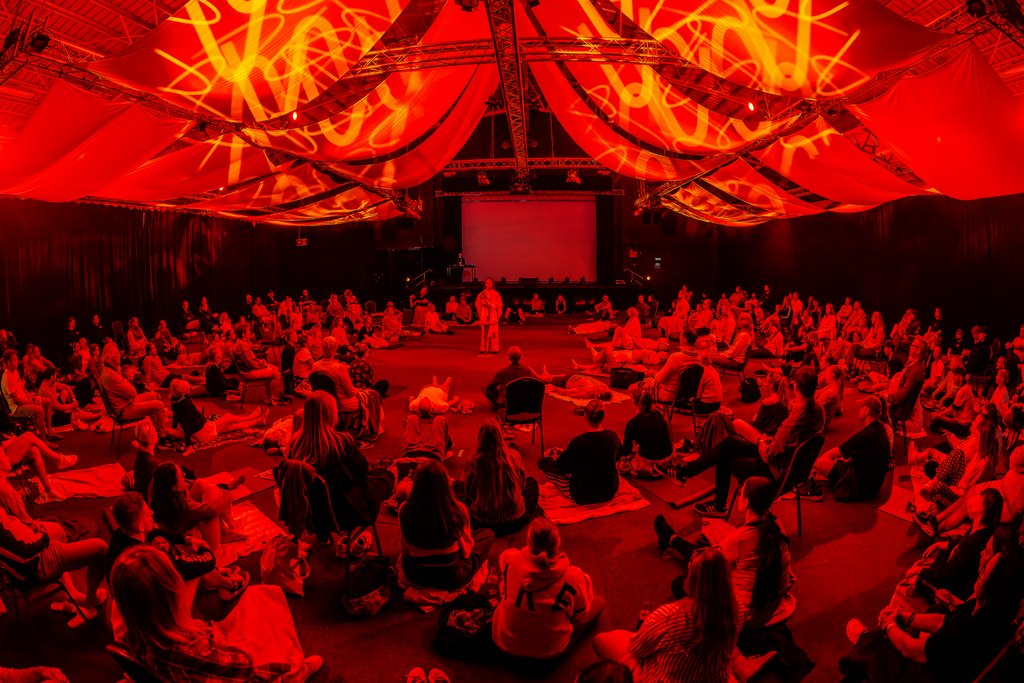
Recently, I was asked to hold space at a great gathering. The theme: transitions. Bardos. The rawness of impermanence.
Hundreds of people came. Rows of bodies, breathing. Eyes open, eyes closed. Hands resting, hands folded.
The room hummed quietly, with the weight of expectation, of curiosity, of searching.
Do you like what you are reading? Sign up below for more blog posts.
It was not fear that moved them. Not grief. Not despair. It was recognition. Continuity. That even as forms dissolve, presence does not. That even when life shifts, the thread is unbroken.
I realized, in that room, my mission made tangible: to weave the sacred into the everyday. To make the teaching of the bardo close as breath. Immediate. Intimate. The Karmapas embody this kind of work on a master level in their returns. Life continues. Awakening continues. Compassion continues. Death is not the end.
The Gathering
I guided their presence carefully. From sight to listening. From the surface of things to the deep stillness beneath. The lights dimmed. Dimmer. Darkness.
Silence grew. Not heavy. Not oppressive. A silence that held attention like a lantern in shadow.
I asked them: “Why. Why are you here? In this body. At this time?”
Do you like what you are reading? Sign up below for more blog posts.
Some whispered inwardly. Some let the question rest on the surface of their mind. Some felt it in the body, a pulse, a tremor, a recognition.
They moved together through reflection. They felt the bardo as reality, not as theory. The space between breaths became passage. The pause between words became doorway.
And I watched. Hundreds of people, each touching continuity. Not learning it. Living it.
Continuity and Choice
The bardo of death is universal. Everyone moves through it. Most are carried by the winds of their habits, scattered without direction. Ordinary beings are tossed, blown, driven.
Awakened masters move differently. The Karmapas step with clarity. They return, life after life. By vow. By compassion. By choice.
In that room, this was reflected. I spoke of the red thread of mind, unbroken across centuries. Of teachers returning. Of vows persisting, like rivers cutting through stone. In their faces, some people recognized it. Recognition not of the mind, but of awareness itself. Immediate. Bodily. Felt.
Do you like what you are reading? Sign up below for more blog posts.
Some closed their eyes. Some looked around. Some simply breathed, letting continuity settle. The sacred, woven into the ordinary, became visible. The teaching was not abstract. It was present, alive.
Embodied Presence
I was reminded as I held the space, how living this teaching is. The sacred is not distant. It is the space between breaths. The pause after a thought dies. The silence after a word. The presence of one human being facing another.
Hundreds of people, sitting quietly, felt it. They did not leave with theory. They left with a lived experience: presence is continuous. Life is not ended by change. The mindstream flows onward, through every passage.
Do you like what you are reading? Sign up below for more blog posts
The Karmapas have done this work for centuries. Returning again and again. Showing that awakening continues. That compassion is unbroken. That the sacred can be woven into every ordinary moment.
The teaching of the Bardo
The gathering ended. The room emptied. Presence lingered. People now carries this imprint with them — a living reflection of continuity, a mirror of the Bodhisattvas’ vow.
The teaching of the bardo was no longer distant. It was as close as breath. As real as the pulse beneath their hands. As immediate as the awareness that flows through each moment.
Do you like what you are reading? Sign up below for more blog posts
Life continues. Awakening continues. Compassion continues. The red thread of presence runs unbroken. Through centuries. Through this gathering. Through every moment we notice.
I give thanks to all of you for trusting me to hold the space.
Leadership today requires more than strategic thinking; it demands inner stability. In Vajrayāna Buddhism, wellbeing is not separate from leadership — it is the ground that allows wise, compassionate, and transformative action. Rather than being another task to manage, wellbeing arises naturally when leaders embody timeless values: ethical clarity , mindful awareness, and compassion. These qualities help leaders remain steady in uncertainty, responsive rather than reactive, and connected to the humanity of those they serve.
Do you like what you are reading? Sign up below for more blog posts
The Ground of Ethical Conduct
True authority rests on trust. In Buddhism, ethical conduct; śīla, means living with integrity and ethical responsibility. For leaders, this is not only about avoiding harm but about cultivating an environment of respect, fairness, and transparency. When actions are aligned with values, the leader’s mind becomes lighter, free from inner contradiction, and more able to focus on what matters.
Do you like what you are reading? Sign up below for more blog posts
Practice: Before making a decision, pause and ask: “Will this choice support both the vision and the wellbeing of those affected?” This reflection strengthens both clarity and credibility.
The Practice of Mindful Awareness
In Vajrayāna, awareness is seen as the natural radiance of mind itself. Yet in daily leadership, constant distractions can obscure that clarity. Smṛti means remembrance — the capacity to remember the presence moment by moment. A leader who cultivates mindful awareness can step out of reactivity, listen with full attention, and hold the larger perspective even in times of pressure.
Do you like what you are reading? Sign up below for more blog posts
Practice: At the start of a meeting, dim the lights, set aside phones, laptops, and pens, and allow one minute of silence. This small ritual helps everyone arrive fully, lets the mind settle, and creates a shared atmosphere of focus and presence. We did this at a kik-off event for hundreds of people recently, and it was perceived as. one of the most magical moments of the event.
Cultivating Compassion
In Vajrayāna, compassion is not sentimentality but the courageous willingness to meet the suffering of others with wisdom and care. Compassion; Karuṇā, softens the tendency to treat leadership as a purely strategic exercise. It reminds us that every colleague, client, or team member carries hopes and struggles just like our own. A compassionate leader fosters loyalty, creativity, and resilience in those around them.
Do you like what you are reading? Sign up below for more blog posts
Practice: In moments of conflict, silently remind yourself: “Just like me, this person longs for respect, safety, and meaning.” This shifts the inner stance from opposition to connection, even when firmness is needed.
Sustainable Inner Leadership
Leadership that integrates śīla, smṛti, and karuṇā is sustainable leadership. These Vajrayāna values are not abstract ideals but practical tools for navigating complexity with steadiness and care. As wellbeing deepens, leaders find themselves more capable of acting decisively without losing empathy, and more able to inspire without burning out. True leadership strength is not control, but the union of clarity, compassion, and integrity.
Do you like what you are reading? Sign up below for more blog posts
👉 I am now opening up one new spot for my 3-month 1:1 process program, designed for leaders who want to cultivate inner leadership — grounding in Buddhist wisdom while developing clarity, resilience, and presence. If this speaks to you, you can explore the program here .
To become a Buddhist nun—or monk—is to step into a life that unravels everything familiar.
It is not a change of clothes but a vow that shapes every detail of existence. Before I was ordained, I sought the guidance of several masters. Two questions followed me everywhere: Where are you going to live? and How are you going to support yourself? These were not small, practical details; they carried the weight of survival itself. To enter monastic life in the West, or even as a Westerner in the East, is to step forward without the nets that have held others for centuries.
Do you like what you are reading? Sign up below for more blog posts
In the Himalayan valleys, monasteries rise like timeless guardians of the Dharma, and tradition still stands strong. Yet as Westerners, we are seldom held inside those institutions. We may be welcomed, but not cared for in the same way as those born into the monastic culture. Even there, in the very heart of Buddhist life, I—like many other Western nuns and monks—had to find my own way. It was a continual patching together of circumstance and creating a fragile but living container for the vows I had taken.
The Western Nun’s Challenges
The masters knew. They saw us Western monastics struggling to carve out a path where no structures had been prepared for us. They understood our difficulties, and yet there was no easy solution. We lived among the ordained, yes, but without the same safety net. The patriarchal hierarchy was heavy, and it shaped how doors opened—or stayed closed. Even within supportive communities, the weight of that hierarchy pressed down, making it clear where we stood.
Do you like what you are reading? Sign up below for more blog posts
Resources came and went. Sometimes a donation arrived, sometimes a little support was given, but it was rarely steady, rarely enough to lean on. A bag of rice, an envelope with a few bills, a place to sleep for a while—these small kindnesses were lifelines, but seldom reliable or structured. And so we learned to live inside uncertainty, carrying our vows without practical shelter of tradition. Devotion had to stand in for stability.
Walking the Path No Matter What
I was able, by blessings and persistence, to remain on this path for nearly a decade and a half. Step by step, year by year, the path unfolded. There were times of luminous clarity, when the Dharma felt as close as my own breath, and the teachings seemed to flow through me as naturally as water. There were also times of raw struggle, when even the question of how to eat or where to stay became part of my practice. In those moments, survival itself was the teaching.
Do you like what you are reading? Sign up below for more blog posts
Still, devotion was the thread that carried me through. It was never about comfort or ease, never about waiting for circumstances to align. It was about saying yes to the path, again and again, even when every outer sign might have suggested giving up. To keep walking, robe wrapped around me, was to live that yes in body and spirit. The difficulties were real, but so was the unshakable sense that this was the life I was meant to live.
One of the Lessons That Remains
Hardship, in the end, is not something to be avoided—it becomes part of the path itself. That is one of the lessons my years in robes gave me. We do not get to choose the shape of the obstacles, only how we meet them. In the Himalayas, it might be the weight of hierarchy and cold nights; in the West, it might be the loneliness of practicing without structures to hold you. Obstacles will come, no matter where you are.
Do you like what you are reading? Sign up below for more blog posts
Some days bring beauty, others bring struggle. Devotion is not about escaping this, but about staying with it. It is about holding steady in the midst of uncertainty and letting those very conditions shape you into something truer than you were before. What once felt like unbearable hardship can, over time, become the ground of deeper resilience. That is not a romantic idea, but a lived truth.
Tending the Flame of Devotion
If there is something I want to leave with you, it is this: the path may not give back what you thought you would receive. The fantasies and ideals we carry at the beginning will not all be met. But the path does give something. Sometimes it gives only a small flame in the darkness, but that flame is real. And if you tend it, protect it, breathe with it, it can carry you further than you ever imagined you could go.
Do you like what you are reading? Sign up below for more blog posts
That flame may not be bright enough to banish all darkness, but it is enough to see the next step, and then the next. It is enough to remind you that the practice, and the devotion are alive within you, no matter the outer circumstances.
Mindfulness — the word rolls off the tongue like a diet soda: light, mildly flavored, unassuming. Behind it, however, lies something far richer, subtle, and enduring. In Buddha Shakyamuni’s original instruction, the Pāli term Sati doesn’t nudge you to “stop and smell the roses.” It means to remember now — to hold this living moment in your heart. Translated into English in the 19th century by T. W. Rhys Davids and the Pāli Text Society, Sati became “mindfulness,” a term that stuck — but not without losing some of its ancient resonance.
Do you like what you are reading? Sign up below for more blog posts
In Triyana Meditation, Sati has always been part of the greater tapestry of the Eightfold Path — and it is still so today. It’s deeply embedded in the route to liberation, not a freestanding technique, but part of an integrated journey that has guided practitioners for over 2,600 years.
The Veil and Our True Default
Far from being our default, the state of mental wandering is a habit — but our actual default state is something much more luminous: clear, spacious knowing. This innate clarity is dimmed by a veil of ignorance, a habitual forgetting of the present. Sati isn’t nudging us to “be”; it is the act of staying awake, of remembering to stay truly present rather than spacing out.
As one practitioner reflected:
“Sati means to remember, to recollect, the state of non-forgetting.”
Another observed:
“Mindfulness… means to hold a mental hold on a cognitive object… not be lost.”
These reflections remind us that Sati is not just idle presence or passive awareness — it is care, memory, vigilance, and ethical attention rolled into one. It is the steady thread that keeps the mind from slipping away into distraction or unconsciousness.
Do you like what you are reading? Sign up below for more blog posts
Sati in Context: Not Alone, But Interwoven
In the Eightfold Path, Sati — Right Mindfulness — is one of eight spokes, each essential for the wheel to turn. These spokes are: Right View (seeing reality clearly), Right Intention (commitment to kindness and non-harming), Right Speech (truthful, beneficial words), Right Action (ethical conduct), Right Livelihood (earning in ways that support life), Right Effort (nourishing wholesome states and letting go of harmful ones), Right Mindfulness (Sati — remembering now), and Right Concentration (steady meditation, unified attention).
Do you like what you are reading? Sign up below for more blog posts
A single spoke can’t carry the wheel; it needs the tension and balance of the others. Sati shines most brightly when held by the strength of Right View and Right Intention, when supported by the steadiness of Right Effort and Right Concentration, and when rooted in the ethical ground of Right Speech, Action, and Livelihood. In Triyana Meditation, this weaving remains seamless. Sati isn’t a stand-alone trick or a technique plucked from its roots. It’s a living thread, stitched through the whole pattern of awakening, binding wisdom, ethics, and meditative stability into one fabric.
Interdependence, Not Hierarchy
When the path is whole, each element moves with the others like breath in the body — quiet, constant, necessary. Ethics steadies the mind; concentration deepens insight; insight guides effort; and mindfulness holds it all in the palm of the present. Pull one away, and the weave slackens. Keep them together, and the fabric can bear the weight of joy, loss, confusion, and clarity alike.
Do you like what you are reading? Sign up below for more blog posts
Then something subtle happens: the mind begins to turn toward itself. The outlines of past and future grow pale, and in their place — a clean, unadorned moment. The mind, a room lit only by the window-outline of now. Without Sati, the room fills with the muffled furniture of memory and anticipation. With it, the light persists — not blinding, not grand, but steady enough to see by.
What We Are Is Clear Knowing
We are not born into confusion. Confusion is acquired, layered, repeated until it feels like the ground we walk on. Beneath it lies what we are: a clear, spacious knowing. Sati — remembering now — is not the act of finding something new, but of returning to the open clarity that has never left. It isn’t mere being; it’s the vigilance of being fully awake inside this moment.
Do you like what you are reading? Sign up below for more blog posts
If you want to explore Sati in its full, embodied context — not as a stripped-down self-help technique, but as a thread in the living tapestry of awakening — join me for meditation classes, retreats, and events. Together, we can remember now, deeply, vividly, awake to the richness of life.
I once owned only two sets of clothes. One set was on my body. The other was dripping on a line. I washed them in cold water, in a plastic bucket. No sun to help them dry. Just wind, time, and the bite of Himalayan air.
I wore my outer robes for weeks at a time, only changing what was closest to the body. There was no wardrobe, no fresh set waiting. Just a rhythm of wear, wash, and wait.
Do you like what you are reading? Sign up below for more blog posts
It wasn’t a lifestyle choice. It was commitment and devotion. And in that devotion, something precious began to emerge—space, clarity, and the quiet depth of contentment.
The Stillness of Waiting
In winter, wet clothes stiffened overnight. On the rooftop, wind tugged at the fabric with the steady indifference of mountain weather—neither cruel nor kind, simply present. Drying took days. So I waited.
And in that waiting, I learned something. Not from books, not from ideas, but from the slow movement of time itself. Everything ripens when it’s ready. Your robes. Your thoughts. Your practice.
Do you like what you are reading? Sign up below for more blog posts
It was in those simple acts. These included scrubbing robes, waiting for them to dry, and breathing into discomfort. That is how the six Pāramitās began to take root.
Generosity, discipline, patience, joyful effort, meditation, and wisdom are not abstract concepts. They are living qualities. These qualities are cultivated one ordinary moment at a time.
Mold and the Quiet Kingdom
I spent three months on a solo retreat. During that time, I lived in a secluded old stone house. This house had once belonged to the village Maharaja. It was monsoon season. I didn’t go outside at all. The rain fell endlessly. I chanted, played instruments, meditated, studied, and let the world recede into mist and memory.
One day, I walked out into the hallway and noticed my only pair of rubber sandals—completely overtaken by mold. Softened and spotted green. Three months of silence from me, and the world had gone on with its quiet transformations.
Do you like what you are reading? Sign up below for more blog posts
I hadn’t worn the shoes, so I hadn’t noticed. I hadn’t needed them.
Retreat was a return to the essentials. To rhythm. To depth. And to the subtle joy that comes when nothing worldly is distracting.
The Invisible Wealth
That retreat didn’t leave me with more things. It left me with a foundation. What I practiced there—day by day, rain by rain—wasn’t austerity. It was the slow cultivation of inner wealth.
Generosity in offering full attention to each act. Patience in letting the robe dry on its own terms. Discipline in getting up before dawn, even when no one else would know. Joyful effort in showing up again and again. Meditation as a thread through every breath. Wisdom in remembering that none of this is separate.
The Path Opens Today
Today, I open the doors to Introduction to Triyana Meditation—a course grounded in Buddhist teachings but shaped for modern lives.
This isn’t just a course in technique. It’s an invitation to a meaningful way of being. This approach supports the gradual cultivation of clarity, stability, and compassion through steady practice.
Do you like what you are reading? Sign up below for more blog posts
You don’t need to retreat to the mountains or strip down your life to bare essentials. You can start cultivating these timeless qualities where you are. These qualities are generosity, patience, stillness, compassion and joy. You can do this with the life you already have.
I created this course based on direct experience. I spent years in retreat and engaged in daily practice and philosophical studies. I have lived the teachings for decades in both seclusion and society. What I offer here is a pathway that’s simple, grounded, and possible to integrate in your every day life.
“You do not have to live in the world you are given.” — Margaret Atwood
In a culture obsessed with doing, measuring, and maximizing, leadership is often reduced to performance. Metrics replace meaning. Urgency outshouts wisdom. But what if leadership is something else entirely — not a role, but a sacred space?
In Buddhist philosophy, particularly within the Vajrayana tradition, space (ākāśa) is not empty in a nihilistic sense. It is full of potential — a living field of awareness in which all things arise, unfold, and dissolve. A true leader is not someone who fills this space with noise and control. Instead, a true leader honors the space. They cultivate it and invite others into it.
Do you like what you are reading? Sign up below for more blog posts
This leadership doesn’t shout. It listens. It doesn’t force. It allows. It doesn’t simply direct — it serves. From this view, leadership becomes an ethical and spiritual practice: the art of making space for transformation.
Space as a Leadership Principle
To lead from sacred space means leading from presence. It means offering your team, your clients, your community — even your own mind — the room to breathe. To not react from fear, but respond from clarity.
Do you like what you are reading? Sign up below for more blog posts
This doesn’t mean being passive. It means becoming deeply attuned. Spacious leadership asks:
What is really needed right now?
What is arising naturally, and what am I trying to force?
Who would I be as a leader if I trusted the unfolding?
When we drop our agendas and rest in awareness, we begin to feel the textures of space. From that space, the right action can emerge. Action that isn’t rushed. That isn’t ego-driven. But that lands with precision and kindness.
Do you like what you are reading? Sign up below for more blog posts
As the great master Dzigar Kongtrul Rinpoche puts it:
“In the ordinary world, people seek power in order to control others. In the sacred view, the greatest power is to control oneself.”
This inner discipline requires staying connected to openness. It avoids contracting into reactivity. This approach is one of the highest forms of leadership. And it’s rare. Because it takes courage to lead from space, when the world demands speed.
Time: Not a Scarcity, but a Teacher
In Buddhism, time isn’t a linear march toward productivity. It’s the unfolding of karma — a dynamic play of causes and conditions. When we lead with an awareness of time as interdependence, we stop trying to dominate the clock. We become stewards of rhythm.
This reframing is radical. Suddenly, the pauses matter as much as the plans. Stillness becomes part of the strategy. Reflection is no longer a luxury, but a necessity.
Do you like what you are reading? Sign up below for more blog posts
A conscious leader learns to move in rhythm with life — not ahead of it, and not behind. And from that rhythm, they create trust, clarity, and authentic impact.
Triyana Leadership: A 3-Month Journey into Sacred Space
This is the leadership we practice in the Triyana Leadership Program. It is a 3-month journey for those who want to lead from something deeper than ambition.
It’s for leaders, teachers, creatives, coaches, and change-makers who are ready to:
Explore the spacious ground of their own awareness
Act with more clarity and compassion under pressure
Build a leadership presence that is resilient, intuitive, and wise
Align strategy with sacred view
I don’t teach tips and tricks. I offer transformation. This program is rooted in Buddhist teachings. It provides real-world tools for integration. The program helps you hold space for yourself and others. This is not just a technique but a way of being.
I didn’t stumble into Buddhism after a crisis or dramatic life event. There was no breaking point, no overnight awakening.
I was a teenager—already drawn to the philosophical and contemplative—and Buddhism felt like a language I somehow already understood. Not in its rituals or cultural expressions at first, but in its view of mind, of suffering, of possibility.
Over time, that quiet recognition deepened into study, practice, and eventually full ordination. I lived as a Buddhist nun for twelve years. And although I’ve since returned to lay life, the path continues—inner, steady, often invisible.
Do you like what you are reading? Sign up below for more blog posts
To speak of a “Buddhist lifestyle” is delicate. In the Vajrayana tradition, we tread lightly around titles. We don’t declare ourselves practitioners as if it were a badge. Instead, we return again and again to the ground of practice—not to prove something, but because we’ve seen what it opens.
This isn’t a prescription. It’s a reflection. Here are a few threads from the fabric of this path.
1. The Choice Not to Burn
There’s a story I return to, again and again—not as a myth, but as a mirror.
Akshobhya, the blue Buddha of the eastern direction, made a vow:
Never to act from anger.
Not to suppress it. Not to pretend it wasn’t there. But to meet it so fully, so honestly, that it would have nowhere to root. In Vajrayana, he embodies the transmutation of aggression—not into passivity, but into clarity, mirror-like awareness. Still water. Unshaken.
Most of us aren’t there. But we can begin.
Do you like what you are reading? Sign up below for more blog posts
Someone offends you. Something feels unfair. And the body tenses, ready to react. In that very moment, before words form—there is breath.
Take one. Then another. Place a hand gently on your belly or chest, and ask:
“What part of me needs presence right now?”
This is not delay. It is discipline. It is stepping into the luminous field before the mind collapses into habit.
Do you like what you are reading? Sign up below for more blog posts
To live this way doesn’t mean you’ll never feel anger. It means you may not be owned by it.
And in a world addicted to outrage, your choice to pause is an act of fierce compassion.
2. Letting the Excess Fall Away
In the West, we tend to confuse fullness with meaning. But a Buddhist lay life often begins by making space—not out of asceticism, but to hear what’s already speaking beneath the noise.
Letting go isn’t only about possessions. It’s about the identities we polish, the stories we carry, the opinions we hold so dear, the arguments we rehearse silently for years.
You might begin with:
Saying no to a conversation that drains.
Ending a task before it’s perfect.
Placing your phone down without checking it one more time.
Do you like what you are reading? Sign up below for more blog posts
Simplicity in Vajrayana isn’t just functional—it’s symbolic. Every gesture, every object, every word can become a mudra, a mantra, a gateway. But only if it’s chosen. Only if you are present to it.
When we let the excess fall away, even the most ordinary moment can become an offering.
3. Walking in Compassion, Not Concept
It’s easy to talk about compassion. Harder to live it when you’re exhausted, or annoyed, or wounded in places you’ve learned to hide even from yourself.
But this path asks us to meet it all—without turning away.
Not to indulge. Not to collapse. But to remain.
In Vajrayana, we are invited to see beings not as they appear, but as expressions of awakened nature, however obscured. This isn’t idealism. It’s a practice of perception. A kind of disciplined tenderness.
Do you like what you are reading? Sign up below for more blog posts
Try beginning the day with a quiet wish:
“May I meet this moment with warmth, openness, and a steady heart.”
Then extend that same aspiration to someone who unsettles you. Not to excuse behavior. But to stay awake to the truth of interbeing.
Compassion isn’t sweet. Not always. Sometimes it’s quiet endurance. Sometimes it’s fierce boundary. But always, it’s a refusal to exile parts of reality—even the uncomfortable ones.
To live that way is not perfection. It is participation.
Do you like what you are reading? Sign up below for more blog posts
If you’d like to deepen into this practice of compassion and loving-kindness, I’ve made one chapter from my eBook Triyana – Keys to Sustainable Transformation available as a free gift. It’s called Loving-Kindness: Fierce and Tender, and it’s an invitation to work with the heart—not to soften it, but to strengthen it with presence.
A Buddhist lifestyle isn’t something you adopt. It’s something you return to—in the middle of a sentence, in the turning of a spoon, in the way you say goodnight.
It’s not about self-improvement. It’s about remembering the nature of mind, again and again, until that remembering starts to shape your gestures, your choices, your gaze.
Sometimes it looks like a shrine and a bell. Sometimes it looks like washing your face slowly in the dark.
Do you like what you are reading? Sign up below for more blog posts
But underneath it all is the same invitation: To wake up. To be kind. To live as though every moment is worthy of full attention—because it is.
And maybe, if we’re lucky, to meet the world with just enough stillness to see it clearly.
It was one of those rare Swedish summer days when the sun actually stays and the sky feels like it might never let go of the light. I took the boat out to one of the islands in the Stockholm archipelago. The sea was full of movement—waves catching light, wind skimming the surface.
Later that evening, I found myself sitting in a small, candlelit wooden church listening to Lise & Gertrud perform. The space was simple, old, loved and full of presence.
They performed a carefully selected mix of songs, arranged in their own unmistakable tone—both dynamic and humorous, yet deeply grounded. What struck me was how relevant this particular setlist was: the lyrics spoke directly to the world we live in now —songs that resonated with what matters most.
Do you like what you are reading? Sign up below for more blog posts
I sat there and cried together with others. It touched something real and it reminded me of what I work with every day: the power of sound, and especially of mantra.
Mantra Explained: Mind, Sound, and Transmission
The word mantra comes from Sanskrit: man means “mind,” and tra means “tool” or “vehicle.” But mantras aren’t tools in the ordinary sense. There’s a reason we don’t translate mantras the way we do other texts. Their power lies in the sound itself—in the breath, the vibration, the repetition. When chanted with sincerity, they shape the mind without requiring the intellect. They are sound that carries power through repetition, breath, and lineage. Mantras protect the mind.
In the Tibetan Buddhist tradition, mantras are considered living syllables. They’re not recited to produce a feeling, or to decorate silence. They’re practiced to align body, breath and awareness with qualities that go far beyond personal emotion.
Do you like what you are reading? Sign up below for more blog posts
Some mantras are gentle. Others are fierce. All are transformative. Mantras move through you like sound shaped into lightning—sometimes soft, sometimes blazing, always alive. They don’t require belief. But they do ask for presence in the here and now. And while anyone can technically repeat a mantra, it’s good to receive transmission from an authentic teacher if you feel drawn to one. Transmission doesn’t make it “more real”—but it connects you to the source, the lineage, the intention. Whether or not you use a mala, it helps the practice settle more deeply. The mala can support rhythm and focus, but the mantra itself does the work—chanted with intention, it carries its effect regardless of props.
One of the mantras I’ve practiced is:
OM AH HUNG BENZA GURU PEMA SIDDHI HUNG
It’s the mantra of Padmasambhava, who is regarded as the Second Buddha in Tibet. He brought the tantric teachings to Tibet in the 8th century, and his presence is invoked in this mantra for protection, insight and unwavering clarity.
I chant this mantra in many different ways—softly, melodiously, with full voice, or quietly under my breath. My recorded version is arranged as a bolero, with a full rock’n’roll drumset. This was never about making music in the traditional sense—it was about entering into relationship with sacred sound. Offering something real. You can listen to it here: 👉 Listen to my recording of the song Padmasambhava on Amazon
Do you like what you are reading? Sign up below for more blog posts
It’s not a traditional version. But it’s true to my practice and blessed by the masters. Mantra doesn’t need to be performed. It needs to be practiced, embodied, and offered.
Belonging Through Sound Mantras are not concepts. They are not there to be explained or understood in the usual way. They are patterns of sound, passed on through living traditions, and practiced for their direct effect. Mantras are highways to the divine—cutting through layers of thinking and touching our essence.
Over time, mantra becomes less about doing something and more about resting in the moment. Not because it’s always peaceful, but because it’s real. As with all true practices, it’s not about forcing anything. It’s about showing up—again and again—until something shifts.
Do you like what you are reading? Sign up below for more blog posts
And sometimes, in a small church, far out in the archipelago, that shift begins with tears and ends with a strong sense of belonging.
With waves still in the body, lyrics still in the chest, moonlight spilling over the trees—what rises in me is a deep sense of grounding into the essence of being.
Not to a category. Not to a belief. But to sound itself.
Lama Chimey Buddhist Minister | Founder of Triyana Meditation
While fireworks crackle across the summer sky and families gather to celebrate independence across the United States, there’s an ancient story from the Buddha’s past lives that offers a gentle nudge toward a deeper kind of freedom — one rooted not in separation, but in connection. Here in Europe, we may not be celebrating the 4th of July ourselves, but it’s a perfect moment to reflect on the universal values of compassion and interdependence. This year, let’s borrow a page from the Jataka tales and reimagine this American holiday as Interdependence Day — a celebration of the beautiful web of life we’re all part of.
The Selfless Monkey King Once, in a distant forest, the Bodhisattva was born as a wise and noble monkey king. He ruled over thousands of monkeys who lived in peace near a river where a delicious mango tree grew. These mangoes were so sweet that the monkey king always made sure none of them fell into the river — for he knew that if humans discovered the fruit, danger would follow.
Do you like what you are reading? Sign up below for more blog posts
But one day, a ripe mango did fall, floating downstream until it reached the king of a nearby kingdom. Tasting its rare sweetness, the human king sent his men upriver to find more. When they stumbled upon the tree, they prepared to kill all the monkeys to claim it.
Seeing the danger, the monkey king acted swiftly. He climbed to the highest tree, spotted a cliff across the river, and with his strong body, formed a living bridge from one tree to another, allowing his monkey subjects to cross to safety. In the end, exhausted and injured, he was found by the human king, who was so moved by the monkey king’s compassion that he ordered his own people to care for him with the utmost respect.
This tale reminds us that leadership, true freedom, and even survival are not about dominating others — they arise through sacrifice, cooperation, and love.
What the Monkey King Knew: We Are Not Alone The Jataka tales are full of kings, animals, and ordinary people who wake up to a great truth: no being exists alone. The monkey king didn’t just save his people out of duty. He understood that his life was tied to theirs — that in saving them, he too was upheld.
Do you like what you are reading? Sign up below for more blog posts
This echoes the Buddhist concept of pratītyasamutpāda, or dependent origination — the idea that everything arises in dependence upon multiple causes and conditions. Your breath, your lunch, your laughter today — none of it exists independently. We are co-created by everything: the trees, the sun, the kindness of strangers, and even the insects we try not to step on.
Interdependence Day: A Lighthearted Reframe So, what if we all take a moment to mark 4th. of July as Interdependence Day? You’d still get to eat pie and light sparklers — but with a slightly softer heart.
Do you like what you are reading? Sign up below for more blog posts
You might thank the earthworms for your garden salad, the people who fixed the roads so you could get to the party, or the trees for the shade at your picnic. You might notice that the joy you feel is amplified not when you’re standing alone, but when you’re laughing with someone else, or quietly sharing a watermelon slice.
Freedom doesn’t mean cutting ties — it means seeing clearly that our well-being is woven into everyone else’s. That we rise, like the monkeys crossing that living bridge, together.
Lighting the Fireworks of Compassion This July 4th, as friends in the U.S. celebrate national freedom, may we all — wherever we are — celebrate not just the independence of nations, but the interdependence of all beings. May we become like the monkey king — courageous and wise, willing to extend ourselves for others because we recognize we were never separate to begin with.
Do you like what you are reading? Sign up below for more blog posts
Go ahead and light your fireworks — just maybe say thank you to the stars while you’re at it. They’re part of your story too.
Summer offers a rare invitation: to slow down, to let go of structure, to reconnect with something deeper than deadlines. Yet even in rest, life continues to unfold—sometimes gently, sometimes unexpectedly. A decision must be made. A message arrives. A loved one struggles. Or perhaps the shift is internal: restlessness, re-evaluation, or a question you didn’t know you were carrying.
Do you like what you are reading? Sign up below for more blog posts
From a Buddhist perspective, leadership is not confined to a particular role or setting. It’s an ongoing relationship to how we meet reality—moment by moment. Whether you’re hosting a gathering, handling a family situation, or quietly walking in nature, your capacity for wise and compassionate leadership is alive and available.
Leading Through the Unpredictable
Life’s unpredictability doesn’t pause for your vacation. A key Buddhist teaching is that impermanence—anicca—is not a disturbance, but a basic truth of reality. Plans change, emotions arise, and conditions shift. The question is not how to avoid this, but how to meet it with awareness.
Do you like what you are reading? Sign up below for more blog posts
A grounded leader recognizes that uncertainty is not the opposite of control—it’s the context in which inner stability becomes most meaningful. Your real power lies not in preventing change, but in staying connected to inner clarity when change arrives. That’s when your leadership becomes trustworthy—not only to others, but to yourself.
Who Are You Without the Title?
It’s common to think of leadership as something tied to status, responsibility, or visibility. But from a dharmic view, true leadership is relational—it emerges through how we show up in each moment, regardless of who is watching or what role we’re in.
Do you like what you are reading? Sign up below for more blog posts
When the title is set aside, what remains is your quality of presence. Your ability to listen, to reflect, to hold space for complexity without collapsing. These aren’t skills you perform; they are capacities you cultivate. Summer, with its looser structure, can be the perfect training ground for this quieter, more integrated form of leadership.
5 Ways to Lead From Inner Wisdom—Even in Flip-Flops
Make Space for Stillness Even during vacation, your nervous system may still run on internal deadlines. Make space each day for stillness. This might be seated meditation, a walk in silence, or simply turning your attention inward for a few breaths. Leadership grounded in clarity begins in quiet.
Respond, Don’t React When something unexpected arises—a change in plans, a moment of tension—observe your impulse. Do you move to control, avoid, or solve? Buddhist practice invites us to pause. A brief moment of awareness can shift you from habit into choice.
Let Go of the Role, Not the Practice Stepping away from work doesn’t mean stepping away from presence. Without the usual structure, your practice can become more natural, integrated, and sincere. Mindfulness, kindness, and wise action are not things we do—they are ways of being.
Root Yourself in Values, Not Outcomes Leadership often orbits around results. But from a dharmic view, it’s your motivation and inner alignment that matter most. Whether you’re navigating a conversation or choosing how to spend your day, let your values—not your agenda—guide you.
Practice Kindness—First With Yourself If your vacation doesn’t unfold as planned, meet yourself with the same compassion you would offer a friend. Leadership doesn’t mean being unshakable. It means staying open. Kindness—especially in unpredictable moments—is not weakness; it’s wisdom in action.
Leading From the Inside Out
Leadership is not about being in control—it’s about being in relationship. To yourself. To others. To the ever-changing nature of life. When you cultivate inner steadiness, outer conditions become less defining.
Do you like what you are reading? Sign up below for more blog posts
Rather than trying to ride every wave with ease, what matters most is the depth of your awareness and the intention you bring to each moment. That’s where true leadership arises—from within, regardless of circumstances.
If you’d like a gentle entry point into this perspective, I offer a free excerpt from my e-book on Metta – Loving Kindness. It’s a contemplative companion to deepen your inner clarity and compassion, no matter where you are on your journey.
And if you’re a leader seeking personal guidance and depth in your leadership, you’re welcome to explore my 1:1 offerings here.
Fear is a faithful companion of the constructed self. While the monkey mind clings to imagined futures, perceived threats, and the fragile sense of self we spend so much energy protecting. And when fear is left unchecked—when it loops through our inner dialogue, unresolved and unnamed—it quietly germinates into anxiety.
Do you like what you are reading? Sign up below for more blog posts
But Buddhism, as many of you know, doesn’t offer us a feel-good bypass. It doesn’t pat the self-constructed I on the back and reassure it that everything will be fine. Instead, it turns the gaze inward and asks: What is this experience made of? What is its cause? And what happens if we meet it without resistance?
From this perspective, fear is not an enemy to be conquered. It is a phenomenon to be studied with tenderness and interest.
Every Emotion Has a Root
Every emotion, including fear, arises due to a preceding thought. That thought, in turn, comes from a perception—an impression received by the senses and filtered through our habitual patterns. And those patterns? They are deeply rooted in ignorance: the fundamental misunderstanding of who and what we are.
Do you like what you are reading? Sign up below for more blog posts
Anxiety isn’t mysterious from this view. It is the ripple effect of unexamined fear—a wave that keeps returning because we never noticed the stone dropped into the water. And still, we are not asked to fight our emotions. Rather, we are invited to see clearly.
The Gesture of Courage
To trace the arising of fear, to recognize it in real-time, and to allow it space to unfold without pushing it away or identifying with it, is a profound act of love. It is a gesture of courage. Because facing fear without trying to fix it or feed it requires a deep trust in the nature of mind itself.
Do you like what you are reading? Sign up below for more blog posts
We are not our fears. Nor are we the thoughts that give rise to them. But the more lovingly we can stay with these movements—without needing to dress them up or send them away—the more naturally they lose their grip.
The Medicine of Clarity
This is not spiritual sedation. This is not comfort for the created self. It’s the medicine of clarity.
In the warmth of awareness, even fear softens.
For more FREE inspiration visit my FREE Resources here.
Disclaimer
The information shared here is intended to support personal growth and insight. It is not a substitute for professional mental health care, psychiatric treatment, or medical advice. If you are experiencing psychological distress, mental illness, or crisis, please seek support from a qualified healthcare provider.
In our modern meditation landscape, the word meditation has taken on many shapes. We see apps, retreats, and hashtags offering everything from stress relief to spiritual awakening. But behind all this modern accessibility lies an ancient, nuanced map of meditation traditions—each with its own depth, method, and view.
As someone who has walked this path for decades, both as a layperson and later as a monastic, I’ve had the rare privilege of experiencing these traditions from the inside. I practiced Shamatha at a Theravāda monastery in rural England, and sat several 10-day silent Vipassanā retreats long before my ordination. My Buddhist journey began in the Mahāyāna tradition at a Zen center when I was twelve years old. I had been seeking it, consciously, persistently. Something finally resonated. And it has never quite let go.
Do you like what you are reading? Sign up below for more blog posts
Today, my own practice has taken me deep into the Vajrayāna path—known as the Indestructible Vehicle.
As you may know, I now teach from a place that integrates all three main schools of Buddhism—Theravāda, Mahāyāna, and Vajrayāna—within Triyana Meditation. In each guided meditation, different methods from all three schools are blended together in a step-by-step approach. It’s a grounded highway to deep understanding. Of course, all students are on their own path and have different reasons for practicing—but they all take part in the same guided meditations.
In this post, I want to introduce the differences between these approaches, not as a lecture, but as a guide to help you find what truly nourishes you. Each has its gifts. Each has its challenges. But all point in the direction of freedom.
Do you like what you are reading? Sign up below for more blog posts
The Three Vehicles: Three Gateways, One Goal
The ultimate aim across all Buddhist paths is liberation from suffering. Each tradition offers a different lens on how to work with the mind. These are not rigid doctrines—they’re skillful means, suited to different temperaments and phases of life.
Theravāda: Grounded Presence and Insight This school is often referred to as the “Teaching of the Elders.” It is the most ancient of the Buddhist schools. Theravāda practice is beautifully stripped-down—clean, precise, and rooted in personal discipline. Through Shamatha (calm abiding), the practitioner trains the mind to settle. Then, using Vipassanā (insight), the practitioner observes reality with increasing clarity. This practice eventually gears into samadhi; sensory withdrawal.
Do you like what you are reading? Sign up below for more blog posts
If you’re someone who needs mental clarity, focus, and emotional steadiness, these practices are a profound foundation. They teach you initially how to stay with what is, without running or grasping.
Mahāyāna: Compassion and Interconnection The “Great Vehicle” expands the view. In Mahāyāna, the aim isn’t just personal liberation but collective awakening. The Bodhisattva path places compassion at the heart of every thought, word, and action.
The Bodhisattva vow means to live for the benefit of all beings. It is not in an abstract sense, but as a daily compass. It reshapes how you relate to everything, from your relationships to your inner critic. Meditation includes Shamatha and Vipassanā, but also analytical contemplations and visualizations that open the heart and dissolve self-centered thinking.
Do you like what you are reading? Sign up below for more blog posts
This path shows up when you’re stuck in traffic and remember others are late too. When someone criticizes you and you ask yourself what might be hurting in them. It’s a lived, practiced compassion—messy, generous, and resilient.
If you long to serve others, the Mahāyāna path offers a deeply relational view of reality. You may feel the weight of isolation. In this path, we awaken together.
This is the path I first met in this lifetime. I started at the age of twelve. I sought out a Zen center and found something that felt unmistakably true.
Vajrayāna: Direct Transformation of Mind Vajrayāna is also known as the Indestructible Vehicle. It uses powerful methods to transform our ordinary experience into the path itself. These practices—like Tonglen, deity meditation, mantra, and subtle body yogas—are precise tools. They directly address the root of suffering, which is ego-clinging and separation.
Do you like what you are reading? Sign up below for more blog posts
Vajrayāna can be intense, but it’s also deeply alive and poetic. It’s for those who long for transformation at the deepest level—not just temporary calm, but complete inner alchemy.
It’s a bit like letting go of the outer layer of who you thought you were. Only then do you find yourself standing more whole than before. You are alert in the ruins and utterly awake.
Key Meditation Practices at a Glance
Here are a few essential practices and where they fit best:
Shamatha (Calm Abiding)
Builds focus and emotional regulation
Helps with laziness, restlessness, scattered attention
Common across all three vehicles
Vipassanā (Insight Meditation)
Sharpens discernment and deepens wisdom
Particularly helpful when dealing with repetitive suffering patterns
Strongly rooted in Theravāda, but used in all schools
Tonglen (Giving and Receiving)
Opens the heart to compassion in real, grounded ways
Great for preventing ego-centricity, emotional numbness, and nurturing compassion
Core to Vajrayāna and Mahāyāna lojong mind training
Which Practice Is Right for You?
You don’t have to pick a side. This isn’t a competitive team sport where you have to pick sides. What’s most important is to listen to where you are right now. Are you at the beginning of your path? Are you still figuring out what to practice? What is your intention with approaching ancient authentic path?
The beauty of the Buddhist path is its adaptability. And it works as long as you are completely true to yourself and honest about where you’re actually at on your path. You need a guide—someone who can be honest with you, keep you accountable, and help you practice not just what you like, but what you need.
Do you like what you are reading? Sign up below for more blog posts
My own Triyana meditations are designed to meet people where they are, drawing from the strengths of all three traditions. Some students begin with favorising focused calm and mindfulness. Others come in through the heart. And some are ready to dive into symbolic and subtle practices.
What matters is that you practice. Not perfectly. But sincerely. Meditation isn’t about fixing yourself. It’s about discovering the vast, open nature of your mind—and learning to live from it.
Do you like what you are reading? Sign up below for more blog posts
And once you find a path that resonates with you—stick to it. The initial search is natural. However, shopping around endlessly from one practice to another will never give you the depth you’re likely longing for.
Do you like what you are reading? Sign up below for more blog posts
Soon, you’ll also be able to get your own set of my Lojong cards. They are a beautiful tool. They bring the heart of Mahāyāna and Vajrayāna into your everyday practice.
No matter your background, schedule, or experience level—there’s a practice for you. Let’s walk this path together.
Sometimes we forget how strong we are—especially when we forget each other. The Buddha once told a story of a flock of birds caught in a hunter’s net. It’s one of the Jataka tales. These are stories of his past lives. Like all good Dharma tales, it is not just for birds. It’s for us. Especially now.
A Story from Long Ago That Still Happens Every Day
Once, long ago, the Bodhisattva was born as a quail. Yes, a small bird. No grand robes or bells or monasteries. Just feathers and forest and instinct.
He lived in a great flock in the fields. Every morning, as the sun climbed over the treetops, they would leave the ground for safer branches. The earth was beautiful—but it was also the place of snares.
A bird-hunter came each day with a net. He would cast it across the feeding grounds, trap a handful of birds, and carry them away to sell. It was an ordinary horror. And each day, the birds who remained would flutter, peck, and pretend tomorrow would be different.
Do you like what you are reading? Sign up below for more blog posts
How the Quails Escaped
The Bodhisattva-quail gathered his courage and said, “We are many, and he is one. If he casts the net again, let us act together. When he throws it down, each one of us should take a part of the net in our beak. Then, with one voice, one wingbeat, we will fly together and carry it away.”
The others listened, but—truthfully—they were tired. Tired of plans, tired of fear, tired of feeling powerless.
Still, the next day, they tried. The net came down. The Bodhisattva called out, “Now!” And they all flew. Together. The net lifted. The bird-catcher screamed. The birds carried it over a hill. They flew over a stream. Finally, they dropped it in the middle of a thorn bush, far from human hands.
For days after, they were safe.
Do you like what you are reading? Sign up below for more blog posts
When We Forget Each Other
But the mind is like a basket with holes. Wisdom seeps out. Quarrels began: “You tugged too soon.” “You didn’t pull at all.” “Your beak slipped.” Pride puffed up. Blame spread like oil on water.
The next time the bird-catcher came, they did not fly together. Each tried on their own, flapping, screeching, struggling. The net held. The bird-catcher laughed. And many birds were taken.
Even birds forget. Even humans.
Do you like what you are reading? Sign up below for more blog posts
What the Net Is Made Of
The net was not just twine. It was habit. Isolation. The belief that we are alone. That our struggle is ours alone to bear. In truth, we are never only one wing—we are a field of feathers rising together, or not at all.
We have nets too. Old patterns. Scrolling without waking. Lashing out instead of listening. Giving up instead of asking for help. These are the traps that catch us day after day, unless we remember.
Do you like what you are reading? Sign up below for more blog posts
What This Means for Us
We are the birds. But we are also the Bodhisattva-quail. Inside each of us is the voice that says, “Wait. We don’t have to do this alone.”
And when we listen, when we act in concert—in sangha, in kindness—then even the tightest net can rise.
So. Today, if you feel caught—pause. Look around. Call on your flock. Or be the one who speaks first. Together, we are stronger than any snare.
It’s not a subject I shy away from. In my world, death is a companion, not a threat. I’ve sat with people who were dying. I’ve guided meditations on impermanence. I’ve conducted memorials. And when I speak of it, people often become very still. Some weep. In this conversation, the host did. Because there’s something intimate and wild about talking openly about death in a culture that’s built to deny it. And most people hold on to their loved ones and lack tools to deal with the pain of loss—not to mention how to speak about it.
Do you like what you are reading? Sign up below for more blog posts
We live in a time and place—industrialized, hyper-distracted, progress-obsessed—where death is treated like a failure. We disguise it with softer words. We sterilize it, tuck it away behind hospital curtains, or outsource it to silence. We speak of productivity, but not of passage. We speak of growth, but not of release. And yet death calls us back to what is essential.
When I was in my early twenties, I died. Not metaphorically. My body gave way. My breath stopped. I left. And then, I returned—because the momentum of karma pulled me back.
Do you like what you are reading? Sign up below for more blog posts
There was no tunnel of light. There were no angels singing. But there was clarity—vast, silent, unmistakable. In that moment, everything unnecessary fell away. The illusions of control, permanence, identity—all gone. What remained was the bare hum of being. A memory too large for words, and too precise to forget.
Buddhist teachings tell us that all things—bodies, mountains, stars—are composed of five elements: earth, water, fire, air, and space. These aren’t poetic symbols. They are the deep anatomy of everything. Earth is form, structure, weight. Water is connection, fluidity, feeling. Fire is energy, transformation, desire. Air is movement, breath, thought. Space is awareness itself—the vastness that allows all else to exist.
At the moment of death, these dissolve. One by one. The earth of the body loses its firmness. The water of the cells dries out. The fire of metabolism flickers and goes dark. The air, our breath, leaves. And then, space remains. Open. Undivided. Clear.
Do you like what you are reading? Sign up below for more blog posts
But these elements are not only what our bodies are made of. They are also how wisdom moves. In the Vajrayana tradition, each element is associated with a Dakini— a sky dancer. Often depicted as a luminous feminine principle, a wisdom force that dances through the body and mind, guiding dissolution not as destruction, but as revelation.
The Earth Dakini is stability, presence, the ground of being. The Water Dakini is flow, compassion, and adaptability. The Fire Dakini is clarity, wrathful love, and transformation. The Air Dakini is movement, breath, subtle insight. The Space Dakini is the vast, unborn knowing that holds all things without grasping.
Do you like what you are reading? Sign up below for more blog posts
Dakinis are not distant deities. They are the faces of nature when she is awake. They are the movements of our own mind when we are unguarded. They rise in meditation, in dreams, in the forests and rivers, in the rising and falling of breath. They are what remains when all mental constructs dissolve. And they are what return us—not to doctrines, but to direct experience.
To live aligned with the elements, to recognize the Dakinis in our own being, is to live close to our inherent nature. It is also to live in contradiction to the dominant culture. We are taught to dominate nature, not to listen to her. We build systems designed to outwit the very cycles we belong to. We speak of nature as it, when in fact it is we.
Our bodies are not standing on earth—they are earth. Our bodies do not just breathe air—they are air. We do not pass through space—our bodies are space. We rise from her, dissolve into her, and rise again.
Do you like what you are reading? Sign up below for more blog posts
Among the foundational teachings in Buddhism, there are verses designed to turn the mind toward the Dharma. They are stark and simple: “Death is certain. The time of death is uncertain.”
When we remember death, we remember what matters in life. When we accept impermanence, we return to the true existential terms. When we befriend the elements, we find our place again—not above nature, but within her rhythm.
Do you like what you are reading? Sign up below for more blog posts
My hope is that these kinds of conversations find their way into more homes. That we speak of death not just in spiritual spaces or at the edge of grief, but also at kitchen tables, in cafés, and while walking through the forest. That we remember, together, how to meet the end of life as part of life.
Buddhism is not a soothing balm for temporary discomfort, though it may offer relief. It is not a technique for stress relief, nor a quiet corner of escape. It is a path—ancient, profound, and transformative. While moments of calm and clarity may arise, they are not the final destination. They are like the fragrance of flowers you pass on the way—pleasant, but not the root.
The aim of the path is awakening.
Not the awakening of momentary insight or convenience. But the deep, enduring shift in how we perceive reality and self—an unfolding, sometimes fierce, sometimes tender. Like a moon slowly revealing itself through clouds. The process is not always smooth. Nor was it ever promised to be.
Do you like what you are reading? Sign up below for more blog posts
Our historical teacher, the Buddha Shakyamuni, remained silent for weeks after his realization. Not from doubt, but from deep understanding. He knew the path requires great willingness, and not all are ready to walk it.
Still, here you are. Practicing. Reading. Willing.
Along the way, peace may grow quietly within you. And yes, you may encounter siddhis—extraordinary abilities that arise from deep meditative absorption. Perceptions beyond the ordinary. They are real, but they are not the goal. Let your fixation on them go, like fragrances on the wind.
The true compass of this path is awakening for the sake of all beings.
Do you like what you are reading? Sign up below for more blog posts
That is why, at the end of a meditation session or Dharma teaching, we dedicate the merit—not to ourselves, but outward. Because even the smallest acts of clarity or kindness ripple far beyond our knowing. Because someone else, somewhere, is aching—just as you have ached. And when pain comes, and you remember others feel this too, something opens. The grip of self-importance loosens. You remember that suffering is shared, not private.
So when the tea is warm, when the sunlight lingers, when connection stirs in the heart—extend it. In thought, in wish. “May others feel this, too.” May this warmth touch places beyond me. May joy be passed along, quietly, without fanfare.
Do you like what you are reading? Sign up below for more blog posts
There are only a few live meditation classes left in Stockholm before we pause for the summer. But practice is not bound by a schedule. It continues in the soft threads of your day.
And if your heart longs for a gentle reminder of lovingkindness, you candownload a free excerpt on Metta here from my e-book Triyana Meditation – Keys to Sustainable Happiness. A drop of Metta to carry with you:
“May I be safe. May I be at ease. May I be free from suffering. May all beings, near and far, Be held in this same wish.”
There is nothing cute about the path. But there is truth in it.
And sometimes, truth is the most compassionate thing there is.
In a world increasingly marked by fragmentation, learning how to truly work together may be one of the most urgent and liberating practices we can undertake. Not just for productivity, but for peace. Not just for efficiency, but for awakening.
Cooperation isn’t just a practical skill—it’s a spiritual one. It’s the act of remembering we belong to each other. Like the roots beneath the forest floor that support and feed the trees, our lives are deeply and invisibly connected.
Do you like what you are reading? Sign up below for more blog posts
Sometimes, when I’m teaching a group for the first time, there’s a certain tension in the room. Not conflict—but the edges are firm. People may lean back with arms crossed. They’re waiting to see how much they can trust. Some have come because they’re searching for something, others because they promised someone else they’d give it a try. Still others have read enough to know the terminology of Buddhism but are unsure how to feel any of it.
This is how we often arrive to newness, with uncertainty—separate, unsure, carrying hidden histories and armour of defence. And yet, when we begin to share authentically, something shifts. A quiet nod here, a laugh there. The warmth seldom rushes in like an immediate flood. It trickles. It tests the stones in the river before it starts to flow.
Do you like what you are reading? Sign up below for more blog posts
One of the most beautiful truths in the Dharma is that nothing exists in isolation. The teaching of pratītyasamutpāda—dependent arising—reminds us that everything comes into being in dependence on conditions. This isn’t just philosophy. It’s permeating our every step through life. Dependent arising is a blueprint applicable to existence itself. It gives us a lens to see through and realize that our relationships, our communities, and even our internal lives are woven together in a profound tapestry of cause and effect.
The 12 links of dependent origination (Sanskrit: dvādaśāṅga-pratītyasamutpāda, Tibetan: tendrel yun tan chu nyi, Pāli: dvādasanidāna) can seem abstract at first glance. But stay with me—even a basic reflection on them can open a deep well of insight into how we relate to one another, and why we often struggle to do so skillfully. When we understand how our habits arise—and this is a big one—how perception colors reaction, and how craving feeds cycles of suffering, we begin to soften. We begin to see ourselves and others with more clarity, more compassion. And from that, real cooperation can emerge—not from obligation, but from recognition.
Do you like what you are reading? Sign up below for more blog posts
Let’s look briefly at just a few of the links in this chain:
Ignorance (Sanskrit: avidyā) – not a failing, but a kind of forgetting. A fog that tells us we are islands. That the others are competitors or strangers. That we have to defend our place, our idea, our worth.
Formation (Sanskrit: saṃskāra) – those unseen scripts written by years of repetition, habit, and reaction. They’re not set in stone. They’re wet ink. Which means we can rewrite. And when we rewrite them together, the act becomes sacred.
Craving (Sanskrit: tṛṣṇā) and Clinging (Sanskrit: upādāna) – they sound dramatic until you see how quietly they move. A tightening of the jaw. A sentence you can’t let go of. A vision of how things should be that won’t make room for how they are.
I’ve found that when I’m introducing the 12 links in a team or sangha—not as doctrine, but as a mirror—people begin to recognize their own patterns. It’s not always comfortable. But it’s real. And real has a power that no motivational strategy can match. Because when we understand that our thoughts and behaviors are conditioned—and that everyone else’s are too—we stop expecting perfection. We start practicing patience. Motivation becomes less about trying to win, and more about wanting to participate in something true.
Do you like what you are reading? Sign up below for more blog posts
When people begin to glimpse how their thoughts, actions, and speech arise from conditioned tendencies—and how those in turn affect the entire dynamic—there’s an opening. Less blame. More curiosity. A willingness to slow down, to listen, to take individual responsibility. And motivation becomes less about chasing reward and more about showing up authentically.
Engagement can’t be forced. It emerges. Like breath. Like dawn. When people feel seen, when they sense they matter—not in theory, but here, now—they start leaning in. They ask questions. They offer help. They begin to cooperate not because they’ve been told to, but because they’ve remembered something essential: they’re part of something.
True engagement doesn’t come from pressure or performance. It comes from connection. And connection arises naturally when we realize: we’re not separate. We never were. Your breath is not only yours. Your mood ripples outward. Your joy strengthens the whole. And when it does, so does everyone’s.
Do you like what you are reading? Sign up below for more blog posts
So, the next time you sit in a meeting, step into a sangha gathering, or simply pause in the quiet of your own mind, remember this: cooperation is not just a practical solution—it’s an expression of wisdom in action. We walk this path together.
May we meet each other with openness. May we support each other with care. And may we always remember the profound joy of cooperation based on the truth of interdependence.
Each year on Valborg, bonfires blaze across hillsides and town squares — ancient rituals meant to chase away darkness, to clear space for new growth. It’s not just tradition. It’s a deep, bodily knowing: that the old must be offered up before the new can arrive.
And maybe you’ve felt it too. A quiet restlessness. The sense that what once carried you no longer fits. That the polished surfaces of leadership have started to crack. The clever talk. The performance of certainty. The unsustainable sprint toward results, metrics, and outcomes that don’t quite touch the core.
The fire is not destruction. It’s truth.
Do you like what you are reading? Sign up below for more blog posts
This is your season to let go. To lead from somewhere real — not from muscle memory or protocol, but from presence. From trust. From courage. Not the kind that bites its lip and pushes through, but the kind that breathes deeper. That knows when to pause. That listens.
In Buddhist tradition, fire is a purifier. A revealer. It strips away illusion. It brings clarity, often uncomfortably so. But it leaves you with what’s essential: the part of you that cannot be undone.
Leadership is not meant to be sterile. You’re not here to manage your humanity out of the room. You’re here to bring it in.
Soft values aren’t soft. They’re revolutionary.
Do you like what you are reading? Sign up below for more blog posts
Stillness isn’t passive — it’s precise. Compassion isn’t sentimental — it’s strategic. Joy isn’t naive — it’s your birthright, and your power. And responsibility? It isn’t blame. It’s the freedom to choose how you show up — again and again. To own your words, your thoughts, your actions.
These are the values rooted in Buddhist practice — not as dogma, but as living, breathing capacities. The same ones you admire in the wisest leaders you’ve known. We don’t leave our insights on the meditation cushion — we carry them into our everyday lives. We weave them in. We embody our truth.
Do you like what you are reading? Sign up below for more blog posts
If this resonates with you, I also write a personal email that weaves together Buddhist wisdom, meditation, dharma reflections, and news about upcoming events and offerings. It’s less polished than the blog — more like a candlelit note of inspiration and invitation. If you’d like to receive it, just visitmy contact page and send a message with the word NEWSLETTER — and I’ll add you to the list by hand. As a welcome gift, you’ll receive a short excerpt from my eBook Triyana Meditation – Keys to Sustainable Transformation, titled Metta – Loving Kindness. Think of it as a gentle spark to begin with.
So, if you too feel the widening crackle beneath the surface — if something in you is ready to break free from the template you once were given and finally lead from the inside out — I’m here.
🜂 1:1 Leadership Coaching — created for women who want to lead with integrity, depth, and clarity. Grounded in Buddhist awareness practices and practical tools for inner and outer transformation. 🜂 Inspirational Speaking — for organizations ready to hear something real. Not more noise, but a voice that reminds people of what matters.
You don’t need to wait for permission.
The old model won’t melt by itself. It burns. And something more alive rises in its place.
It began, as so many things do, not with a plan, but with a loud stirring — the kind that hums beneath the surface until it can no longer be ignored. A bold inner call that rang out with the knowing that something essential must be shared.
The word Triyana means Three Vehicles, a term from ancient Buddhist teachings, and here it carries something tender: a path spacious enough to hold your contradictions, your doubts, and your yearning for both stillness and transformation. It is a space where ancient wisdom meets modern hearts and minds. It’s also a tribute to my teacher’s main monastery in the west: Karma TriyanaDharmachakra.
Do you like what you are reading? Sign up below for more blog posts
I started Triyana to offer a space for you to grow on an accelerated path. A space where your direct development matters more than any belief. Where consistentcy and dedication is the teacher, and silence speaks more than a thousand truths.
After decades spent in monasteries, on stages, in classrooms, and on the road — between performance and devotion — I knew that the most powerful shifts doesn’t come from knowledge, but from intimacy: Intimacy with presence, stillness and insights.
With sound. With the body – and beyond. With what we usually run from — our own minds.
Do you like what you are reading? Sign up below for more blog posts
Triyana became a doorway. Not for escape, but for return. Return to now. Return to yourself and your unlimited being.
Today, we sit in quiet rooms in Sweden and sometimes online — together yet alone — exploring the landscapes within. We breathe, we sense, we remember. We meditate not to become someone new, but to soften into who we already are beneath the noise, and maybe get a glimpse of our Buddhanature – the inherent goodness within.
In that softening, I encourage everyone to apply Upekkha — equanimity — the quiet balance that neither grasps nor resists. We practice radical acceptance, not as resignation, but as the doorway to profound peace through insight.
Do you like what you are reading? Sign up below for more blog posts
This matters. Because togetherness is the word of our times — and remembering now is sacred work. In a distracted world, attention is an act of love, and silence, our temple.
Triyana is growing. What began as a path of meditation is now becoming something broader — a living toolbox for inner leadership, where the ability to stay present, respond with clarity, and lead with empathy become your greatest strengths. Imagine facing challenges with a clear mind, not reacting, but responding from a place of balance and wisdom.
So if you’ve felt the pull to sit, to listen, to explore who you are when no one is watching — Triyana is here. Not as a destination, but as a practice. A breath at a time. A moment at a time. A path of many ways. And you are welcome.
Do you like what you are reading? Sign up below for more blog posts
Seek out what resonates most with where you’re at right now and how Triyana can serve you in your life by exploring the main site, www.skydancerworld.com
Much love to all of you, my Triyana Sangha. With warmth and gratitude, Lama Chimey
The Hollywood actress Uma Thurman is actually named after the central channel in the subtle nervous system — Uma (དུམ་མ།). Her parents are Vajrayana Buddhists, and her name reflects this deep symbolic lineage. So next time you hear her name, remember it’s not just Hollywood — it’s also inner wisdom!
In my two latest workshops, we’ve examined the central axis within the subtle nervous system. This axis is known in Tibetan as Uma. This channel runs vertically through the center of the body. It connects with a complex network of thousands of subtle nerves, or nadis. That’s why we sit upright when meditating. We only lie down for specific relaxation or Nidra practices. In Tibetan Yoga, these structures form the foundation for many of our energy-body techniques.
Do you like what you are reading? Sign up below for more blog posts
Uma is not about inner stillness or comfort. It’s the highway to the path of awakening. This path is a way to access our full human potential. We do this by aligning ourselves with our most refined internal structure. When the central channel is activated, we start to move beyond the distorted states of mind. These are linked with the so-called “lower realms” — patterns of hatred, greed, jealousy, and habitual reactivity.
In traditional teachings, Uma is the channel for the wisdom winds (rlung) to rise. This happens when the mind is stable and directed. This rising allows for clarity and lucidity. It provides the ability to break free from the emotional conditioning. Such conditioning keeps us locked into worldly concerns and samsaric cycles. Without access to Uma, the winds stay trapped in the left and right channels, reinforcing dualistic perception and mental confusion.
One of the ways I work with these teachings is through a practice I’ve developed called Namkha Nidra. It draws from traditional Yoga Nidra and integrates core principles from the Tibetan understanding of mind and subtle anatomy. The word Namkha (ནམ་མཁ།) means “sky” or “space.” It refers not only to the physical sky but also to the open, boundless quality of consciousness. Namkha is also used in Tibetan ritual. It involves art and energetic symbolism. These are part of a geometric form representing the five elements and their interdependence.
Do you like what you are reading? Sign up below for more blog posts
Namkha Nidra is not about healing or self-soothing. It focuses on loosening the identification with limited self-concepts. It involves shifting attention toward the space that is always available but usually unnoticed. The aim is not self-improvement. It is about gaining freedom from the structures that bind consciousness. These include attachment, aversion, and the mistaken belief in a fixed “I”.
This involves a fundamental shift in how we relate to experience. Rather than attempting to fix or fulfill the personal narrative as our main goal, we train in releasing its grip. (More on this topic in the live teacher conversation series, available as recordings on my Instagram feed.) The sense of “I” becomes more porous, and what remains is awareness itself — vivid, unbound, and naturally ethical. Tibetan Yoga is typically part of the curriculum in a traditional three-year retreat. It offers a precise and well-tested map for navigating this terrain, and Uma is central to that process.
Do you like what you are reading? Sign up below for more blog posts
The strength of Uma’s vertical channel supports our exploration of Namkha’s boundless space — they are not opposites but complementary. Together, they offer us a balanced approach to mental training. Uma aligns and stabilizes us. Namkha provides the expansive release of the structures that bind consciousness. In this way, both sitting up meditations and lying down practices like Yoga Nidra can serve the same purpose. They help us break free from conditioned patterns. We become more aligned with the open, unbound nature of mind.
These are not abstract ideas reserved for scholars, monastics or Himalayan yogis. Whether you’re new to these terms or have practiced for years, the logic of this system is experiential. You can explore it directly in your own body — but I strongly recommend doing so with proper guidance. The subtle nervous system should not be experimented with casually, especially not through an app or book alone. Seek out a teacher with authentic training who can guide you responsibly.
Do you like what you are reading? Sign up below for more blog posts
If you’re curious about what it means to align beyond the personal self, subscribe to the newsletter. It is a good place to start. It goes beyond reading this blog. I share grounded teachings, practice materials, and updates on upcoming sessions — always rooted in lived experience. I’d love to connect with those of you who are ready to go deeper. Get in touch here.
Leadership is often framed as a role that demands relentless drive, sharp decision-making, and an unwavering focus on results. For women in leadership, these demands frequently come with additional pressures—balancing expectations, navigating biases, and holding space for both professional excellence and personal integrity.
Yet, the most powerful leaders are not those who sacrifice their wellbeing for success, but those who integrate self-awareness, balance, and presence into their leadership. This is where the Triyana Mentorship Program comes in—a space where leadership and inner mastery meet.
Do you like what you are reading? Sign up below for more blog posts
The Power of Conscious Leadership
Conscious leadership is about leading with awareness—of oneself, of others, and of the greater impact of one’s choices. It requires presence, clarity, and the ability to act from a place of inner stability rather than reactivity. The Buddhist teachings remind us that all things arise from mind—our actions, our speech, and our leadership. Without knowing the mind, how can we trust it to lead?
Women in leadership often find themselves carrying not only their own responsibilities but also the emotional labor of teams, family, and community. Conscious leadership invites us to shift from carrying the weight of others to creating a space where people feel empowered to carry themselves.
Do you like what you are reading? Sign up below for more blog posts
But before we can transform an organization, we must transform the one leading it. That begins with a deep, unflinching look at ourselves. And if that sounds terrifying, good—it should. Real leadership isn’t about comfort, it’s about truth. And truth isn’t always gentle.
If you’re ready to go deeper and work with me, the Triyana Mentorship Program offers personal leadership coaching that cuts through illusion and gets to the core of how you lead and why.
Wellbeing as a Leadership Practice
Sustainable leadership requires sustainable energy. If our minds are restless, our nervous systems overstimulated, and our bodies exhausted, our ability to lead effectively diminishes. Wellbeing is not a luxury or an afterthought—it is foundational to leading with clarity and strength.
Buddhism has never been about soft, comfortable spirituality. It is about waking up. And waking up means no longer deceiving ourselves with the story that exhaustion is the price of success.
Do you like what you are reading? Sign up below for more blog posts
Meditation, self-reflection, and mindfulness practices are not just self-care gimmicks; they are surgical tools for cutting through the noise. A few minutes of intentional stillness each day recalibrates the nervous system, sharpens intuition, and strengthens our capacity to hold space without depletion.
Conscious breathing, body awareness, and daily pauses for self-check-in can transform the way we show up in leadership and in life. But let’s be clear—lasting transformation doesn’t come from an intense week or weekend of self-work every now and then. It comes from consistency, from daily engagement with our own mind and habits. Leadership is shaped in the small, repeated actions, not the occasional grand effort.
And just as an athlete needs a coach to refine their technique, a leader needs someone outside of their comfort zone to mirror back their progress, challenge their blind spots, and push them further. This is why mentorship matters—why it’s essential. The Triyana Mentorship Program exists for those who are ready to step into this kind of deep, committed work.
Do you like what you are reading? Sign up below for more blog posts
And yet, discipline is required. A lone wolf doesn’t last long. This is why having a mentor matters. The Triyana Mentorship Program is designed to push leaders beyond the comfortable and into the profound. Because the world doesn’t need more leaders who are just managing—it needs leaders who are awake.
Bringing It All Together
When personal wellbeing and leadership are aligned, we lead with presence rather than pressure, clarity rather than overwhelm. We create cultures that value depth over speed, wisdom over urgency, and presence over productivity for its own sake. And in doing so, we give others permission to do the same.
Do you like what you are reading? Sign up below for more blog posts
Leadership is not just about what we achieve but about how we show up. When we lead consciously, we transform not only our own experience but the collective experience of those we serve.
So I ask you—how will you lead yourself today? And are you willing to step into something deeper?
If you are, let’s talk. The Triyana Mentorship Program is here for those ready to lead from the inside out.
Today, I had the pleasure of sharing a live conversation on Instagram with yoga teacher and healthcare practitioner Rebecka Latoś. It was the final session in our teacher series, and we dove into a topic that’s both relevant and thought-provoking: the relationship between psychology and Buddhism. We explored how these two fields, often seen as separate or even contradictory, can actually complement each other beautifully. You can watch the full conversation on our feeds, and if you’ve been following my work here on The Dharma Blog, you know that this is a topic I’ve delved into before.
Complementary Paths
Buddhism and psychology are not opposites, nor are they rivals. They are complementary paths, each offering profound tools for cultivating compassion, clarity, and personal growth. Psychology often focuses on stabilizing and soothing the ego, promoting mental well-being and emotional resilience. Buddhism, on the other hand, challenges the very notion of a fixed self, guiding us to see through the illusion of permanence and identity.
Do you like what you are reading? Sign up below for more blog posts.
Yet, these approaches don’t have to be at odds. When used with discernment and clarity, they can coexist and even enhance one another. Rather than seeing them as competing philosophies, we can view them as interconnected practices that support and strengthen our inner transformation.
Letting Go of Self-Fixation
One of the core teachings of Buddhism is learning to loosen the grip of our attachment to a fixed self. Clinging to a rigid sense of identity only deepens our suffering, especially when reality challenges that perception. Building resilience and maintaining stability in our sense of self is essential, but it’s equally important to understand that this self is not permanent or unchanging.
Do you like what you are reading? Sign up below for more blog posts.
Psychology helps us soothe and stabilize the ego, making us more prepared to face difficult truths without succumbing to despair. By nurturing emotional health and gaining insight into our behavioral patterns, we create a solid foundation for deeper spiritual practices. This way, when we encounter challenging insights or transformative experiences, we are not overwhelmed but instead prepared to integrate and process them.
Preparation and Guidance
Deep spiritual practices require both preparation and maturity. Authentic guidance is crucial in navigating these profound inner journeys. A skilled teacher serves as a mirror, reflecting our progress and helping us move beyond mere conceptual understanding to direct experience. Without this guidance, it’s easy to become entangled in abstract ideas or misconceptions, mistaking intellectual knowledge for genuine insight.
Meditation vs. Relaxation
One of the most common misconceptions in modern wellness culture is equating meditation with relaxation. While traditional Buddhist meditation can result in a sense of calm, its true purpose is far deeper. Meditation is about realizing your limitless potential and directly experiencing the nature of mind. Relaxation may be a byproduct, but it is not the goal.
Do you like what you are reading? Sign up below for more blog posts.
This distinction becomes crucial when blending Buddhist practices with therapeutic techniques. While relaxation exercises can ease stress, meditation challenges us to look beyond comfort, confronting the raw reality of our thoughts and emotions. Integrating both approaches mindfully can help maintain balance between well-being and transformative insight.
A Holistic Human Experience
Buddhism and psychology together form a holistic map of the human experience. Psychology acknowledges the messiness of being human—our fears, desires, insecurities, and vulnerabilities—while Buddhism points toward the vast potential for liberation beyond these entanglements. Embracing both perspectives allows us to honor our humanity while also aspiring to wisdom and compassion.
Ego Care and Letting Go
Caring for the ego doesn’t mean indulging it, nor does letting go mean dismissing our emotional needs. There is a dynamic balance to be struck. Soothe your ego when it hurts, offer it compassion, but be ready to release it when the time comes. Both acts are expressions of love—one tending to our humanity, the other honoring our potential for liberation.
Do you like what you are reading? Sign up below for more blog posts.
In practice, this means being gentle with yourself during moments of emotional pain while also holding the intention to release clinging. It’s not an either-or situation, but a balanced dance between self-compassion and letting go.
Buddhist Teachings in Modern Psychology
Many modern therapeutic approaches draw directly from Buddhist teachings. Techniques like Mindfulness-Based Stress Reduction (MBSR) and certain cognitive therapies are grounded in foundational Buddhist principles. Early Buddhist texts even outline theories of perception and cognition that align with modern psychology.
For example, the concept of ayatanas (sense bases) explains how perception arises, while conceptual proliferation distorts direct experience. Understanding this process helps us become aware of how our thoughts shape our reality.
The Illusion of Self
One of the most transformative teachings in Buddhist psychology is the concept of anatta—no fixed self. The illusion of a permanent, unchanging identity is a root cause of suffering. By exploring the five aggregates—form, sensations, perception, mental formations, and consciousness—we can see how our sense of identity is constructed. Realizing the impermanence of these elements leads to wisdom and liberation.
Intention and Ethical Conduct
Our intentions shape the outcomes of our actions. Whether in meditation or in daily life, setting a clear and compassionate intention guides our journey toward inner peace. However, meditation alone is not enough to sustain transformation. Ethical conduct is essential for building a stable foundation, providing the integrity needed for deeper insights to take root and flourish.
Embracing Both Paths
Buddhism and psychology don’t need to compete or contradict each other. When approached with clarity and intention, they form a balanced approach to healing and transformation. Both help us navigate the complexities of human experience while pointing to our potential for liberation. To get book recommendations about similar topics, or listen to guided meditations and dharma talks for free, visit my free resources here.
Do you like what you are reading? Sign up below for more blog posts.
Let me know your thoughts on this conversation, and feel free to share your reflections in the comments!
Together, we share this moment—not just as individuals walking separate paths but as interconnected beings in a world that is shifting faster than ever. Uncertainty looms, and many feel the weight of change pressing heavily upon them. Some fear what might be coming, others hesitate, waiting for clarity. But waiting is an illusion.
Time is now. Not tomorrow, not when circumstances are perfect, not when the world feels stable. Now is the only reality we have. This moment is where healing begins, where choices are made, where awareness can shift. If we delay presence, we deny ourselves the fullness of life. When we choose to be here, in this moment, we reclaim our power.
Do you like what you are reading? Sign up below for more blog posts.
To meet these times with strength, we need resilience, honesty, and compassion. Resilience does not mean forcefully enduring but learning to bend with the winds of change without breaking—like bamboo, which sways with the storm yet remains firmly rooted. It is about meeting life as it is—uncertain, unpredictable, impermanent—without resistance. The more we soften into the ongoing stream of now—allowing thoughts, emotions, and external circumstances to come and go without resistance—the stronger we become. This is the practice of presence, of meeting each moment with acceptance rather than tension. What you cultivate on the cushion becomes embodied in your daily life.
Honesty is the mirror that reflects the truth of who we are. When we turn inward with sincerity, we see our fears, our attachments, our limitations. And yet, within that same mirror, we also see our innate wisdom, courage, and boundless potential. Truth liberates, even when it is uncomfortable.
Compassion is what holds it all together. Without it, resilience becomes cold endurance, and honesty becomes sharp and cutting. Compassion reminds us that we, like everyone else, are learning, growing, and finding our way. When we extend kindness to ourselves, it naturally flows outward to others, creating a space where transformation can happen.
Do you like what you are reading? Sign up below for more blog posts.
The world will not wait for us to feel ready. It is calling for us to act, to center ourselves in mutual goodness, leaning into the core of the unshakable. This is why inner work is NOT a luxury—it is a necessity. Triyana® Buddhist Meditation offers a way to cultivate this grounded presence, to navigate life’s uncertainties with clarity, and to step into an authentic path of awakening. Rooted in an integrated system that bridges traditional Buddhist wisdom with modern understanding, Triyana Meditation provides structured levels of practice, making deep transformation accessible and practical for everyday life.
For those who are ready to take the next step, an upcoming opportunity awaits. In my in person three hourTriyana Meditation workshop in Stockholm April 5th, we will explore meditation postures and their impact on the subtle nervous system. We will dive into the five foundational levels of the Triyana Meditation system, and the four invaluable qualities that inspire the positive traits necessary for deep transformation—both in meditation and in life. The workshop will culminate in a long, guided Triyana Meditation session, offering a profound opportunity to connect, experience, and embody this path.
Do you like what you are reading? Sign up below for more blog posts.
Together, we reconnect with the present moment, embracing its depth and clarity. Together, we choose to be present, to be courageous, to be kind and honest.
A true leader is not appointed by an organization’s management team. Leadership is not defined by titles, positions, or authority—it is defined by presence, influence, and alignment with shared values. People naturally follow those who inspire them, guide them, and reflect the qualities they admire. Whether they hold an official title or not, a real leader is someone who others trust and willingly turn to for direction.
The Dynamics of True Leadership
If you have the title but not the trust of your team, someone else will naturally fill that space. That is how group dynamics work. People instinctively follow those who embody leadership qualities—clarity, presence, and integrity. This can be both a challenge and an opportunity. Instead of seeing informal leaders as a threat, recognize them as a valuable force within your team.
Do you like what you are reading? Sign up below for more blog posts.
In Buddhist philosophy, we understand that leadership is not about possession but about interdependence. A wise leader does not suppress natural leadership in others but nurtures it. True leadership is about serving the greater good, not reinforcing ego. If someone else has influence, invite them into the conversation, listen to their insights, and lead in collaboration rather than competition. Your role is not to demand leadership but to embody it.
Navigating Leadership in a Team Setting
What happens when there is someone in your team whom others look to for guidance, even if they do not hold a formal leadership role? This is not an obstacle; it is an opportunity to strengthen the group. Rather than competing for authority, the key is to foster a leadership culture based on mutual respect and shared purpose.
Observe with Awareness: Notice who people naturally turn to in times of uncertainty. This person is already fulfilling a leadership role, whether acknowledged or not.
Engage, Don’t Exclude: Instead of feeling undermined, invite them to contribute to discussions, recognizing their influence.
Lead with Service: True leadership is not about control, but about enabling others to bring out their best. If someone else in your team holds influence, see how you can work together to support the overall mission.
Leadership as Presence and Influence
A leader’s true power does not come from their position but from their ability to inspire and uplift others. In Buddhist practice, presence is key. Mindfulness (Sati) teaches us that true leadership is not about control but about deep listening and understanding. When we cultivate presence, we lead with clarity rather than reactivity, with wisdom rather than impulse.
This means:
Speaking with intention rather than dominance.
Leading through example rather than instruction alone.
Creating space for others to step into their own leadership potential.
The Ripple Effect of Purposeful Leadership
A leader who is aligned with their values creates a culture of trust and inspiration. Employees feel seen and valued. Teams become more engaged. Challenges are met with curiosity rather than fear. In contrast, when leaders operate from a place of obligation rather than purpose, burnout and disengagement become inevitable.
Do you like what you are reading? Sign up below for more blog posts.
The way you show up as a leader directly influences your team and organization. Your calm confidence fosters stability. Your self-awareness promotes emotional intelligence. Your clarity in purpose encourages alignment and motivation in others. Leadership is not about perfection—it is about intention and conscious action.
Cultivating Inner Leadership
To sustain your presence as a leader, regular self-reflection and mindfulness practices are essential. Consider integrating these habits into your leadership journey:
Morning Reflection: Before diving into work, take five minutes to reconnect with your purpose. Ask yourself, How can I lead with intention today?
Mindful Communication: In meetings and conversations, listen with full presence. Notice when your mind drifts and gently return to the present moment. Do not fixate on what you are going to respond. Listen with presence, an open mind, and warm attention.
Energy Renewal: Leadership requires sustained energy. Take a few minutes to recharge with a simple mindfulness practice. If you need support, I invite you to join my guided Immune Boost Relaxation session to regain clarity and energy.
Step Into Your True Leadership Potential
True leadership is not a status granted from above; it is earned through presence, trust, and alignment with shared values. It is a dynamic process of guiding and being guided, of teaching and learning. When you lead with awareness, integrity, and service, you create an environment where leadership is not about control, but about empowerment.
Do you like what you are reading? Sign up below for more blog posts.
If you are ready to deepen your leadership journey, I invite you to reach out to me directly about my leadership and mentoring programs. Together, we can cultivate the qualities that make leadership truly impactful—not just for your team, but for yourself as well.
Tomorrow, March 8 is a day to celebrate women, but in truth, every day is an opportunity to recognize the immeasurable strength, wisdom, and compassion we bring into the world. From a Buddhist perspective, the feminine principle represents deep wisdom—prajñā—that cuts through illusion and nurtures all beings with boundless compassion. In my meditation classes I always encourage my students to expand their view into the unborn, spacious, inclusive mind. Being guided makes it easier to focus and actually get in to a regular practice. And those who have attended my workshops say that the classes afterwards are something entirely different.
The feminine qualities, beyond gender identity, include the qualities of patience, resilience, and emotional wisdom, showing the world how true strength arises not from domination but from understanding and interconnectedness.
Across time and traditions, we have embodied this wisdom in countless ways. The great female practitioners of the past—Mahapajapati Gotami, the first Buddhist nun and foster mother of the Buddha; Yeshe Tsogyal, the mother of Tibetan Buddhism; Machig Labdrön, who pioneered the profound Chöd practice—stood as beacons of resilience and realization. These women transcended societal limitations, demonstrating that the path to awakening is open to all, regardless of gender or status. They remind us that spiritual accomplishment is not about external recognition but the depth of realization cultivated within.
Do you like what you are reading? Sign up below for more blog posts.
We are often the unseen force of transformation in families, communities, and societies. Our ability to hold space, to listen deeply, and to act from a place of wisdom shapes the world in ways often overlooked. Whether as caregivers, teachers, healers, or leaders, we weave together the fabric of our collective existence. In Buddhist teachings, the path of the bodhisattva—one who dedicates their life to the benefit of all beings—is often embodied by those who selflessly serve, offering compassion without seeking acknowledgment.
Do you like what you are reading? Sign up below for more blog posts.
Despite historical and cultural challenges, we have continually risen to lead, teach, and inspire. In many Buddhist traditions, female monastics and lay practitioners have had to push against barriers to gain recognition. In the aftermath of having jumped ship and entered new territory as a Buddhist nun, I was facing cold facts concerning what can be expected in our day and age for a life as a western Buddhist monastic. We take ordination for life, only to realize that the social context needed for growth and learning is often absent. The structures that should support us are lacking, leaving us to navigate our path with limited guidance. We are all of course on individual journeys, with different ups and downs. Still, in general, we share the inevitable cultural clashes, gender inequality, the lack of sufficient support, home base, and many times even a basic monastic training.
Do you like what you are reading? Sign up below for more blog posts.
Many lives run parallel to mine, who can bear witness to this occurrence. Most of us come to live on the edge of all societies and institutions, where we have to sustain ourselves on all levels very creatively. At the same time, our own, as well as others expectations of what we are supposed to both absorb and uphold concerning the Buddha’s wisdom teachings, become both too high and too low. It surely is a noble pursuit, but one that currently finds itself badly limping in countries that lack a settled presence of Buddhist culture. Today, more of us are stepping into roles of spiritual leadership, reclaiming our rightful place as teachers and lineage holders. This shift is not only necessary but vital for a more balanced and compassionate world.
Do you like what you are reading? Sign up below for more blog posts.
May this day serve as a reminder of the sacred feminine in all of us, regardless of gender. May we honor the wisdom and compassion that we bring, not just today, but always. And may we continue to support, uplift, and celebrate each other in our shared journey toward awakening. The more we recognize and empower the feminine qualities of wisdom and compassion, the more we cultivate a world rooted in genuine harmony and understanding vs one in domination.
Losar, the Tibetan New Year, is a time of fresh beginnings, reflection, and renewal. Rooted in ancient traditions, this celebration marks not just the start of a new year but an opportunity for deep spiritual transformation. As we step into this new cycle today, we are reminded of the impermanence and ever-changing nature of life. Each year carries its own unique energy, inviting us to release what no longer serves us and embrace wisdom, clarity, and compassion.
As I prepare for Losar, I find myself cleaning out my home and moving things around, reflecting on what I want to bring with me into the new year and what has served its purpose and can be left behind. This process feels both symbolic and deeply personal—letting go of the unnecessary to create space for new opportunities and clarity. It is a reminder that renewal isn’t just about external change but an inner shift as well.
Do you like what you are reading? Sign up below for more blog posts.
Today, families and communities around the world are coming together to celebrate Losar. Traditionally, it is observed over several days, with rituals that cleanse, purify, and prepare the mind and environment for a new beginning. Homes are thoroughly cleaned, symbolizing the clearing away of obstacles and stagnant energy. Families are making offerings, reciting prayers, and engaging in ceremonies that invoke blessings for the year ahead. Special foods are being prepared and shared, bringing a sense of joy and community.
This year, we take inspiration from the qualities associated with the cycle ahead. Just as a snake sheds its skin, we too can let go of old habits, thoughts, and attachments that may be holding us back. The practice of reflection, mindfulness and meditation is particularly important during this time, as it helps us cultivate clarity and presence. By turning inward, we can connect with the deeper aspects of our being, and aspire to recognizing the luminous nature of mind that is always present beneath the distractions of daily life.
Do you like what you are reading? Sign up below for more blog posts.
Beyond personal reflection, Losar is a time to extend well-wishes and generosity to others. It is an opportunity to renew our commitment to kindness and compassion. I encourage you to be generous, not only in material ways but in your warmth, patience, and understanding. A kind word, a helping hand, or a heartfelt smile can uplift those around you. May you take this opportunity to spread joy and light to others, knowing that your kindness has a ripple effect far beyond what you can see. When we give selflessly, we align ourselves with the natural flow of abundance and interconnectedness, reinforcing the values of love and harmony.
Setting positive intentions for the new year is also a central aspect of Losar. This goes beyond simple resolutions; it is about making a heartfelt commitment to deepen our practice, cultivate wisdom, and contribute to the well-being of all beings. Like I tell my regular students, to deepen their practice and gain a better understanding of the Buddhist philosophy behind the Triyana meditation system, I always encourage taking the opportunity to explore further by attending my workshops. Through prayer, meditation, and conscious action, we align ourselves with the greater good and strengthen our connection to the path of awakening.
Do you like what you are reading? Sign up below for more blog posts.
As we welcome this new year today, may we do so with open hearts and clear minds. May this new cycle bring deeper understanding, unshakable joy, and a heart full of loving-kindness. May your practice flourish, and may the light of your realization bring benefit to the world.
Wishing you a joyful, peaceful, and auspicious Losar!
There are moments when life feels unbearably heavy, when even the smallest step forward seems impossible. In those times, it may help to remember that just as the moon wanes and waxes, so too does our experience of suffering. No feeling, no hardship, no moment is permanent. Consider the changing of the seasons—harsh winters give way to spring, and even the longest night eventually meets the dawn. History, too, reminds us of this truth; great challenges, like those faced by leaders and communities in times of struggle, have eventually led to transformation and renewal. Whatever you are facing now will shift, just as all things do.
Do you like what you are reading? Sign up below for more blog posts.
Suffering is not a sign that something has gone wrong. It is not a punishment or a failure. It is part of this human experience, woven into the fabric of existence. When we resist it, when we fight against our pain or tell ourselves we shouldn’t feel this way, suffering tightens its grip. But if we turn towards it with even the smallest amount of openness, we may begin to see something unexpected—a softening, a shift, a crack where light can enter.
You are not alone. Even if it feels like no one understands, or feels what you feel, there are countless others walking their own paths through struggle. Some are ahead of you on the road, some are beside you, and some will come after, learning from the traces you leave behind. Just as you are not alone in your suffering, you are not alone in your healing.
Do you like what you are reading? Sign up below for more blog posts.
Whatever burden you carry right now, you do not have to hold it so tightly. Let it rest for a moment. Even in the smallest way, allow yourself to release—through a deep breath, through a gentle smile, through a moment of silence where you do nothing but exist. Trust that this moment will pass, just as all moments before it have.
A powerful practice to help shift the focus from our own suffering is Tonglen—the practice of breathing in the suffering of ourselves and others and breathing out relief, compassion, and healing. To enjoy a guided meditation on Tonglen with me go here. When we recognize that countless beings experience pain just as we do, our suffering loses some of its isolating grip. By offering compassion outward, we remind ourselves that we are interconnected. In extending kindness beyond our own struggles, we create space for hope to arise.
There is a deep well of strength within you, even if you cannot feel it right now. It does not disappear in hardship; it is revealed through it. Each challenge, each sorrow, each moment of despair carves out space within you—not to make you hollow, but to make room for something new.
Do you like what you are reading? Sign up below for more blog posts.
Right now, it may feel impossible to see beyond the storm. But even in the midst of uncertainty, small steps can guide the way—like reaching out to a friend, practicing gratitude for even the smallest comforts, or simply allowing yourself to rest without judgment. Just as travelers navigate through rough weather by seeking shelter and waiting for clearer skies, you too can find moments of stability amidst the chaos. Trust that clarity will come. Know that storms do not last forever. The sky clears. The earth settles. And when it does, you will still be here. Changed, perhaps. Softer, perhaps. But still here.
So take another breath. Feel the life within you. And know that you are moving forward, even now.
Do you like what you are reading? Sign up below for more blog posts.
Visit my Free Resources page here for more inspiration.
Valentine’s Day is often framed around romantic love—grand gestures, flowers, and the idea of finding “the one.” But from a Buddhist perspective, love is much broader, deeper, and more available than that. True love is not limited to a partner or a specific relationship—it is a boundless state of being, cultivated through metta, or loving-kindness.
Love Without Conditions
Metta is a love that does not depend on another person’s approval, actions, or presence. It is not based on attraction or attachment. It is the warmth of an open heart, a kindness that radiates to all beings, including ourselves.
Do you like what you are reading? Sign up below for more blog posts.
When we cultivate metta, we extend goodwill to everyone, not just those we find easy to love. This includes strangers, those we struggle with, and most importantly, ourselves.
Loving-Kindness Begins Within
Many people find it easier to offer kindness to others than to themselves. But without self-compassion, love becomes conditional—tied to achievement, external validation, or comparison. True loving-kindness begins with accepting ourselves as we are.
Do you like what you are reading? Sign up below for more blog posts.
Can you offer yourself the same care you would give a dear friend? Can you meet your flaws and struggles with patience rather than judgment? This is the practice.
Try this simple metta meditation:
Find stillness. Sit comfortably and take a few deep breaths.
Offer yourself kindness. Silently repeat: May I be happy. May I be safe. May I be free from suffering. May I be at peace.
Expand outward. Offer these same wishes to someone you love, then to a neutral person, then to someone who challenges you, and finally to all beings everywhere.
The heart softens as it widens.
Acts of Kindness: Love in Action
Loving-kindness is not just a feeling; it is a practice. Small acts of compassion—offering a smile, listening deeply, showing patience—become a way of embodying love in everyday life.
Do you like what you are reading? Sign up below for more blog posts.
This Valentine’s Day, instead of focusing on what love you receive, consider what love you can give. Not just to a partner, but to a colleague, a neighbor, a stranger, or even someone you may have overlooked. A kind word or a moment of presence can change someone’s day.
If you’d like to explore how to cultivate loving-kindness in a structured way, you’re always welcome to join my meditation classes, retreats, or events. We practice together to strengthen these qualities—not just for a season, but as a way of life. To explore free resources with me online go here.
Love as a Path, Not a Transaction
In Buddhism, love is not a trade or an expectation. It is not given with the hope of something in return. It is a state of being, cultivated through practice.
When we free love from possession and attachment, it becomes inexhaustible. The more we offer, the more it grows.
Do you like what you are reading? Sign up below for more blog posts.
This is also the kind of love I seek to honor in ceremonies—whether it’s guiding people through life’s transitions, holding space for remembrance, or officiating weddings where love is a conscious choice and commitment. If you’re looking for a wedding officiant who brings depth and presence to your special day, I’d be honored to hold that space with you.
So today, let love be more than a holiday. Let it be a practice, a daily offering, a way of seeing and being in the world.
May you be happy. May you be safe. May you be free from suffering. May you be at peace.
As winter loosens its grip and we step into the vibrant embrace of spring, there’s a palpable shift both in nature and within ourselves. The world awakens from its slumber—buds unfurl, days stretch longer, and a fresh sense of renewal colors our everyday lives. This season of hope and lightness invites us to pause, breathe, and recognize the “glimtar”—those brief, radiant moments of joy and clarity that flicker through our days.
In meditation, spring becomes an opportunity to cherish these positive emotions without clinging to them, understanding their beautiful impermanence. Notice how your body responds to this lightness—the softer breath, the lighter heart. Each inhale is a renewal; each exhale, a gentle release. This mindful awareness mirrors the delicate balance of the season: appreciating growth without rushing it.
Do you like what you are reading? Sign up below for more blog posts.
Joyful mindfulness in spring is like tuning into the subtle rhythms of nature’s awakening. It’s the quiet thrill of noticing the first bloom, the warmth of sunlight on your skin after months of cold, and the gentle optimism that stirs within. This sense of hope isn’t about forcing positivity but embracing the natural ebb and flow of emotions, trusting that even after the longest winter, light and growth return. By staying present with these experiences, we cultivate a grounded joy that carries us through the season and beyond.
As spring blossoms into summer, the mood shifts again. The world is in full bloom, and with it comes emotional expansiveness—joy, energy, and connection swirl around us. Summer’s warmth encourages openness, but it also asks for grounding. Meditation during this time focuses on staying present and centered, using the breath as an anchor amidst the season’s emotional abundance. Balance is key: embracing the vibrancy without being swept away by it.
Do you like what you are reading? Sign up below for more blog posts.
It’s no wonder that this time of year is also wedding season. Just as nature celebrates life and connection, so do we. Weddings are a profound expression of love and commitment, and I am honored to support couples in this transformative moment. As an ordained wedding officiant, authorized to perform weddings and other congregational rites, I hold space with joy and reverence, guided by the tradition upheld by the late Khenpo Karthar Rinpoche.
Whether you’re celebrating a spring ceremony surrounded by blossoming flowers or a summer wedding under the golden sun, your love is at the heart of it all. You don’t need to be Buddhist to enjoy this ceremony—love is universal, and all couples wishing to make a sincere commitment are welcome.
Each wedding includes ritual preparations, two preparatory meetings, and the performance of the ceremony itself. Together, we create a meaningful experience that honors your unique journey and the shared path ahead. Read more about my wedding services here.
Do you like what you are reading? Sign up below for more blog posts.
As we move through these seasons of growth and connection, may we find beauty in both the fleeting glimpses of joy and the lasting bonds of love.
In the rush of responsibilities and ambitions, the essence of true leadership can become clouded. Leadership is not just about efficiency and outcomes; it is about creating space for wisdom, clarity, and connection. Among the great qualities that cultivate such leadership, the Paramita of Patience—Kshanti—holds a special place.
The Path of the Paramitas
The Paramitas, or “perfections,” are the qualities that lead one beyond suffering. They guide us toward wisdom and compassionate action, helping us meet challenges with steadiness rather than reactivity. Patience is not mere endurance; it is the capacity to remain open, clear, and responsive amid difficulties.
Do you like what you are reading? Sign up below for more blog posts.
In leadership, patience fosters resilience, trust, and the ability to see beyond momentary obstacles. It allows space for people to grow, for challenges to unfold naturally, and for decisions to emerge from insight rather than urgency.
Cultivating Patience in Leadership
How does patience manifest in leadership? Consider these key aspects:
1. Patience with Oneself
Leadership is a path of continuous refinement. Growth takes time—both for individuals and organizations. Rather than rushing to perfect every decision, allow space for learning. When mistakes arise, meet them with curiosity rather than self-judgment.
2. Patience with Others
A wise leader recognizes that each person moves at their own pace. Teams thrive when given room to learn, explore, and express ideas without fear of haste or harsh critique. By fostering patience, you create an environment where wisdom can emerge naturally.
3. Patience with Challenges
Difficulties are inevitable. The question is not how to avoid them, but how to meet them with steadiness. Instead of reacting impulsively to setbacks, pause. Observe. Trust that clarity will come, and in that space, the most skillful action will reveal itself.
4. Mindful Communication
Impatience breeds conflict. Words spoken in haste often create division. Instead, listen deeply. Speak with awareness. Respond with care. In doing so, you transform communication into a source of connection rather than discord.
5. Leading by Example
The most powerful teachings are not in words but in actions. Embody patience in the way you lead—through your presence, your choices, and your interactions. When patience is woven into your being, it naturally influences those around you.
6. Creating a Culture of Patience
A team or organization flourishes when patience is valued. Recognize and support those who work with care rather than haste. Encourage reflection over reactivity. Make patience a strength rather than a liability in your workplace culture.
The Fruits of Patience
Patience is not passivity—it is the foundation of wise leadership. It nurtures trust, strengthens relationships, and cultivates long-term vision. When patience becomes a way of being, teams work with greater harmony, creativity deepens, and challenges become opportunities rather than obstacles.
Do you like what you are reading? Sign up below for more blog posts.
True leadership is measured not only in achievements but in the well-being of those we guide. Through patience, we create environments where individuals and teams can flourish—not just in productivity but in wisdom, resilience, and genuine connection.
Walking the Path
Patience is a practice, not a destination. Small, consistent efforts transform not only leadership but life itself. If you feel called to explore this path further—whether in leadership development, corporate retreats, or individual guidance—I welcome you to walk this journey with me. Send your request here.
With metta, Lama Chimey Buddhist Priest, Teacher and Leadership Mentor
We are not trapped by our circumstances, nor by the thoughts and emotions that surge through us. The key lies in using our intelligence to explore the mind and discover that the solution to our suffering exists within us. Training in equanimity means allowing thoughts and feelings to arise and pass without clinging to or rejecting them. We always have the choice to empower these emotions or to simply let them go.
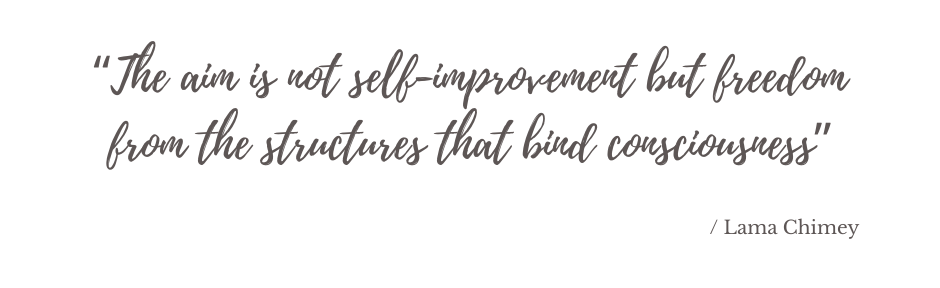

Freedom is always available. We can choose what benefits ourselves, others, and the world at large. To simply be, rather than always doing, is an act of wisdom.
Do you like what you are reading? Sign up below for more blog posts.
Busyness has become an accepted excuse for many behaviors. We believe we must have an opinion on everything – from the sky to our shoelaces. But the world does not require our constant commentary. It continues to turn even when we take a moment to relax. Yet, we forget this again and again. We notice it when we worry about trivial matters, let stress dictate our decisions, or get caught in thoughts about things beyond our control.
Thoughts, like clouds, drift in and out of our awareness without requiring our constant judgment. Beyond them, there is always a vast, open sky – a space of clarity and wisdom. Therefore, it is unwise to attach ourselves to every passing thought and believe in everything we think. By adopting an open and lighthearted approach, we allow thoughts to come and go without letting them rule us.
I often refer to the quality of Upeka, or equanimity, in my meditation classes to ground ourselves and gain perspective on our stirred-up emotions and opinions. This practice allows us to continue seeing clearly and follow through on what truly matters.
It is not only okay but liberating to let go and allow things to be as they are. We can always return to our commitments when we choose, holding situations with an open hand instead of a clenched fist. Trying to shape the world according to our preferences is exhausting and unnecessary.
Do you like what you are reading? Sign up below for more blog posts.
Letting go does not mean giving up. It means trusting that wisdom and compassion arise naturally when we stop forcing and start allowing. The mind, unburdened by excessive interference, finds its own balance. It is in stillness that clarity emerges. It is in spaciousness that true strength resides.
Change is inevitable, and it calls us to be both steady and engaged. This is not a time for passivity or apathy. Now, more than ever, we must come together with open hearts and clear minds. Our shared strength and support are vital as we navigate the uncertainties ahead. With wisdom and compassion, we can meet each challenge and embrace the evolving journey of life.
I am deeply grateful that so many of you find inspiration and support in my blog posts. It means a lot to me to be part of your journey. I invite you to practice relaxation and meditation to stay grounded, and join my email list, as it may be one of the more stable ways to stay connected in an ever-changing world. Together, we can continue to explore, grow, and support one another through the ebb and flow of life.
As a leader, you hold the power to shape the culture, impact, and future of your organization. With the start of a new year, there is no better time to reevaluate your approach to leadership and lay the groundwork for personal and professional growth. Drawing inspiration from Buddhist principles, the concept of the Three Doors—thought, action, and speech—offers a framework to guide your leadership journey with authenticity, integrity, and compassion.
Door 1: The Door of Thought
Wise leadership begins with wise thinking. As a leader, your decisions shape the path of your team and organization. Cultivate conscious awareness of your thoughts, biases, and values, aligning them with what benefits not just the organization but society as a whole. Reflect on your motivations, ensuring they are grounded in ethical principles that prioritize the greater good.
Do you like what you are reading? Sign up below for more blog posts.
By walking through the door of thought, you create an environment rooted in truthfulness and trust. Your mindful approach inspires your team to adopt ethical conduct and nurtures a culture of integrity and shared purpose.
Door 2: The Door of Action
Your actions speak louder than words and have the potential to transform your workplace. Align your behavior with wise and ethical standards, demonstrating empathy, compassion, and inclusivity. Lead by example, fostering an environment where every individual feels valued, seen, and supported.
Do you like what you are reading? Sign up below for more blog posts.
When your actions reflect wisdom, you inspire collaboration, teamwork, and personal growth. Your example becomes a guiding light, cultivating a nurturing space where individuals and teams thrive under your leadership.
Door 3: The Door of Speech
Words are powerful tools for building trust and harmony within an organization. Prioritize clear, empathetic, and ethical communication. Encourage open dialogue, listen actively, and embrace diverse perspectives. By doing so, you resolve conflicts and foster a culture of mutual respect and collaboration.
Do you like what you are reading? Sign up below for more blog posts.
Through the door of speech, you strengthen relationships and enhance team dynamics. Your commitment to wise communication creates an inclusive atmosphere where your team feels empowered and connected to a shared vision.
Start Fresh: Lay the Foundation for Your Growth This Year
The new year is a perfect opportunity to embrace this framework and step into your role as a wise and compassionate leader. By unlocking the three doors of thought, action, and speech, you inspire your team to follow your example, creating an organization where integrity and positive change flourish.
Do you like what you are reading? Sign up below for more blog posts.
To help you lay the foundation for this transformation, join us this weekend in Stockholm for an inspiring TriyanaMeditation Workshop – New Year, New Beginning. This event is designed to support you in cultivating clarity, compassion, and balance as you begin the year. Together, we’ll explore how meditation can enhance your personal life and leadership style and set the stage for a more intentional and impactful 2025.
Take the First Step Toward Wise Leadership Your leadership has the power to shape not only your team but the entire culture of your organization. Let this be the year you lead with authenticity, inspire positive change, and create a workplace that thrives on trust and integrity.
Do you like what you are reading? Sign up below for more blog posts.
Don’t miss this opportunity to deepen your meditation practice and transform your approach to leadership. Reserve your spot for the workshop today, and start the year with purpose, clarity, and wisdom.
The New Year, New Beginning workshop is open to new as well as seasoned meditators alike.
The teachings on impermanence remind us of a truth we often shy away from: nothing lasts forever. We live amidst constant change, and the things we hold dear, the places we call home, even the people we cherish, are all subject to time and transformation. Can wildfires awaken us to the impermanence of our precious lives? This realization is not meant to bring despair but to awaken us to the preciousness of each moment and the urgency of living with intention.
The recent wildfires consuming parts of Los Angeles—a city I once called home—serve as a vivid reminder of this truth. A place that shaped countless lives, including my own, now faces an unrelenting force of nature. These fires strip away the familiar, leaving behind only ash and memory. Yet, within such loss lies a stark clarity: life is fragile, unpredictable, and achingly precious. We cannot take anything or anyone for granted.
Do you like what you are reading? Sign up below for more blog posts.
Living Fully Amid Change
Buddhist teachings encourage us to meet impermanence with courage and clarity. It is not about clinging to what will inevitably change but about opening our hearts to the beauty of what is here, right now. The joy of a conversation, the kindness of a stranger, the simple act of breathing—all these moments become profoundly meaningful when we recognize their impermanence.
When we embrace this truth, we begin to see each day as an opportunity—a chance to grow, to connect, and to deepen our understanding of ourselves and others. By releasing our grasp on what cannot be held, we make space for renewal and transformation, for fresh beginnings amid the remnants of the past.
Do you like what you are reading? Sign up below for more blog posts.
Impermanence also calls us to cultivate resilience and compassion. When life consumes what we love, it is our inner strength and our care for one another that carry us through. A whispered word of comfort, the quiet presence of a friend, or the shared silence of meditation can transform pain into connection and growth. How we live—how we choose to treat others and how we care for ourselves—matters deeply.
Seizing the Moment
There is no better time than now to live fully and authentically. If there is someone you’ve been meaning to reconnect with, reach out. If there’s a dream you’ve been putting off, take the first step. If gratitude has been overshadowed by routine, pause and reflect on the gifts you already have. These actions, however small, are the seeds of a meaningful life.
Do you like what you are reading? Sign up below for more blog posts.
If you want to have my support and the support of a meditation community, consider joining us for the workshop Fresh Start, New Beginning, January 19th in Stockholm. Together, we will listen inward, set our intentions forward, and lay the groundwork for a year of meditation ahead. This workshop is designed to help you align with your deeper aspirations, offering a sacred space to reflect and renew. Be the beacon you want to be in life by committing to your inner work. Regular Triyana Meditation classes in Stockholm begin in February—a perfect opportunity to nurture your practice and connect with others on the path. By building a foundation of consistent meditation, you can strengthen your ability to navigate life’s inevitable changes with grace and purpose.
A Call to Reflect and Act
When the world shifts, we are reminded not only of what can be lost but also of what can be gained: a deeper appreciation for life’s fragility and a renewed commitment to live with purpose. Are we living in alignment with our values? Are we expressing the love and gratitude we feel? Are we stepping forward with courage and clarity?
This is not a call to perfection but a call to presence. When we embrace impermanence, we stop sleepwalking through life. We wake up to its vibrancy, its urgency, and its infinite potential. Each day, each interaction, and each breath becomes an opportunity to create meaning.
Do you like what you are reading? Sign up below for more blog posts.
May we all learn to cherish each moment, to seize opportunities while they are present, and to hold one another close, knowing that nothing—and no one—is guaranteed to stay. May we move forward with open hearts, clear intentions, and a willingness to embrace the painful yet meaningful lessons of impermanence.
Join the Journey
If you feel inspired to take the next step in your meditation journey, join us for our upcoming events. The Fresh Start, New Beginning workshop offers a profound way to start the year with clarity and intention. Our regular Triyana Meditation classes in Stockholm, starting in February, provide a supportive environment to deepen your practice and anchor your inner work. Together, we can face life’s changes with strength, resilience, and compassion.
The start of a new year brings the perfect opportunity to reflect, reset, and set intentions for the path ahead. This moment offers a rare opportunity to ask ourselves: How do I want to live? What qualities do I want to cultivate? What would it mean to live with greater clarity, compassion, and balance?
Do you like what you are reading? Sign up below for more blog posts.
For those seeking clarity, compassion, and stability in their lives, meditation offers a transformative foundation. Not as a quick fix but as a lifelong journey. Meditation is a practice that nurtures the qualities we most deeply seek: peace, resilience, and a connection to what truly matters. Yet, starting and sustaining a meditation practice isn’t always easy. It requires not only commitment but also an understanding of the deeper principles that make it meaningful and transformative.A consistent practice doesn’t just calm the mind—it becomes a way to grow, transform, and navigate life’s challenges with wisdom and equanimity.
Do you like what you are reading? Sign up below for more blog posts.
Triyana Meditation draws inspiration from the three schools of Buddhism: Theravāda, Mahāyāna, and Vajrayāna. These schools each offer profound insights and techniques to help us overcome obstacles and deepen our connection to ourselves and the world around us. I will delve deeper into this in my upcoming in-personworkshop, Fresh Start – New Beginning, but here’s a glimpse of the foundational principles that can inspire and sustain your meditation practice:
The Three Pillars of Triyana Meditation
The Theravāda Path: Turning Inward The journey often begins with a realization: the pursuit of worldly happiness never truly satisfies. This path invites us to turn inward, seeking a life that is not only happier but also more meaningful. It’s about cultivating clarity of mind, letting go of distractions, and discovering inner peace.
The Mahāyāna Path: Extending Compassion As we progress, we see that everyone shares the same desire for happiness and freedom from suffering. The Mahāyāna perspective broadens our intention, encouraging us to use what we learn not just for ourselves but to benefit others. Through this, compassion becomes the driving force of our practice.
The Vajrayāna Path: Transforming Obstacles Life is full of challenges, but the Vajrayāna path teaches us to transform obstacles in their place. Anger can be turned into clarity, desire to contentment, ego-pride into equanimity. Instead of avoiding difficulties, we learn to meet them head-on and use them as fuel for growth.
These principles form the foundation of Triyana Meditation, blending the wisdom of all three schools into a practice that is both transformative and practical.
The Power of Philosophy in Practice
Understanding the philosophy behind your meditation practice is like adding fuel to the fire of your intention. It turns a simple act of sitting still into a profound journey of self-discovery and transformation. When you understand why you’re practicing—whether it’s to cultivate peace, support others, or overcome your challenges—you gain a sense of direction and purpose. This clarity keeps you anchored when distractions arise or when the practice feels difficult or stagnant.
Do you like what you are reading? Sign up below for more blog posts.
Philosophy provides context to the techniques, helping us move beyond seeing meditation as just a tool for relaxation. It becomes a way of life—a lens through which we approach everything, from our relationships to our work and daily decisions. By reflecting on the deeper principles of Triyana Meditation, such as compassion, clarity, and transformation, we align our practice with values that resonate deeply, making it not just a habit but a meaningful and transformative journey.
The Strength of Community
If you’ve ever tried to establish a meditation practice on your own, you know how isolating it can sometimes feel. Sitting in silence can be powerful, but without a teacher and the support of others, it’s easy to lose momentum or feel disconnected from the larger picture. That’s why community is so powerful—it reminds us that while meditation is deeply personal, it is not something we have to do alone.
Do you like what you are reading? Sign up below for more blog posts.
Practicing together creates a shared sense of purpose and connection. In a community, we hold space for each other, encouraging and inspiring one another to keep going, especially during challenging times. The collective energy of a group amplifies the benefits of meditation, making the experience richer and more fulfilling. Community also fosters accountability and provides a safe space to share insights, ask questions, and grow together. Through this shared journey, we realize that by supporting each other, we all progress further along the path.
How to lay a sustainable foundation for your meditation practice in the year ahead.
The three pillars of Triyana Meditation and how they can guide your path.
A transformative guided meditation to release old patterns and embrace the new with clarity and compassion.
Workshop Details:
Location: Yoga Shakti, Högbergsgatan 30A, Södermalm, Stockholm
Date & Time: January 19th, 12:00 PM – 3:00 PM
This workshop is designed to provide both beginners and experienced practitioners with tools, insights, and a supportive space to set the tone for a meaningful meditation year.
Whether you choose to join the workshop or embark on your practice at home, let this be the year you build a meditation practice rooted in clarity, compassion, and transformation. Embrace the wisdom of the Buddhist path, and let Triyana Meditation guide you toward a happier, more meaningful life.
Do you like what you are reading? Sign up below for more blog posts.
Together, let’s create a foundation that will support us, inspire us, and carry us forward in the months ahead as we need each other, our good intentions and stable minds more than ever.
Here’s to a year of growth, connection, and peace.
The Light in the Darkness In Sweden, December is a time when the sun offers only fleeting visits. The days are short, the nights long, and the darkness pervasive. Yet, amidst this, we celebrate Lucia—a luminous symbol of hope, courage, and the returning light. The image of a white-clad figure crowned with candles walking through the dark is as poignant as it is beautiful.
This tradition resonates deeply with Buddhist teachings on Buddha nature, the pure and radiant essence that lies within all beings. Just as Lucia’s light pierces the physical darkness, the realization of our inner light dispels the shadows of ignorance, revealing the spacious, luminous nature of mind.
A Memory of Light and Song Decades ago, during my time at acting school, I was given the honor of playing Lucia. Dressed in my grandmother’s wedding gown, I walked gracefully through the school’s corridors, a procession of classmates behind me. Their voices, clear and angelic, sang the traditional hymns of Lucia, filling the air with something timeless and sacred.
Do you like what you are reading? Sign up below for more blog posts.
Carrying the light felt symbolic of something far greater than myself. It was as if the act of walking—surrounded by music, love, and hope—was a reflection of the spiritual journey I was about to take. In that moment, I felt deeply connected to something beyond words: the unbroken, luminous potential within each of us.
The Path to Realizing Buddha Nature In Buddhism, Buddha nature is not something we attain but something we uncover. It is the innate, spacious clarity of our mind, present in all beings regardless of circumstances. Just as the light of Lucia shines through the darkness, our Buddha nature is always there, waiting to be recognized.
Do you like what you are reading? Sign up below for more blog posts.
Here are some practices to help you realize this inner radiance and spacious nature:
Meditate on Stillness Sit quietly and focus on your breath. As you breathe in, imagine spaciousness expanding within you; as you breathe out, let go of tension, thoughts, and distractions. Allow the mind to settle naturally into its clear and luminous state.
Reflect on Interconnectedness Recognize that your inner light is not separate from the world around you. Spend time contemplating how your thoughts, actions, and energy influence others and how their light uplifts you in turn.
Practice Loving-Kindness Radiate warmth toward yourself and others. Begin with yourself: silently repeat, “May I be happy, may I be peaceful, may I awaken to my inner light.” Extend this wish to others, imagining their own inner light shining brightly.
Observe Nature Spend time in nature, rest from your phone for a while, take a walk noticing how light and space exist effortlessly. Whether it’s the play of sunlight on snow or the vastness of a winter sky, let these natural elements remind you of the spacious clarity of your mind.
Embrace the Shadows Just as Lucia walks into the darkness, we can face our own shadows with courage. Bring self-compassion to your fears, doubts, and suffering. These experiences are not obstacles to your Buddha nature—they are opportunities to reveal it.
Hope, Warmth, and the Light Within Lucia is a tradition steeped in warmth and beauty, offering solace in the year’s darkest days. Her light reminds us that no matter how deep the shadows, the dawn will come. Similarly, the realization of Buddha nature is a return to our truest self, where light and spaciousness are infinite and unchanging.
Do you like what you are reading? Sign up below for more blog posts.
May this season inspire you to walk gracefully through life’s corridors, guided by your inner light. And may your practice, like Lucia’s procession, illuminate the world around you, bringing hope, warmth, and joy to all beings.
In a world overflowing with options and endless distractions, the restless mind craves novelty. It is easy to treat meditation like a collection of shimmering jewels—sampling one, then another, dazzled by their surfaces but never unlocking the treasures within. Yet, the essence of meditation lies not in skimming across the waves but in diving deeply, allowing the ocean’s quiet mystery to envelop you.
Do you like what you are reading? Sign up below for more blog posts.
For beginners, it is natural—and even encouraged—to explore. Like bees seeking nectar, we flit from flower to flower, searching for what feels right. But eventually, if we are to taste the true sweetness, we must settle on a single bloom and return to it, again and again, with unwavering attention.
Why Depth Matters
Meditation isn’t about finding peace alone, peace is only part of the journey, and a pre-requisite to go deeper and finding treasures of insight. Meditation isn’t about managing stress—it’s a path to profound understanding and awakening. Meditation is not merely a practice; it is a journey inward, a return to our original nature. To go deep is to confront the truth of your being—the beauty, the ache, the infinite vastness. This cannot be rushed or discovered through surface-level dabbling. Depth demands commitment.
Do you like what you are reading? Sign up below for more blog posts.
The deeper you go, the more the layers of the mind unfold:
• First, you meet restlessness and resistance, the mind’s ceaseless chatter and doubt. These are not barriers but gates, inviting you to go further.
• Then comes stillness, not as an absence, but as a living, breathing presence that holds you. Here, insight arises—not from thought, but from a wisdom that emerges like light through the cracks.
• Finally, the path disappears, and you see that the destination was never elsewhere—it was always within you.
In Buddhist traditions, we call this the practice of going beyond. Beyond distraction. Beyond doubt. Beyond self.
Triyana Meditation: A Path for Depth Seekers
Triyana Meditation is not a one-size-fits-all approach. It is a system rooted in the profound teachings of Buddhism’s three great vehicles:
• Theravāda, which offers the grounding of discipline and clarity, like the roots of a great tree.
• Mahāyāna, which opens the heart to compassion as vast as the sky.
• Vajrayāna, which reveals the luminous essence of all things, hidden in plain sight.
Do you like what you are reading? Sign up below for more blog posts.
These traditions are not separate streams but tributaries flowing into the same river. In Triyana, we guide you step by step, inviting you to journey deeper, honoring where you are while offering tools to explore what lies beyond.
Your Invitation to Go Deeper
The Triyana Meditation Teacher Training begins on April 4th, 2025. This program is primarily for teachers and coaches, but open for anyone who are ready to put in the work because the yearning to uncover meditation’s true depth—through a journey of study, practice, and awakening, is calling you to go deeper.
Enrollment is now open, with a Super Early Bird discount available until December 13th, 2024.
Commit to a single path, and the path will reveal its endless expanse.
Do you like what you are reading? Sign up below for more blog posts.
As one teacher said:
“If you chase two rabbits, you will lose them both. Chase one, and it will lead you to the forest’s heart.”
Take this moment. Choose the well you will dig. Go deep enough, and the living water will rise to meet you.