
Leadership as Sacred Space: Buddhist Teachings for Conscious Impact

“You do not have to live in the world you are given.”
Margaret Atwood

In a culture obsessed with doing, measuring, and maximizing, leadership is often reduced to performance. Metrics replace meaning. Urgency outshouts wisdom. But what if leadership is something else entirely — not a role, but a sacred space?

In Buddhist philosophy, particularly within the Vajrayana tradition, space (ākāśa) is not empty in a nihilistic sense. It is full of potential — a living field of awareness in which all things arise, unfold, and dissolve. A true leader is not someone who fills this space with noise and control. Instead, a true leader honors the space. They cultivate it and invite others into it.

Do you like what you are reading? Sign up below for more blog posts

This leadership doesn’t shout. It listens. It doesn’t force. It allows. It doesn’t simply direct — it serves. From this view, leadership becomes an ethical and spiritual practice: the art of making space for transformation.


Space as a Leadership Principle

To lead from sacred space means leading from presence. It means offering your team, your clients, your community — even your own mind — the room to breathe. To not react from fear, but respond from clarity.

Do you like what you are reading? Sign up below for more blog posts

This doesn’t mean being passive. It means becoming deeply attuned. Spacious leadership asks:

  • What is really needed right now?
  • What is arising naturally, and what am I trying to force?
  • Who would I be as a leader if I trusted the unfolding?

When we drop our agendas and rest in awareness, we begin to feel the textures of space. From that space, the right action can emerge. Action that isn’t rushed. That isn’t ego-driven. But that lands with precision and kindness.

Do you like what you are reading? Sign up below for more blog posts

As the great master Dzigar Kongtrul Rinpoche puts it:

“In the ordinary world, people seek power in order to control others.
In the sacred view, the greatest power is to control oneself.”

This inner discipline requires staying connected to openness. It avoids contracting into reactivity. This approach is one of the highest forms of leadership. And it’s rare. Because it takes courage to lead from space, when the world demands speed.


Time: Not a Scarcity, but a Teacher

In Buddhism, time isn’t a linear march toward productivity. It’s the unfolding of karma — a dynamic play of causes and conditions. When we lead with an awareness of time as interdependence, we stop trying to dominate the clock. We become stewards of rhythm.

This reframing is radical. Suddenly, the pauses matter as much as the plans. Stillness becomes part of the strategy. Reflection is no longer a luxury, but a necessity.

Do you like what you are reading? Sign up below for more blog posts

A conscious leader learns to move in rhythm with life — not ahead of it, and not behind. And from that rhythm, they create trust, clarity, and authentic impact.


Triyana Leadership: A 3-Month Journey into Sacred Space

This is the leadership we practice in the Triyana Leadership Program. It is a 3-month journey for those who want to lead from something deeper than ambition.

It’s for leaders, teachers, creatives, coaches, and change-makers who are ready to:

  • Explore the spacious ground of their own awareness
  • Act with more clarity and compassion under pressure
  • Build a leadership presence that is resilient, intuitive, and wise
  • Align strategy with sacred view

I don’t teach tips and tricks. I offer transformation. This program is rooted in Buddhist teachings. It provides real-world tools for integration. The program helps you hold space for yourself and others. This is not just a technique but a way of being.

Ready to redefine leadership — not as a hustle, but as a path?
👉 Learn more and apply here


“When there is no more grasping, space appears. When space appears, wisdom dances.”
Vajrayana teaching

Do you like what you are reading? Sign up below for more blog posts

Leadership is not about taking up more space.
It’s about making space sacred.
And in that space, something extraordinary can arise.


Warm Greetings,

Lama Chimey

Get Dharma Blog Posts straight to your device
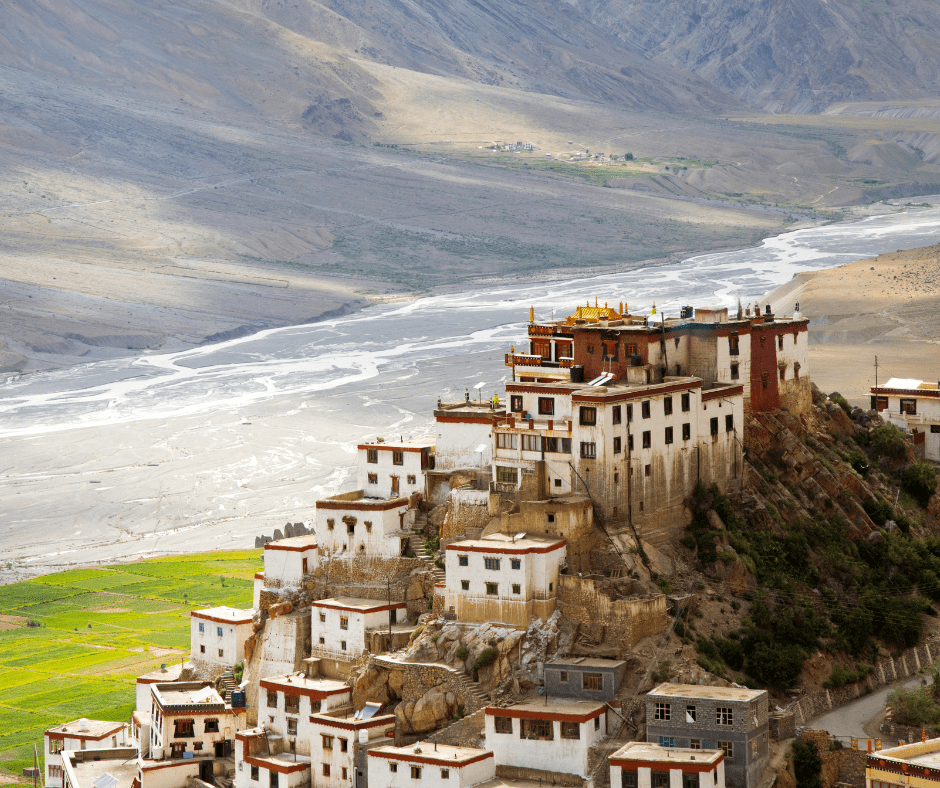
Three Gentle Shifts Toward a Buddhist-Inspired Lifestyle

I didn’t stumble into Buddhism after a crisis or dramatic life event.
There was no breaking point, no overnight awakening.

I was a teenager—already drawn to the philosophical and contemplative—and Buddhism felt like a language I somehow already understood. Not in its rituals or cultural expressions at first, but in its view of mind, of suffering, of possibility.

Over time, that quiet recognition deepened into study, practice, and eventually full ordination. I lived as a Buddhist nun for twelve years. And although I’ve since returned to lay life, the path continues—inner, steady, often invisible.

Do you like what you are reading? Sign up below for more blog posts

To speak of a “Buddhist lifestyle” is delicate. In the Vajrayana tradition, we tread lightly around titles. We don’t declare ourselves practitioners as if it were a badge. Instead, we return again and again to the ground of practice—not to prove something, but because we’ve seen what it opens.

This isn’t a prescription. It’s a reflection.
Here are a few threads from the fabric of this path.


1. The Choice Not to Burn

There’s a story I return to, again and again—not as a myth, but as a mirror.

Akshobhya, the blue Buddha of the eastern direction, made a vow:

Never to act from anger.

Not to suppress it. Not to pretend it wasn’t there. But to meet it so fully, so honestly, that it would have nowhere to root. In Vajrayana, he embodies the transmutation of aggression—not into passivity, but into clarity, mirror-like awareness. Still water. Unshaken.

Most of us aren’t there. But we can begin.

Do you like what you are reading? Sign up below for more blog posts

Someone offends you. Something feels unfair. And the body tenses, ready to react. In that very moment, before words form—there is breath.

Take one.
Then another.
Place a hand gently on your belly or chest, and ask:

“What part of me needs presence right now?”

This is not delay. It is discipline.
It is stepping into the luminous field before the mind collapses into habit.

Do you like what you are reading? Sign up below for more blog posts

To live this way doesn’t mean you’ll never feel anger.
It means you may not be owned by it.

And in a world addicted to outrage, your choice to pause is an act of fierce compassion.


2. Letting the Excess Fall Away

In the West, we tend to confuse fullness with meaning. But a Buddhist lay life often begins by making space—not out of asceticism, but to hear what’s already speaking beneath the noise.

Letting go isn’t only about possessions. It’s about the identities we polish, the stories we carry, the opinions we hold so dear, the arguments we rehearse silently for years.

You might begin with:

  • Saying no to a conversation that drains.
  • Ending a task before it’s perfect.
  • Placing your phone down without checking it one more time.

Do you like what you are reading? Sign up below for more blog posts

Simplicity in Vajrayana isn’t just functional—it’s symbolic. Every gesture, every object, every word can become a mudra, a mantra, a gateway. But only if it’s chosen. Only if you are present to it.

When we let the excess fall away, even the most ordinary moment can become an offering.


3. Walking in Compassion, Not Concept

It’s easy to talk about compassion. Harder to live it when you’re exhausted, or annoyed, or wounded in places you’ve learned to hide even from yourself.

But this path asks us to meet it all—without turning away.

Not to indulge. Not to collapse. But to remain.

In Vajrayana, we are invited to see beings not as they appear, but as expressions of awakened nature, however obscured. This isn’t idealism. It’s a practice of perception. A kind of disciplined tenderness.

Do you like what you are reading? Sign up below for more blog posts

Try beginning the day with a quiet wish:

“May I meet this moment with warmth, openness, and a steady heart.”

Then extend that same aspiration to someone who unsettles you.
Not to excuse behavior. But to stay awake to the truth of interbeing.

Compassion isn’t sweet. Not always.
Sometimes it’s quiet endurance.
Sometimes it’s fierce boundary.
But always, it’s a refusal to exile parts of reality—even the uncomfortable ones.

To live that way is not perfection. It is participation.

Do you like what you are reading? Sign up below for more blog posts

If you’d like to deepen into this practice of compassion and loving-kindness, I’ve made one chapter from my eBook Triyana – Keys to Sustainable Transformation available as a free gift.
It’s called Loving-Kindness: Fierce and Tender, and it’s an invitation to work with the heart—not to soften it, but to strengthen it with presence.

📥 Click here to receive your free chapter »


Where the Path Continues

A Buddhist lifestyle isn’t something you adopt. It’s something you return to—in the middle of a sentence, in the turning of a spoon, in the way you say goodnight.

It’s not about self-improvement. It’s about remembering the nature of mind, again and again, until that remembering starts to shape your gestures, your choices, your gaze.

Sometimes it looks like a shrine and a bell.
Sometimes it looks like washing your face slowly in the dark.

Do you like what you are reading? Sign up below for more blog posts

But underneath it all is the same invitation:
To wake up.
To be kind.
To live as though every moment is worthy of full attention—because it is.

And maybe, if we’re lucky, to meet the world with just enough stillness
to see it clearly.

With you,
Lama Chimey


Get Dharma Blog Posts straight to your device

Sacred Sound in a Shifting World: A Buddhist Minister Reflects

It was one of those rare Swedish summer days when the sun actually stays and the sky feels like it might never let go of the light. I took the boat out to one of the islands in the Stockholm archipelago. The sea was full of movement—waves catching light, wind skimming the surface.

Later that evening, I found myself sitting in a small, candlelit wooden church listening to Lise & Gertrud perform. The space was simple, old, loved and full of presence.

They performed a carefully selected mix of songs, arranged in their own unmistakable tone—both dynamic and humorous, yet deeply grounded. What struck me was how relevant this particular setlist was: the lyrics spoke directly to the world we live in now —songs that resonated with what matters most.

Do you like what you are reading? Sign up below for more blog posts

I sat there and cried together with others. It touched something real and it reminded me of what I work with every day: the power of sound, and especially of mantra.


Mantra Explained: Mind, Sound, and Transmission

The word mantra comes from Sanskrit: man means “mind,” and tra means “tool” or “vehicle.” But mantras aren’t tools in the ordinary sense. There’s a reason we don’t translate mantras the way we do other texts. Their power lies in the sound itself—in the breath, the vibration, the repetition. When chanted with sincerity, they shape the mind without requiring the intellect. They are sound that carries power through repetition, breath, and lineage. Mantras protect the mind.

In the Tibetan Buddhist tradition, mantras are considered living syllables. They’re not recited to produce a feeling, or to decorate silence. They’re practiced to align body, breath and awareness with qualities that go far beyond personal emotion.

Do you like what you are reading? Sign up below for more blog posts

Some mantras are gentle. Others are fierce. All are transformative. Mantras move through you like sound shaped into lightning—sometimes soft, sometimes blazing, always alive. They don’t require belief. But they do ask for presence in the here and now. And while anyone can technically repeat a mantra, it’s good to receive transmission from an authentic teacher if you feel drawn to one. Transmission doesn’t make it “more real”—but it connects you to the source, the lineage, the intention. Whether or not you use a mala, it helps the practice settle more deeply. The mala can support rhythm and focus, but the mantra itself does the work—chanted with intention, it carries its effect regardless of props.

One of the mantras I’ve practiced is:

OM AH HUNG BENZA GURU PEMA SIDDHI HUNG

It’s the mantra of Padmasambhava, who is regarded as the Second Buddha in Tibet. He brought the tantric teachings to Tibet in the 8th century, and his presence is invoked in this mantra for protection, insight and unwavering clarity.

I chant this mantra in many different ways—softly, melodiously, with full voice, or quietly under my breath. My recorded version is arranged as a bolero, with a full rock’n’roll drumset. This was never about making music in the traditional sense—it was about entering into relationship with sacred sound. Offering something real. You can listen to it here:
👉 Listen to my recording of the song Padmasambhava on Amazon

Do you like what you are reading? Sign up below for more blog posts

It’s not a traditional version. But it’s true to my practice and blessed by the masters. Mantra doesn’t need to be performed. It needs to be practiced, embodied, and offered.


Belonging Through Sound
Mantras are not concepts. They are not there to be explained or understood in the usual way. They are patterns of sound, passed on through living traditions, and practiced for their direct effect. Mantras are highways to the divine—cutting through layers of thinking and touching our essence.

Over time, mantra becomes less about doing something and more about resting in the moment. Not because it’s always peaceful, but because it’s real. As with all true practices, it’s not about forcing anything. It’s about showing up—again and again—until something shifts.

Do you like what you are reading? Sign up below for more blog posts

And sometimes, in a small church, far out in the archipelago, that shift begins with tears and ends with a strong sense of belonging.

With waves still in the body, lyrics still in the chest, moonlight spilling over the trees—what rises in me is a deep sense of grounding into the essence of being.

Not to a category.
Not to a belief.
But to sound itself.


Lama Chimey
Buddhist Minister | Founder of Triyana Meditation

Get Dharma Blog Posts straight to your device
Interdependence Day — A Jataka Tale for the 4th of July

AI Generated image


While fireworks crackle across the summer sky and families gather to celebrate independence across the United States, there’s an ancient story from the Buddha’s past lives that offers a gentle nudge toward a deeper kind of freedom — one rooted not in separation, but in connection. Here in Europe, we may not be celebrating the 4th of July ourselves, but it’s a perfect moment to reflect on the universal values of compassion and interdependence. This year, let’s borrow a page from the Jataka tales and reimagine this American holiday as Interdependence Day — a celebration of the beautiful web of life we’re all part of.


The Selfless Monkey King
Once, in a distant forest, the Bodhisattva was born as a wise and noble monkey king. He ruled over thousands of monkeys who lived in peace near a river where a delicious mango tree grew. These mangoes were so sweet that the monkey king always made sure none of them fell into the river — for he knew that if humans discovered the fruit, danger would follow.

Do you like what you are reading? Sign up below for more blog posts

But one day, a ripe mango did fall, floating downstream until it reached the king of a nearby kingdom. Tasting its rare sweetness, the human king sent his men upriver to find more. When they stumbled upon the tree, they prepared to kill all the monkeys to claim it.

Seeing the danger, the monkey king acted swiftly. He climbed to the highest tree, spotted a cliff across the river, and with his strong body, formed a living bridge from one tree to another, allowing his monkey subjects to cross to safety. In the end, exhausted and injured, he was found by the human king, who was so moved by the monkey king’s compassion that he ordered his own people to care for him with the utmost respect.

This tale reminds us that leadership, true freedom, and even survival are not about dominating others — they arise through sacrifice, cooperation, and love.


What the Monkey King Knew: We Are Not Alone
The Jataka tales are full of kings, animals, and ordinary people who wake up to a great truth: no being exists alone. The monkey king didn’t just save his people out of duty. He understood that his life was tied to theirs — that in saving them, he too was upheld.

Do you like what you are reading? Sign up below for more blog posts

This echoes the Buddhist concept of pratītyasamutpāda, or dependent origination — the idea that everything arises in dependence upon multiple causes and conditions. Your breath, your lunch, your laughter today — none of it exists independently. We are co-created by everything: the trees, the sun, the kindness of strangers, and even the insects we try not to step on.


Interdependence Day: A Lighthearted Reframe
So, what if we all take a moment to mark 4th. of July as Interdependence Day? You’d still get to eat pie and light sparklers — but with a slightly softer heart.

Do you like what you are reading? Sign up below for more blog posts

You might thank the earthworms for your garden salad, the people who fixed the roads so you could get to the party, or the trees for the shade at your picnic. You might notice that the joy you feel is amplified not when you’re standing alone, but when you’re laughing with someone else, or quietly sharing a watermelon slice.

Freedom doesn’t mean cutting ties — it means seeing clearly that our well-being is woven into everyone else’s. That we rise, like the monkeys crossing that living bridge, together.


Lighting the Fireworks of Compassion
This July 4th, as friends in the U.S. celebrate national freedom, may we all — wherever we are — celebrate not just the independence of nations, but the interdependence of all beings. May we become like the monkey king — courageous and wise, willing to extend ourselves for others because we recognize we were never separate to begin with.

Do you like what you are reading? Sign up below for more blog posts

Go ahead and light your fireworks — just maybe say thank you to the stars while you’re at it. They’re part of your story too.

Lots of love,

Lama Chimey

Get Dharma Blog Posts straight to your device

5 Ways to Lead From Inner Wisdom—Even in Flip-Flops

Your Leadership Doesn’t Take Time Off

Summer offers a rare invitation: to slow down, to let go of structure, to reconnect with something deeper than deadlines. Yet even in rest, life continues to unfold—sometimes gently, sometimes unexpectedly. A decision must be made. A message arrives. A loved one struggles. Or perhaps the shift is internal: restlessness, re-evaluation, or a question you didn’t know you were carrying.

Do you like what you are reading? Sign up below for more blog posts

From a Buddhist perspective, leadership is not confined to a particular role or setting. It’s an ongoing relationship to how we meet reality—moment by moment. Whether you’re hosting a gathering, handling a family situation, or quietly walking in nature, your capacity for wise and compassionate leadership is alive and available.


Leading Through the Unpredictable

Life’s unpredictability doesn’t pause for your vacation. A key Buddhist teaching is that impermanence—anicca—is not a disturbance, but a basic truth of reality. Plans change, emotions arise, and conditions shift. The question is not how to avoid this, but how to meet it with awareness.

Do you like what you are reading? Sign up below for more blog posts

A grounded leader recognizes that uncertainty is not the opposite of control—it’s the context in which inner stability becomes most meaningful. Your real power lies not in preventing change, but in staying connected to inner clarity when change arrives. That’s when your leadership becomes trustworthy—not only to others, but to yourself.


Who Are You Without the Title?

It’s common to think of leadership as something tied to status, responsibility, or visibility. But from a dharmic view, true leadership is relational—it emerges through how we show up in each moment, regardless of who is watching or what role we’re in.

Do you like what you are reading? Sign up below for more blog posts

When the title is set aside, what remains is your quality of presence. Your ability to listen, to reflect, to hold space for complexity without collapsing. These aren’t skills you perform; they are capacities you cultivate. Summer, with its looser structure, can be the perfect training ground for this quieter, more integrated form of leadership.


5 Ways to Lead From Inner Wisdom—Even in Flip-Flops

  1. Make Space for Stillness
    Even during vacation, your nervous system may still run on internal deadlines. Make space each day for stillness. This might be seated meditation, a walk in silence, or simply turning your attention inward for a few breaths. Leadership grounded in clarity begins in quiet.
  2. Respond, Don’t React
    When something unexpected arises—a change in plans, a moment of tension—observe your impulse. Do you move to control, avoid, or solve? Buddhist practice invites us to pause. A brief moment of awareness can shift you from habit into choice.
  3. Let Go of the Role, Not the Practice
    Stepping away from work doesn’t mean stepping away from presence. Without the usual structure, your practice can become more natural, integrated, and sincere. Mindfulness, kindness, and wise action are not things we do—they are ways of being.
  4. Root Yourself in Values, Not Outcomes
    Leadership often orbits around results. But from a dharmic view, it’s your motivation and inner alignment that matter most. Whether you’re navigating a conversation or choosing how to spend your day, let your values—not your agenda—guide you.
  5. Practice Kindness—First With Yourself
    If your vacation doesn’t unfold as planned, meet yourself with the same compassion you would offer a friend. Leadership doesn’t mean being unshakable. It means staying open. Kindness—especially in unpredictable moments—is not weakness; it’s wisdom in action.

Leading From the Inside Out

Leadership is not about being in control—it’s about being in relationship. To yourself. To others. To the ever-changing nature of life. When you cultivate inner steadiness, outer conditions become less defining.

Do you like what you are reading? Sign up below for more blog posts

Rather than trying to ride every wave with ease, what matters most is the depth of your awareness and the intention you bring to each moment. That’s where true leadership arises—from within, regardless of circumstances.

If you’d like a gentle entry point into this perspective, I offer a free excerpt from my e-book on Metta – Loving Kindness. It’s a contemplative companion to deepen your inner clarity and compassion, no matter where you are on your journey.

And if you’re a leader seeking personal guidance and depth in your leadership, you’re welcome to explore my 1:1 offerings here.

Yours in the Dharma,

Lama Chimey

Get Dharma Blog Posts straight to your device
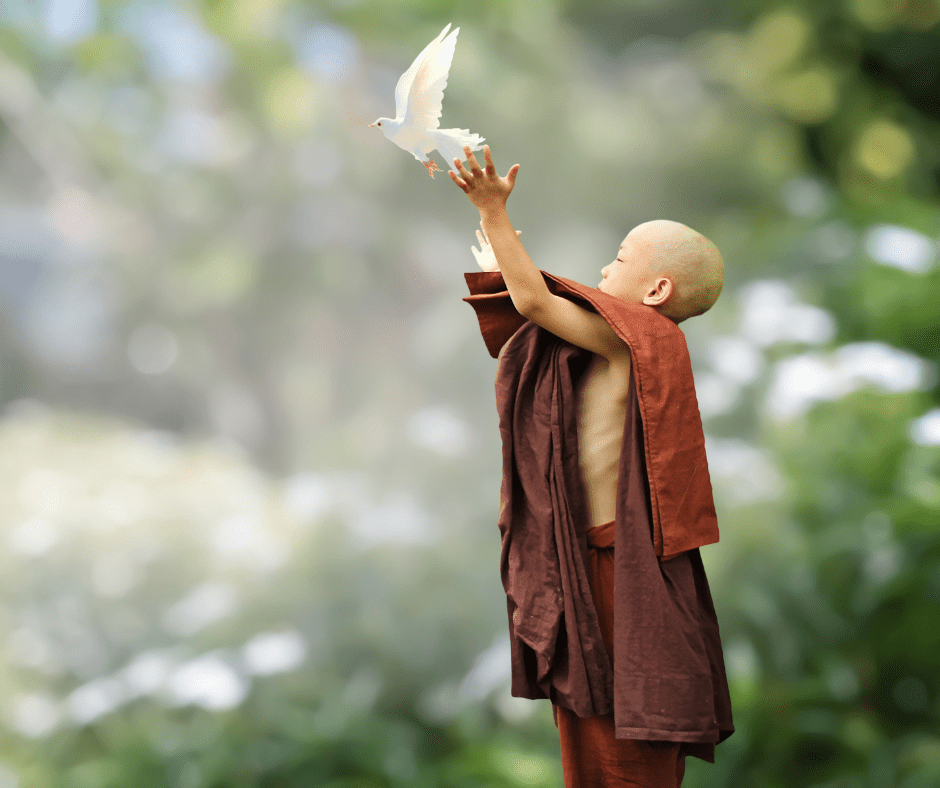
From Fear to Clarity: What Buddhism Teaches About Anxiety and the Mind

The Faithful Companion of the Constructed Self

Fear is a faithful companion of the constructed self. While the monkey mind clings to imagined futures, perceived threats, and the fragile sense of self we spend so much energy protecting. And when fear is left unchecked—when it loops through our inner dialogue, unresolved and unnamed—it quietly germinates into anxiety.

Do you like what you are reading? Sign up below for more blog posts

But Buddhism, as many of you know, doesn’t offer us a feel-good bypass. It doesn’t pat the self-constructed I on the back and reassure it that everything will be fine. Instead, it turns the gaze inward and asks: What is this experience made of? What is its cause? And what happens if we meet it without resistance?

From this perspective, fear is not an enemy to be conquered. It is a phenomenon to be studied with tenderness and interest.

Every Emotion Has a Root

Every emotion, including fear, arises due to a preceding thought. That thought, in turn, comes from a perception—an impression received by the senses and filtered through our habitual patterns. And those patterns? They are deeply rooted in ignorance: the fundamental misunderstanding of who and what we are.

Do you like what you are reading? Sign up below for more blog posts

Anxiety isn’t mysterious from this view. It is the ripple effect of unexamined fear—a wave that keeps returning because we never noticed the stone dropped into the water. And still, we are not asked to fight our emotions. Rather, we are invited to see clearly.

The Gesture of Courage

To trace the arising of fear, to recognize it in real-time, and to allow it space to unfold without pushing it away or identifying with it, is a profound act of love. It is a gesture of courage. Because facing fear without trying to fix it or feed it requires a deep trust in the nature of mind itself.

Do you like what you are reading? Sign up below for more blog posts

We are not our fears. Nor are we the thoughts that give rise to them. But the more lovingly we can stay with these movements—without needing to dress them up or send them away—the more naturally they lose their grip.

The Medicine of Clarity

This is not spiritual sedation. This is not comfort for the created self. It’s the medicine of clarity.

In the warmth of awareness, even fear softens.

For more FREE inspiration visit my FREE Resources here.

Disclaimer

The information shared here is intended to support personal growth and insight. It is not a substitute for professional mental health care, psychiatric treatment, or medical advice. If you are experiencing psychological distress, mental illness, or crisis, please seek support from a qualified healthcare provider.

With kindness,

Lama Chimey

Explore What Meditation Paths are Best for You: Theravāda, Mahāyāna, or Vajrayāna

In our modern meditation landscape, the word meditation has taken on many shapes. We see apps, retreats, and hashtags offering everything from stress relief to spiritual awakening. But behind all this modern accessibility lies an ancient, nuanced map of meditation traditions—each with its own depth, method, and view.

As someone who has walked this path for decades, both as a layperson and later as a monastic, I’ve had the rare privilege of experiencing these traditions from the inside. I practiced Shamatha at a Theravāda monastery in rural England, and sat several 10-day silent Vipassanā retreats long before my ordination. My Buddhist journey began in the Mahāyāna tradition at a Zen center when I was twelve years old. I had been seeking it, consciously, persistently. Something finally resonated. And it has never quite let go.

Do you like what you are reading? Sign up below for more blog posts

Today, my own practice has taken me deep into the Vajrayāna path—known as the Indestructible Vehicle.

As you may know, I now teach from a place that integrates all three main schools of Buddhism—Theravāda, Mahāyāna, and Vajrayāna—within Triyana Meditation. In each guided meditation, different methods from all three schools are blended together in a step-by-step approach. It’s a grounded highway to deep understanding. Of course, all students are on their own path and have different reasons for practicing—but they all take part in the same guided meditations.

In this post, I want to introduce the differences between these approaches, not as a lecture, but as a guide to help you find what truly nourishes you. Each has its gifts. Each has its challenges. But all point in the direction of freedom.

Do you like what you are reading? Sign up below for more blog posts


The Three Vehicles: Three Gateways, One Goal

The ultimate aim across all Buddhist paths is liberation from suffering. Each tradition offers a different lens on how to work with the mind. These are not rigid doctrines—they’re skillful means, suited to different temperaments and phases of life.

Theravāda: Grounded Presence and Insight
This school is often referred to as the “Teaching of the Elders.” It is the most ancient of the Buddhist schools. Theravāda practice is beautifully stripped-down—clean, precise, and rooted in personal discipline. Through Shamatha (calm abiding), the practitioner trains the mind to settle. Then, using Vipassanā (insight), the practitioner observes reality with increasing clarity. This practice eventually gears into samadhi; sensory withdrawal.

Do you like what you are reading? Sign up below for more blog posts

If you’re someone who needs mental clarity, focus, and emotional steadiness, these practices are a profound foundation. They teach you initially how to stay with what is, without running or grasping.

Mahāyāna: Compassion and Interconnection
The “Great Vehicle” expands the view. In Mahāyāna, the aim isn’t just personal liberation but collective awakening. The Bodhisattva path places compassion at the heart of every thought, word, and action.

The Bodhisattva vow means to live for the benefit of all beings. It is not in an abstract sense, but as a daily compass. It reshapes how you relate to everything, from your relationships to your inner critic. Meditation includes Shamatha and Vipassanā, but also analytical contemplations and visualizations that open the heart and dissolve self-centered thinking.

Do you like what you are reading? Sign up below for more blog posts

This path shows up when you’re stuck in traffic and remember others are late too. When someone criticizes you and you ask yourself what might be hurting in them. It’s a lived, practiced compassion—messy, generous, and resilient.

If you long to serve others, the Mahāyāna path offers a deeply relational view of reality. You may feel the weight of isolation. In this path, we awaken together.

This is the path I first met in this lifetime. I started at the age of twelve. I sought out a Zen center and found something that felt unmistakably true.

Vajrayāna: Direct Transformation of Mind
Vajrayāna is also known as the Indestructible Vehicle. It uses powerful methods to transform our ordinary experience into the path itself. These practices—like Tonglen, deity meditation, mantra, and subtle body yogas—are precise tools. They directly address the root of suffering, which is ego-clinging and separation.

Do you like what you are reading? Sign up below for more blog posts

Vajrayāna can be intense, but it’s also deeply alive and poetic. It’s for those who long for transformation at the deepest level—not just temporary calm, but complete inner alchemy.

It’s a bit like letting go of the outer layer of who you thought you were. Only then do you find yourself standing more whole than before. You are alert in the ruins and utterly awake.


Key Meditation Practices at a Glance

Here are a few essential practices and where they fit best:

Shamatha (Calm Abiding)

  • Builds focus and emotional regulation
  • Helps with laziness, restlessness, scattered attention
  • Common across all three vehicles

Vipassanā (Insight Meditation)

  • Sharpens discernment and deepens wisdom
  • Particularly helpful when dealing with repetitive suffering patterns
  • Strongly rooted in Theravāda, but used in all schools

Tonglen (Giving and Receiving)

  • Opens the heart to compassion in real, grounded ways
  • Great for preventing ego-centricity, emotional numbness, and nurturing compassion
  • Core to Vajrayāna and Mahāyāna lojong mind training

Which Practice Is Right for You?

You don’t have to pick a side. This isn’t a competitive team sport where you have to pick sides. What’s most important is to listen to where you are right now. Are you at the beginning of your path? Are you still figuring out what to practice? What is your intention with approaching ancient authentic path?

The beauty of the Buddhist path is its adaptability. And it works as long as you are completely true to yourself and honest about where you’re actually at on your path. You need a guide—someone who can be honest with you, keep you accountable, and help you practice not just what you like, but what you need.

Do you like what you are reading? Sign up below for more blog posts

My own Triyana meditations are designed to meet people where they are, drawing from the strengths of all three traditions. Some students begin with favorising focused calm and mindfulness. Others come in through the heart. And some are ready to dive into symbolic and subtle practices.

What matters is that you practice. Not perfectly. But sincerely. Meditation isn’t about fixing yourself. It’s about discovering the vast, open nature of your mind—and learning to live from it.

Do you like what you are reading? Sign up below for more blog posts

And once you find a path that resonates with you—stick to it. The initial search is natural. However, shopping around endlessly from one practice to another will never give you the depth you’re likely longing for.


Ready to Begin or Deepen Your Journey?

If any of this speaks to you, I offer:

Visit the Meditation Classes & Events Page
Explore My Digital Courses
Texts & Lojong Cards – coming soon

Do you like what you are reading? Sign up below for more blog posts

Soon, you’ll also be able to get your own set of my Lojong cards. They are a beautiful tool. They bring the heart of Mahāyāna and Vajrayāna into your everyday practice.

No matter your background, schedule, or experience level—there’s a practice for you. Let’s walk this path together.

With warmth and blessings,
Lama Chimey

Get Dharma Blog Posts straight to your device
Even Birds Forget: A Bodhisattva Story About Collective Strength

The Clever Quail and the Net of Habit

Sometimes we forget how strong we are—especially when we forget each other.
The Buddha once told a story of a flock of birds caught in a hunter’s net.
It’s one of the Jataka tales. These are stories of his past lives. Like all good Dharma tales, it is not just for birds.
It’s for us. Especially now.

A Story from Long Ago That Still Happens Every Day

Once, long ago, the Bodhisattva was born as a quail.
Yes, a small bird. No grand robes or bells or monasteries. Just feathers and forest and instinct.

He lived in a great flock in the fields. Every morning, as the sun climbed over the treetops, they would leave the ground for safer branches.
The earth was beautiful—but it was also the place of snares.

A bird-hunter came each day with a net. He would cast it across the feeding grounds, trap a handful of birds, and carry them away to sell.
It was an ordinary horror.
And each day, the birds who remained would flutter, peck, and pretend tomorrow would be different.

Do you like what you are reading? Sign up below for more blog posts

How the Quails Escaped

The Bodhisattva-quail gathered his courage and said,
“We are many, and he is one. If he casts the net again, let us act together.
When he throws it down, each one of us should take a part of the net in our beak. Then, with one voice, one wingbeat, we will fly together and carry it away.”

The others listened, but—truthfully—they were tired.
Tired of plans, tired of fear, tired of feeling powerless.

Still, the next day, they tried.
The net came down. The Bodhisattva called out, “Now!”
And they all flew. Together.
The net lifted.
The bird-catcher screamed.
The birds carried it over a hill. They flew over a stream. Finally, they dropped it in the middle of a thorn bush, far from human hands.

For days after, they were safe.

Do you like what you are reading? Sign up below for more blog posts

When We Forget Each Other

But the mind is like a basket with holes. Wisdom seeps out.
Quarrels began:
“You tugged too soon.”
“You didn’t pull at all.”
“Your beak slipped.”
Pride puffed up.
Blame spread like oil on water.

The next time the bird-catcher came, they did not fly together.
Each tried on their own, flapping, screeching, struggling.
The net held. The bird-catcher laughed. And many birds were taken.

Even birds forget.
Even humans.

Do you like what you are reading? Sign up below for more blog posts

What the Net Is Made Of

The net was not just twine.
It was habit. Isolation.
The belief that we are alone. That our struggle is ours alone to bear.
In truth, we are never only one wing—we are a field of feathers rising together, or not at all.

We have nets too.
Old patterns.
Scrolling without waking.
Lashing out instead of listening.
Giving up instead of asking for help.
These are the traps that catch us day after day, unless we remember.

Do you like what you are reading? Sign up below for more blog posts

What This Means for Us

We are the birds.
But we are also the Bodhisattva-quail.
Inside each of us is the voice that says,
“Wait. We don’t have to do this alone.”

And when we listen, when we act in concert—in sangha, in kindness—then even the tightest net can rise.

So.
Today, if you feel caught—pause.
Look around.
Call on your flock.
Or be the one who speaks first.
Together, we are stronger than any snare.

Yours in the Dharma,

Lama Chimey

Get Dharma Blog Posts straight to your device

Death as a Teacher: A Buddhist’s Reflection on Dying and Returning

Recently, I joined a podcast to speak about death. (If you understand Swedish you can listen to it here. ) Both symbolically and philosophically. But primarily—as the inescapable fact it is.

It’s not a subject I shy away from. In my world, death is a companion, not a threat. I’ve sat with people who were dying. I’ve guided meditations on impermanence. I’ve conducted memorials. And when I speak of it, people often become very still. Some weep. In this conversation, the host did. Because there’s something intimate and wild about talking openly about death in a culture that’s built to deny it. And most people hold on to their loved ones and lack tools to deal with the pain of loss—not to mention how to speak about it.

Do you like what you are reading? Sign up below for more blog posts

We live in a time and place—industrialized, hyper-distracted, progress-obsessed—where death is treated like a failure. We disguise it with softer words. We sterilize it, tuck it away behind hospital curtains, or outsource it to silence. We speak of productivity, but not of passage. We speak of growth, but not of release. And yet death calls us back to what is essential.

When I was in my early twenties, I died.
Not metaphorically. My body gave way. My breath stopped. I left.
And then, I returned—because the momentum of karma pulled me back.

Do you like what you are reading? Sign up below for more blog posts

There was no tunnel of light. There were no angels singing. But there was clarity—vast, silent, unmistakable. In that moment, everything unnecessary fell away. The illusions of control, permanence, identity—all gone. What remained was the bare hum of being. A memory too large for words, and too precise to forget.

Buddhist teachings tell us that all things—bodies, mountains, stars—are composed of five elements: earth, water, fire, air, and space. These aren’t poetic symbols. They are the deep anatomy of everything. Earth is form, structure, weight. Water is connection, fluidity, feeling. Fire is energy, transformation, desire. Air is movement, breath, thought. Space is awareness itself—the vastness that allows all else to exist.

At the moment of death, these dissolve. One by one.
The earth of the body loses its firmness.
The water of the cells dries out.
The fire of metabolism flickers and goes dark.
The air, our breath, leaves.
And then, space remains. Open. Undivided. Clear.

Do you like what you are reading? Sign up below for more blog posts

But these elements are not only what our bodies are made of. They are also how wisdom moves. In the Vajrayana tradition, each element is associated with a Dakini— a sky dancer. Often depicted as a luminous feminine principle, a wisdom force that dances through the body and mind, guiding dissolution not as destruction, but as revelation.

The Earth Dakini is stability, presence, the ground of being.
The Water Dakini is flow, compassion, and adaptability.
The Fire Dakini is clarity, wrathful love, and transformation.
The Air Dakini is movement, breath, subtle insight.
The Space Dakini is the vast, unborn knowing that holds all things without grasping.

Do you like what you are reading? Sign up below for more blog posts

Dakinis are not distant deities. They are the faces of nature when she is awake. They are the movements of our own mind when we are unguarded. They rise in meditation, in dreams, in the forests and rivers, in the rising and falling of breath. They are what remains when all mental constructs dissolve. And they are what return us—not to doctrines, but to direct experience.

To live aligned with the elements, to recognize the Dakinis in our own being, is to live close to our inherent nature. It is also to live in contradiction to the dominant culture. We are taught to dominate nature, not to listen to her. We build systems designed to outwit the very cycles we belong to. We speak of nature as it, when in fact it is we.

Our bodies are not standing on earth—they are earth.
Our bodies do not just breathe air—they are air.
We do not pass through space—our bodies are space.
We rise from her, dissolve into her, and rise again.

Do you like what you are reading? Sign up below for more blog posts

Among the foundational teachings in Buddhism, there are verses designed to turn the mind toward the Dharma. They are stark and simple:
“Death is certain. The time of death is uncertain.”

When we remember death, we remember what matters in life.
When we accept impermanence, we return to the true existential terms.
When we befriend the elements, we find our place again—not above nature, but within her rhythm.

Do you like what you are reading? Sign up below for more blog posts

My hope is that these kinds of conversations find their way into more homes. That we speak of death not just in spiritual spaces or at the edge of grief, but also at kitchen tables, in cafés, and while walking through the forest. That we remember, together, how to meet the end of life as part of life.

If you’d like to listen to the full conversation, in Swedish, you can do so here. I hope it brings reflection, grounding, and maybe even a sense of quiet acceptance.

Yours in the Dharma,

Lama Chimey

Get Dharma Blog Posts straight to your device

Forget Inner Peace: The Buddhist Path Is About Something Much Bigger

Let’s begin gently.

Buddhism is not a soothing balm for temporary discomfort, though it may offer relief. It is not a technique for stress relief, nor a quiet corner of escape. It is a path—ancient, profound, and transformative. While moments of calm and clarity may arise, they are not the final destination. They are like the fragrance of flowers you pass on the way—pleasant, but not the root.

The aim of the path is awakening.

Not the awakening of momentary insight or convenience. But the deep, enduring shift in how we perceive reality and self—an unfolding, sometimes fierce, sometimes tender. Like a moon slowly revealing itself through clouds. The process is not always smooth. Nor was it ever promised to be.

Do you like what you are reading? Sign up below for more blog posts

Our historical teacher, the Buddha Shakyamuni, remained silent for weeks after his realization. Not from doubt, but from deep understanding. He knew the path requires great willingness, and not all are ready to walk it.

Still, here you are. Practicing. Reading. Willing.

Along the way, peace may grow quietly within you. And yes, you may encounter siddhis—extraordinary abilities that arise from deep meditative absorption. Perceptions beyond the ordinary. They are real, but they are not the goal. Let your fixation on them go, like fragrances on the wind.

The true compass of this path is awakening for the sake of all beings.

Do you like what you are reading? Sign up below for more blog posts

That is why, at the end of a meditation session or Dharma teaching, we dedicate the merit—not to ourselves, but outward. Because even the smallest acts of clarity or kindness ripple far beyond our knowing. Because someone else, somewhere, is aching—just as you have ached. And when pain comes, and you remember others feel this too, something opens. The grip of self-importance loosens. You remember that suffering is shared, not private.

So when the tea is warm, when the sunlight lingers, when connection stirs in the heart—extend it. In thought, in wish. “May others feel this, too.” May this warmth touch places beyond me. May joy be passed along, quietly, without fanfare.

Do you like what you are reading? Sign up below for more blog posts

There are only a few live meditation classes left in Stockholm before we pause for the summer. But practice is not bound by a schedule. It continues in the soft threads of your day.

Stay tuned—digital meditation courses are on their way.

And if your heart longs for a gentle reminder of lovingkindness, you can download a free excerpt on Metta here from my e-book Triyana Meditation – Keys to Sustainable Happiness. A drop of Metta to carry with you:

“May I be safe.
May I be at ease.
May I be free from suffering.
May all beings, near and far,
Be held in this same wish.”

There is nothing cute about the path. But there is truth in it.

And sometimes, truth is the most compassionate thing there is.

/ Lama Chimey

Get Dharma Blog Posts straight to your device