5 Ways to Lead From Inner Wisdom—Even in Flip-Flops

Your Leadership Doesn’t Take Time Off

Summer offers a rare invitation: to slow down, to let go of structure, to reconnect with something deeper than deadlines. Yet even in rest, life continues to unfold—sometimes gently, sometimes unexpectedly. A decision must be made. A message arrives. A loved one struggles. Or perhaps the shift is internal: restlessness, re-evaluation, or a question you didn’t know you were carrying.

Do you like what you are reading? Sign up below for more blog posts

From a Buddhist perspective, leadership is not confined to a particular role or setting. It’s an ongoing relationship to how we meet reality—moment by moment. Whether you’re hosting a gathering, handling a family situation, or quietly walking in nature, your capacity for wise and compassionate leadership is alive and available.


Leading Through the Unpredictable

Life’s unpredictability doesn’t pause for your vacation. A key Buddhist teaching is that impermanence—anicca—is not a disturbance, but a basic truth of reality. Plans change, emotions arise, and conditions shift. The question is not how to avoid this, but how to meet it with awareness.

Do you like what you are reading? Sign up below for more blog posts

A grounded leader recognizes that uncertainty is not the opposite of control—it’s the context in which inner stability becomes most meaningful. Your real power lies not in preventing change, but in staying connected to inner clarity when change arrives. That’s when your leadership becomes trustworthy—not only to others, but to yourself.


Who Are You Without the Title?

It’s common to think of leadership as something tied to status, responsibility, or visibility. But from a dharmic view, true leadership is relational—it emerges through how we show up in each moment, regardless of who is watching or what role we’re in.

Do you like what you are reading? Sign up below for more blog posts

When the title is set aside, what remains is your quality of presence. Your ability to listen, to reflect, to hold space for complexity without collapsing. These aren’t skills you perform; they are capacities you cultivate. Summer, with its looser structure, can be the perfect training ground for this quieter, more integrated form of leadership.


5 Ways to Lead From Inner Wisdom—Even in Flip-Flops

  1. Make Space for Stillness
    Even during vacation, your nervous system may still run on internal deadlines. Make space each day for stillness. This might be seated meditation, a walk in silence, or simply turning your attention inward for a few breaths. Leadership grounded in clarity begins in quiet.
  2. Respond, Don’t React
    When something unexpected arises—a change in plans, a moment of tension—observe your impulse. Do you move to control, avoid, or solve? Buddhist practice invites us to pause. A brief moment of awareness can shift you from habit into choice.
  3. Let Go of the Role, Not the Practice
    Stepping away from work doesn’t mean stepping away from presence. Without the usual structure, your practice can become more natural, integrated, and sincere. Mindfulness, kindness, and wise action are not things we do—they are ways of being.
  4. Root Yourself in Values, Not Outcomes
    Leadership often orbits around results. But from a dharmic view, it’s your motivation and inner alignment that matter most. Whether you’re navigating a conversation or choosing how to spend your day, let your values—not your agenda—guide you.
  5. Practice Kindness—First With Yourself
    If your vacation doesn’t unfold as planned, meet yourself with the same compassion you would offer a friend. Leadership doesn’t mean being unshakable. It means staying open. Kindness—especially in unpredictable moments—is not weakness; it’s wisdom in action.

Leading From the Inside Out

Leadership is not about being in control—it’s about being in relationship. To yourself. To others. To the ever-changing nature of life. When you cultivate inner steadiness, outer conditions become less defining.

Do you like what you are reading? Sign up below for more blog posts

Rather than trying to ride every wave with ease, what matters most is the depth of your awareness and the intention you bring to each moment. That’s where true leadership arises—from within, regardless of circumstances.

If you’d like a gentle entry point into this perspective, I offer a free excerpt from my e-book on Metta – Loving Kindness. It’s a contemplative companion to deepen your inner clarity and compassion, no matter where you are on your journey.

And if you’re a leader seeking personal guidance and depth in your leadership, you’re welcome to explore my 1:1 offerings here.

Yours in the Dharma,

Lama Chimey

Get Dharma Blog Posts straight to your device

From Fear to Clarity: What Buddhism Teaches About Anxiety and the Mind

The Faithful Companion of the Constructed Self

Fear is a faithful companion of the constructed self. While the monkey mind clings to imagined futures, perceived threats, and the fragile sense of self we spend so much energy protecting. And when fear is left unchecked—when it loops through our inner dialogue, unresolved and unnamed—it quietly germinates into anxiety.

Do you like what you are reading? Sign up below for more blog posts

But Buddhism, as many of you know, doesn’t offer us a feel-good bypass. It doesn’t pat the self-constructed I on the back and reassure it that everything will be fine. Instead, it turns the gaze inward and asks: What is this experience made of? What is its cause? And what happens if we meet it without resistance?

From this perspective, fear is not an enemy to be conquered. It is a phenomenon to be studied with tenderness and interest.

Every Emotion Has a Root

Every emotion, including fear, arises due to a preceding thought. That thought, in turn, comes from a perception—an impression received by the senses and filtered through our habitual patterns. And those patterns? They are deeply rooted in ignorance: the fundamental misunderstanding of who and what we are.

Do you like what you are reading? Sign up below for more blog posts

Anxiety isn’t mysterious from this view. It is the ripple effect of unexamined fear—a wave that keeps returning because we never noticed the stone dropped into the water. And still, we are not asked to fight our emotions. Rather, we are invited to see clearly.

The Gesture of Courage

To trace the arising of fear, to recognize it in real-time, and to allow it space to unfold without pushing it away or identifying with it, is a profound act of love. It is a gesture of courage. Because facing fear without trying to fix it or feed it requires a deep trust in the nature of mind itself.

Do you like what you are reading? Sign up below for more blog posts

We are not our fears. Nor are we the thoughts that give rise to them. But the more lovingly we can stay with these movements—without needing to dress them up or send them away—the more naturally they lose their grip.

The Medicine of Clarity

This is not spiritual sedation. This is not comfort for the created self. It’s the medicine of clarity.

In the warmth of awareness, even fear softens.

For more FREE inspiration visit my FREE Resources here.

Disclaimer

The information shared here is intended to support personal growth and insight. It is not a substitute for professional mental health care, psychiatric treatment, or medical advice. If you are experiencing psychological distress, mental illness, or crisis, please seek support from a qualified healthcare provider.

With kindness,

Lama Chimey

Explore What Meditation Paths are Best for You: Theravāda, Mahāyāna, or Vajrayāna

In our modern meditation landscape, the word meditation has taken on many shapes. We see apps, retreats, and hashtags offering everything from stress relief to spiritual awakening. But behind all this modern accessibility lies an ancient, nuanced map of meditation traditions—each with its own depth, method, and view.

As someone who has walked this path for decades, both as a layperson and later as a monastic, I’ve had the rare privilege of experiencing these traditions from the inside. I practiced Shamatha at a Theravāda monastery in rural England, and sat several 10-day silent Vipassanā retreats long before my ordination. My Buddhist journey began in the Mahāyāna tradition at a Zen center when I was twelve years old. I had been seeking it, consciously, persistently. Something finally resonated. And it has never quite let go.

Do you like what you are reading? Sign up below for more blog posts

Today, my own practice has taken me deep into the Vajrayāna path—known as the Indestructible Vehicle.

As you may know, I now teach from a place that integrates all three main schools of Buddhism—Theravāda, Mahāyāna, and Vajrayāna—within Triyana Meditation. In each guided meditation, different methods from all three schools are blended together in a step-by-step approach. It’s a grounded highway to deep understanding. Of course, all students are on their own path and have different reasons for practicing—but they all take part in the same guided meditations.

In this post, I want to introduce the differences between these approaches, not as a lecture, but as a guide to help you find what truly nourishes you. Each has its gifts. Each has its challenges. But all point in the direction of freedom.

Do you like what you are reading? Sign up below for more blog posts


The Three Vehicles: Three Gateways, One Goal

The ultimate aim across all Buddhist paths is liberation from suffering. Each tradition offers a different lens on how to work with the mind. These are not rigid doctrines—they’re skillful means, suited to different temperaments and phases of life.

Theravāda: Grounded Presence and Insight
This school is often referred to as the “Teaching of the Elders.” It is the most ancient of the Buddhist schools. Theravāda practice is beautifully stripped-down—clean, precise, and rooted in personal discipline. Through Shamatha (calm abiding), the practitioner trains the mind to settle. Then, using Vipassanā (insight), the practitioner observes reality with increasing clarity. This practice eventually gears into samadhi; sensory withdrawal.

Do you like what you are reading? Sign up below for more blog posts

If you’re someone who needs mental clarity, focus, and emotional steadiness, these practices are a profound foundation. They teach you initially how to stay with what is, without running or grasping.

Mahāyāna: Compassion and Interconnection
The “Great Vehicle” expands the view. In Mahāyāna, the aim isn’t just personal liberation but collective awakening. The Bodhisattva path places compassion at the heart of every thought, word, and action.

The Bodhisattva vow means to live for the benefit of all beings. It is not in an abstract sense, but as a daily compass. It reshapes how you relate to everything, from your relationships to your inner critic. Meditation includes Shamatha and Vipassanā, but also analytical contemplations and visualizations that open the heart and dissolve self-centered thinking.

Do you like what you are reading? Sign up below for more blog posts

This path shows up when you’re stuck in traffic and remember others are late too. When someone criticizes you and you ask yourself what might be hurting in them. It’s a lived, practiced compassion—messy, generous, and resilient.

If you long to serve others, the Mahāyāna path offers a deeply relational view of reality. You may feel the weight of isolation. In this path, we awaken together.

This is the path I first met in this lifetime. I started at the age of twelve. I sought out a Zen center and found something that felt unmistakably true.

Vajrayāna: Direct Transformation of Mind
Vajrayāna is also known as the Indestructible Vehicle. It uses powerful methods to transform our ordinary experience into the path itself. These practices—like Tonglen, deity meditation, mantra, and subtle body yogas—are precise tools. They directly address the root of suffering, which is ego-clinging and separation.

Do you like what you are reading? Sign up below for more blog posts

Vajrayāna can be intense, but it’s also deeply alive and poetic. It’s for those who long for transformation at the deepest level—not just temporary calm, but complete inner alchemy.

It’s a bit like letting go of the outer layer of who you thought you were. Only then do you find yourself standing more whole than before. You are alert in the ruins and utterly awake.


Key Meditation Practices at a Glance

Here are a few essential practices and where they fit best:

Shamatha (Calm Abiding)

  • Builds focus and emotional regulation
  • Helps with laziness, restlessness, scattered attention
  • Common across all three vehicles

Vipassanā (Insight Meditation)

  • Sharpens discernment and deepens wisdom
  • Particularly helpful when dealing with repetitive suffering patterns
  • Strongly rooted in Theravāda, but used in all schools

Tonglen (Giving and Receiving)

  • Opens the heart to compassion in real, grounded ways
  • Great for preventing ego-centricity, emotional numbness, and nurturing compassion
  • Core to Vajrayāna and Mahāyāna lojong mind training

Which Practice Is Right for You?

You don’t have to pick a side. This isn’t a competitive team sport where you have to pick sides. What’s most important is to listen to where you are right now. Are you at the beginning of your path? Are you still figuring out what to practice? What is your intention with approaching ancient authentic path?

The beauty of the Buddhist path is its adaptability. And it works as long as you are completely true to yourself and honest about where you’re actually at on your path. You need a guide—someone who can be honest with you, keep you accountable, and help you practice not just what you like, but what you need.

Do you like what you are reading? Sign up below for more blog posts

My own Triyana meditations are designed to meet people where they are, drawing from the strengths of all three traditions. Some students begin with favorising focused calm and mindfulness. Others come in through the heart. And some are ready to dive into symbolic and subtle practices.

What matters is that you practice. Not perfectly. But sincerely. Meditation isn’t about fixing yourself. It’s about discovering the vast, open nature of your mind—and learning to live from it.

Do you like what you are reading? Sign up below for more blog posts

And once you find a path that resonates with you—stick to it. The initial search is natural. However, shopping around endlessly from one practice to another will never give you the depth you’re likely longing for.


Ready to Begin or Deepen Your Journey?

If any of this speaks to you, I offer:

Visit the Meditation Classes & Events Page
Explore My Digital Courses
Texts & Lojong Cards – coming soon

Do you like what you are reading? Sign up below for more blog posts

Soon, you’ll also be able to get your own set of my Lojong cards. They are a beautiful tool. They bring the heart of Mahāyāna and Vajrayāna into your everyday practice.

No matter your background, schedule, or experience level—there’s a practice for you. Let’s walk this path together.

With warmth and blessings,
Lama Chimey

Get Dharma Blog Posts straight to your device

Even Birds Forget: A Bodhisattva Story About Collective Strength

The Clever Quail and the Net of Habit

Sometimes we forget how strong we are—especially when we forget each other.
The Buddha once told a story of a flock of birds caught in a hunter’s net.
It’s one of the Jataka tales. These are stories of his past lives. Like all good Dharma tales, it is not just for birds.
It’s for us. Especially now.

A Story from Long Ago That Still Happens Every Day

Once, long ago, the Bodhisattva was born as a quail.
Yes, a small bird. No grand robes or bells or monasteries. Just feathers and forest and instinct.

He lived in a great flock in the fields. Every morning, as the sun climbed over the treetops, they would leave the ground for safer branches.
The earth was beautiful—but it was also the place of snares.

A bird-hunter came each day with a net. He would cast it across the feeding grounds, trap a handful of birds, and carry them away to sell.
It was an ordinary horror.
And each day, the birds who remained would flutter, peck, and pretend tomorrow would be different.

Do you like what you are reading? Sign up below for more blog posts

How the Quails Escaped

The Bodhisattva-quail gathered his courage and said,
“We are many, and he is one. If he casts the net again, let us act together.
When he throws it down, each one of us should take a part of the net in our beak. Then, with one voice, one wingbeat, we will fly together and carry it away.”

The others listened, but—truthfully—they were tired.
Tired of plans, tired of fear, tired of feeling powerless.

Still, the next day, they tried.
The net came down. The Bodhisattva called out, “Now!”
And they all flew. Together.
The net lifted.
The bird-catcher screamed.
The birds carried it over a hill. They flew over a stream. Finally, they dropped it in the middle of a thorn bush, far from human hands.

For days after, they were safe.

Do you like what you are reading? Sign up below for more blog posts

When We Forget Each Other

But the mind is like a basket with holes. Wisdom seeps out.
Quarrels began:
“You tugged too soon.”
“You didn’t pull at all.”
“Your beak slipped.”
Pride puffed up.
Blame spread like oil on water.

The next time the bird-catcher came, they did not fly together.
Each tried on their own, flapping, screeching, struggling.
The net held. The bird-catcher laughed. And many birds were taken.

Even birds forget.
Even humans.

Do you like what you are reading? Sign up below for more blog posts

What the Net Is Made Of

The net was not just twine.
It was habit. Isolation.
The belief that we are alone. That our struggle is ours alone to bear.
In truth, we are never only one wing—we are a field of feathers rising together, or not at all.

We have nets too.
Old patterns.
Scrolling without waking.
Lashing out instead of listening.
Giving up instead of asking for help.
These are the traps that catch us day after day, unless we remember.

Do you like what you are reading? Sign up below for more blog posts

What This Means for Us

We are the birds.
But we are also the Bodhisattva-quail.
Inside each of us is the voice that says,
“Wait. We don’t have to do this alone.”

And when we listen, when we act in concert—in sangha, in kindness—then even the tightest net can rise.

So.
Today, if you feel caught—pause.
Look around.
Call on your flock.
Or be the one who speaks first.
Together, we are stronger than any snare.

Yours in the Dharma,

Lama Chimey

Get Dharma Blog Posts straight to your device

Death as a Teacher: A Buddhist’s Reflection on Dying and Returning

Recently, I joined a podcast to speak about death. (If you understand Swedish you can listen to it here. ) Both symbolically and philosophically. But primarily—as the inescapable fact it is.

It’s not a subject I shy away from. In my world, death is a companion, not a threat. I’ve sat with people who were dying. I’ve guided meditations on impermanence. I’ve conducted memorials. And when I speak of it, people often become very still. Some weep. In this conversation, the host did. Because there’s something intimate and wild about talking openly about death in a culture that’s built to deny it. And most people hold on to their loved ones and lack tools to deal with the pain of loss—not to mention how to speak about it.

Do you like what you are reading? Sign up below for more blog posts

We live in a time and place—industrialized, hyper-distracted, progress-obsessed—where death is treated like a failure. We disguise it with softer words. We sterilize it, tuck it away behind hospital curtains, or outsource it to silence. We speak of productivity, but not of passage. We speak of growth, but not of release. And yet death calls us back to what is essential.

When I was in my early twenties, I died.
Not metaphorically. My body gave way. My breath stopped. I left.
And then, I returned—because the momentum of karma pulled me back.

Do you like what you are reading? Sign up below for more blog posts

There was no tunnel of light. There were no angels singing. But there was clarity—vast, silent, unmistakable. In that moment, everything unnecessary fell away. The illusions of control, permanence, identity—all gone. What remained was the bare hum of being. A memory too large for words, and too precise to forget.

Buddhist teachings tell us that all things—bodies, mountains, stars—are composed of five elements: earth, water, fire, air, and space. These aren’t poetic symbols. They are the deep anatomy of everything. Earth is form, structure, weight. Water is connection, fluidity, feeling. Fire is energy, transformation, desire. Air is movement, breath, thought. Space is awareness itself—the vastness that allows all else to exist.

At the moment of death, these dissolve. One by one.
The earth of the body loses its firmness.
The water of the cells dries out.
The fire of metabolism flickers and goes dark.
The air, our breath, leaves.
And then, space remains. Open. Undivided. Clear.

Do you like what you are reading? Sign up below for more blog posts

But these elements are not only what our bodies are made of. They are also how wisdom moves. In the Vajrayana tradition, each element is associated with a Dakini— a sky dancer. Often depicted as a luminous feminine principle, a wisdom force that dances through the body and mind, guiding dissolution not as destruction, but as revelation.

The Earth Dakini is stability, presence, the ground of being.
The Water Dakini is flow, compassion, and adaptability.
The Fire Dakini is clarity, wrathful love, and transformation.
The Air Dakini is movement, breath, subtle insight.
The Space Dakini is the vast, unborn knowing that holds all things without grasping.

Do you like what you are reading? Sign up below for more blog posts

Dakinis are not distant deities. They are the faces of nature when she is awake. They are the movements of our own mind when we are unguarded. They rise in meditation, in dreams, in the forests and rivers, in the rising and falling of breath. They are what remains when all mental constructs dissolve. And they are what return us—not to doctrines, but to direct experience.

To live aligned with the elements, to recognize the Dakinis in our own being, is to live close to our inherent nature. It is also to live in contradiction to the dominant culture. We are taught to dominate nature, not to listen to her. We build systems designed to outwit the very cycles we belong to. We speak of nature as it, when in fact it is we.

Our bodies are not standing on earth—they are earth.
Our bodies do not just breathe air—they are air.
We do not pass through space—our bodies are space.
We rise from her, dissolve into her, and rise again.

Do you like what you are reading? Sign up below for more blog posts

Among the foundational teachings in Buddhism, there are verses designed to turn the mind toward the Dharma. They are stark and simple:
“Death is certain. The time of death is uncertain.”

When we remember death, we remember what matters in life.
When we accept impermanence, we return to the true existential terms.
When we befriend the elements, we find our place again—not above nature, but within her rhythm.

Do you like what you are reading? Sign up below for more blog posts

My hope is that these kinds of conversations find their way into more homes. That we speak of death not just in spiritual spaces or at the edge of grief, but also at kitchen tables, in cafés, and while walking through the forest. That we remember, together, how to meet the end of life as part of life.

If you’d like to listen to the full conversation, in Swedish, you can do so here. I hope it brings reflection, grounding, and maybe even a sense of quiet acceptance.

Yours in the Dharma,

Lama Chimey

Get Dharma Blog Posts straight to your device

Forget Inner Peace: The Buddhist Path Is About Something Much Bigger

Let’s begin gently.

Buddhism is not a soothing balm for temporary discomfort, though it may offer relief. It is not a technique for stress relief, nor a quiet corner of escape. It is a path—ancient, profound, and transformative. While moments of calm and clarity may arise, they are not the final destination. They are like the fragrance of flowers you pass on the way—pleasant, but not the root.

The aim of the path is awakening.

Not the awakening of momentary insight or convenience. But the deep, enduring shift in how we perceive reality and self—an unfolding, sometimes fierce, sometimes tender. Like a moon slowly revealing itself through clouds. The process is not always smooth. Nor was it ever promised to be.

Do you like what you are reading? Sign up below for more blog posts

Our historical teacher, the Buddha Shakyamuni, remained silent for weeks after his realization. Not from doubt, but from deep understanding. He knew the path requires great willingness, and not all are ready to walk it.

Still, here you are. Practicing. Reading. Willing.

Along the way, peace may grow quietly within you. And yes, you may encounter siddhis—extraordinary abilities that arise from deep meditative absorption. Perceptions beyond the ordinary. They are real, but they are not the goal. Let your fixation on them go, like fragrances on the wind.

The true compass of this path is awakening for the sake of all beings.

Do you like what you are reading? Sign up below for more blog posts

That is why, at the end of a meditation session or Dharma teaching, we dedicate the merit—not to ourselves, but outward. Because even the smallest acts of clarity or kindness ripple far beyond our knowing. Because someone else, somewhere, is aching—just as you have ached. And when pain comes, and you remember others feel this too, something opens. The grip of self-importance loosens. You remember that suffering is shared, not private.

So when the tea is warm, when the sunlight lingers, when connection stirs in the heart—extend it. In thought, in wish. “May others feel this, too.” May this warmth touch places beyond me. May joy be passed along, quietly, without fanfare.

Do you like what you are reading? Sign up below for more blog posts

There are only a few live meditation classes left in Stockholm before we pause for the summer. But practice is not bound by a schedule. It continues in the soft threads of your day.

Stay tuned—digital meditation courses are on their way.

And if your heart longs for a gentle reminder of lovingkindness, you can download a free excerpt on Metta here from my e-book Triyana Meditation – Keys to Sustainable Happiness. A drop of Metta to carry with you:

“May I be safe.
May I be at ease.
May I be free from suffering.
May all beings, near and far,
Be held in this same wish.”

There is nothing cute about the path. But there is truth in it.

And sometimes, truth is the most compassionate thing there is.

/ Lama Chimey

Get Dharma Blog Posts straight to your device
The Joy of Cooperation Through The Power of Interdependence


In a world increasingly marked by fragmentation, learning how to truly work together may be one of the most urgent and liberating practices we can undertake. Not just for productivity, but for peace. Not just for efficiency, but for awakening.

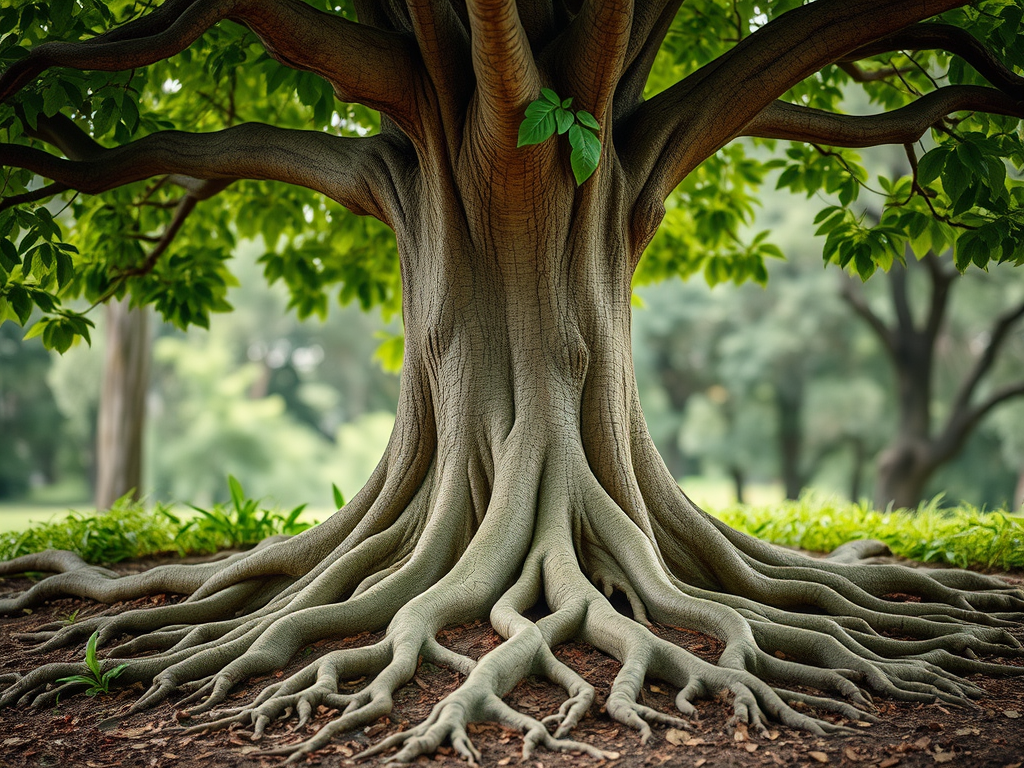
Cooperation isn’t just a practical skill—it’s a spiritual one. It’s the act of remembering we belong to each other. Like the roots beneath the forest floor that support and feed the trees, our lives are deeply and invisibly connected.

Do you like what you are reading? Sign up below for more blog posts

Sometimes, when I’m teaching a group for the first time, there’s a certain tension in the room. Not conflict—but the edges are firm. People may lean back with arms crossed. They’re waiting to see how much they can trust. Some have come because they’re searching for something, others because they promised someone else they’d give it a try. Still others have read enough to know the terminology of Buddhism but are unsure how to feel any of it.

This is how we often arrive to newness, with uncertainty—separate, unsure, carrying hidden histories and armour of defence. And yet, when we begin to share authentically, something shifts. A quiet nod here, a laugh there. The warmth seldom rushes in like an immediate flood. It trickles. It tests the stones in the river before it starts to flow.

Do you like what you are reading? Sign up below for more blog posts

One of the most beautiful truths in the Dharma is that nothing exists in isolation. The teaching of pratītyasamutpāda—dependent arising—reminds us that everything comes into being in dependence on conditions. This isn’t just philosophy. It’s permeating our every step through life. Dependent arising is a blueprint applicable to existence itself. It gives us a lens to see through and realize that our relationships, our communities, and even our internal lives are woven together in a profound tapestry of cause and effect.

The 12 links of dependent origination (Sanskrit: dvādaśāṅga-pratītyasamutpāda, Tibetan: tendrel yun tan chu nyi, Pāli: dvādasanidāna) can seem abstract at first glance. But stay with me—even a basic reflection on them can open a deep well of insight into how we relate to one another, and why we often struggle to do so skillfully. When we understand how our habits arise—and this is a big one—how perception colors reaction, and how craving feeds cycles of suffering, we begin to soften. We begin to see ourselves and others with more clarity, more compassion. And from that, real cooperation can emerge—not from obligation, but from recognition.

Do you like what you are reading? Sign up below for more blog posts

Let’s look briefly at just a few of the links in this chain:

  • Ignorance (Sanskrit: avidyā) – not a failing, but a kind of forgetting. A fog that tells us we are islands. That the others are competitors or strangers. That we have to defend our place, our idea, our worth.
  • Formation (Sanskrit: saṃskāra) – those unseen scripts written by years of repetition, habit, and reaction. They’re not set in stone. They’re wet ink. Which means we can rewrite. And when we rewrite them together, the act becomes sacred.
  • Craving (Sanskrit: tṛṣṇā) and Clinging (Sanskrit: upādāna) – they sound dramatic until you see how quietly they move. A tightening of the jaw. A sentence you can’t let go of. A vision of how things should be that won’t make room for how they are.

I’ve found that when I’m introducing the 12 links in a team or sangha—not as doctrine, but as a mirror—people begin to recognize their own patterns. It’s not always comfortable. But it’s real. And real has a power that no motivational strategy can match. Because when we understand that our thoughts and behaviors are conditioned—and that everyone else’s are too—we stop expecting perfection. We start practicing patience. Motivation becomes less about trying to win, and more about wanting to participate in something true.

Do you like what you are reading? Sign up below for more blog posts

When people begin to glimpse how their thoughts, actions, and speech arise from conditioned tendencies—and how those in turn affect the entire dynamic—there’s an opening. Less blame. More curiosity. A willingness to slow down, to listen, to take individual responsibility. And motivation becomes less about chasing reward and more about showing up authentically.

Engagement can’t be forced. It emerges. Like breath. Like dawn. When people feel seen, when they sense they matter—not in theory, but here, now—they start leaning in. They ask questions. They offer help. They begin to cooperate not because they’ve been told to, but because they’ve remembered something essential: they’re part of something.

True engagement doesn’t come from pressure or performance. It comes from connection. And connection arises naturally when we realize: we’re not separate. We never were. Your breath is not only yours. Your mood ripples outward. Your joy strengthens the whole. And when it does, so does everyone’s.

Do you like what you are reading? Sign up below for more blog posts

So, the next time you sit in a meeting, step into a sangha gathering, or simply pause in the quiet of your own mind, remember this: cooperation is not just a practical solution—it’s an expression of wisdom in action. We walk this path together.

May we meet each other with openness.
May we support each other with care.
And may we always remember the profound joy of cooperation based on the truth of interdependence.

Lama Chimey

Get Dharma Blog Posts straight to your device

Light the Fire for the Leadership You Actually Want to Embody

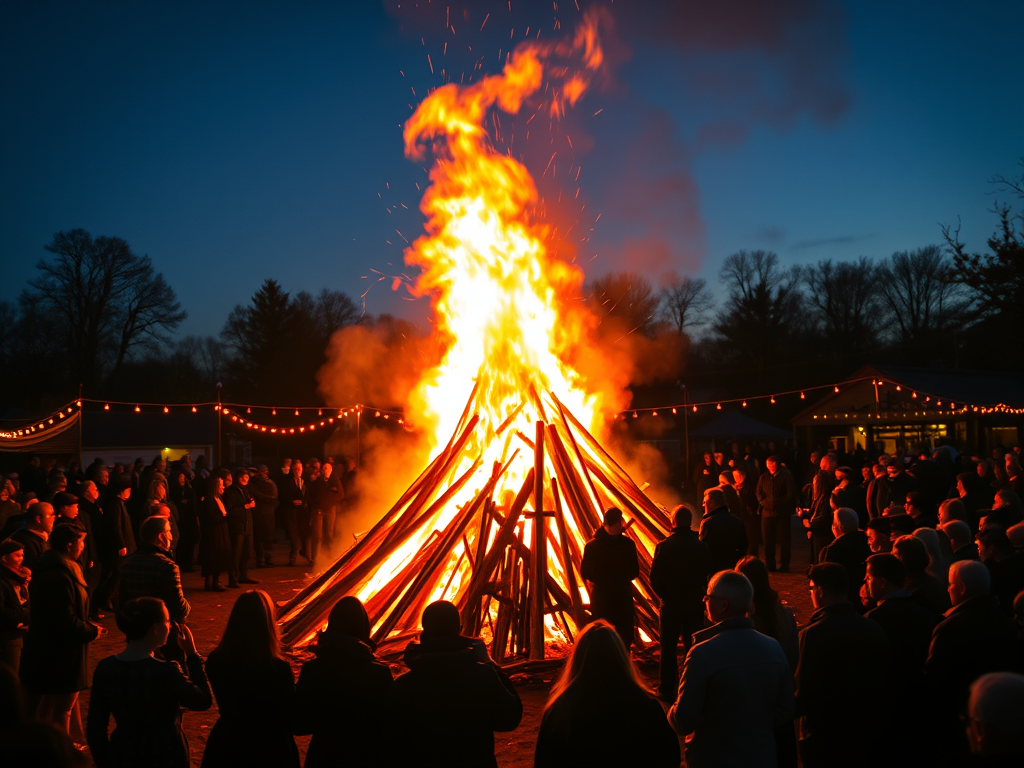
Image generated by AI.

In Sweden, spring arrives with fire.

Each year on Valborg, bonfires blaze across hillsides and town squares — ancient rituals meant to chase away darkness, to clear space for new growth. It’s not just tradition. It’s a deep, bodily knowing: that the old must be offered up before the new can arrive.

And maybe you’ve felt it too. A quiet restlessness. The sense that what once carried you no longer fits. That the polished surfaces of leadership have started to crack. The clever talk. The performance of certainty. The unsustainable sprint toward results, metrics, and outcomes that don’t quite touch the core.

The fire is not destruction. It’s truth.

Do you like what you are reading? Sign up below for more blog posts

This is your season to let go. To lead from somewhere real — not from muscle memory or protocol, but from presence. From trust. From courage. Not the kind that bites its lip and pushes through, but the kind that breathes deeper. That knows when to pause. That listens.

In Buddhist tradition, fire is a purifier. A revealer. It strips away illusion. It brings clarity, often uncomfortably so. But it leaves you with what’s essential: the part of you that cannot be undone.

Leadership is not meant to be sterile. You’re not here to manage your humanity out of the room. You’re here to bring it in.

Soft values aren’t soft. They’re revolutionary.

Do you like what you are reading? Sign up below for more blog posts

Stillness isn’t passive — it’s precise.
Compassion isn’t sentimental — it’s strategic.
Joy isn’t naive — it’s your birthright, and your power.
And responsibility? It isn’t blame. It’s the freedom to choose how you show up — again and again. To own your words, your thoughts, your actions.

These are the values rooted in Buddhist practice — not as dogma, but as living, breathing capacities. The same ones you admire in the wisest leaders you’ve known. We don’t leave our insights on the meditation cushion — we carry them into our everyday lives. We weave them in. We embody our truth.

Do you like what you are reading? Sign up below for more blog posts

If this resonates with you, I also write a personal email that weaves together Buddhist wisdom, meditation, dharma reflections, and news about upcoming events and offerings. It’s less polished than the blog — more like a candlelit note of inspiration and invitation. If you’d like to receive it, just visit my contact page and send a message with the word NEWSLETTER — and I’ll add you to the list by hand. As a welcome gift, you’ll receive a short excerpt from my eBook Triyana Meditation – Keys to Sustainable Transformation, titled Metta – Loving Kindness. Think of it as a gentle spark to begin with.

So, if you too feel the widening crackle beneath the surface — if something in you is ready to break free from the template you once were given and finally lead from the inside out — I’m here.

🜂 1:1 Leadership Coaching — created for women who want to lead with integrity, depth, and clarity. Grounded in Buddhist awareness practices and practical tools for inner and outer transformation.
🜂 Inspirational Speaking — for organizations ready to hear something real. Not more noise, but a voice that reminds people of what matters.

You don’t need to wait for permission.

The old model won’t melt by itself. It burns. And something more alive rises in its place.

You’re not here to fit in.
You’re here to ignite.

With courage and clarity,

Here when you’re ready.

Lama Chimey

Get Dharma Blog Posts straight to your device
Triyana: From Quiet Stirring to Powerful Transformation

It began, as so many things do, not with a plan, but with a loud stirring — the kind that hums beneath the surface until it can no longer be ignored.
A bold inner call that rang out with the knowing that something essential must be shared.

And so, Triyana was born from that knowing.

The word Triyana means Three Vehicles, a term from ancient Buddhist teachings, and here it carries something tender: a path spacious enough to hold your contradictions, your doubts, and your yearning for both stillness and transformation. It is a space where ancient wisdom meets modern hearts and minds. It’s also a tribute to my teacher’s main monastery in the west: Karma Triyana Dharmachakra.

Do you like what you are reading? Sign up below for more blog posts

I started Triyana to offer a space for you to grow on an accelerated path.
A space where your direct development matters more than any belief.
Where consistentcy and dedication is the teacher, and silence speaks more than a thousand truths.

After decades spent in monasteries, on stages, in classrooms, and on the road — between performance and devotion — I knew that the most powerful shifts doesn’t come from knowledge, but from intimacy:
Intimacy with presence, stillness and insights. 

With sound.
With the body – and beyond.
With what we usually run from — our own minds.

Do you like what you are reading? Sign up below for more blog posts

Triyana became a doorway. Not for escape, but for return.
Return to now.
Return to yourself and your unlimited being.

Today, we sit in quiet rooms in Sweden and sometimes online — together yet alone — exploring the landscapes within. We breathe, we sense, we remember.
We meditate not to become someone new, but to soften into who we already are beneath the noise, and maybe get a glimpse of our Buddhanature – the inherent goodness within.


In that softening, I encourage everyone to apply Upekkha — equanimity — the quiet balance that neither grasps nor resists.
We practice radical acceptance, not as resignation, but as the doorway to profound peace through insight.

Do you like what you are reading? Sign up below for more blog posts

This matters.
Because togetherness is the word of our times — and remembering now is sacred work. In a distracted world, attention is an act of love, and silence, our temple.

Triyana is growing. What began as a path of meditation is now becoming something broader — a living toolbox for inner leadership, where the ability to stay present, respond with clarity, and lead with empathy become your greatest strengths.
Imagine facing challenges with a clear mind, not reacting, but responding from a place of balance and wisdom.

So if you’ve felt the pull to sit, to listen, to explore who you are when no one is watching — Triyana is here.
Not as a destination, but as a practice.
A breath at a time. A moment at a time.
A path of many ways.
And you are welcome.

Do you like what you are reading? Sign up below for more blog posts

Seek out what resonates most with where you’re at right now and how Triyana can serve you in your life by exploring the main site, www.skydancerworld.com

Much love to all of you, my Triyana Sangha.
With warmth and gratitude,
Lama Chimey

Get Dharma Blog Posts straight to your device

Uma: The Subtle Axis of Tibetan Yoga — and Why We Sit Up to Break Free

The Hollywood actress Uma Thurman is actually named after the central channel in the subtle nervous system — Uma (དུམ་མ།). Her parents are Vajrayana Buddhists, and her name reflects this deep symbolic lineage. So next time you hear her name, remember it’s not just Hollywood — it’s also inner wisdom!

In my two latest workshops, we’ve examined the central axis within the subtle nervous system. This axis is known in Tibetan as Uma. This channel runs vertically through the center of the body. It connects with a complex network of thousands of subtle nerves, or nadis. That’s why we sit upright when meditating. We only lie down for specific relaxation or Nidra practices. In Tibetan Yoga, these structures form the foundation for many of our energy-body techniques.

Do you like what you are reading? Sign up below for more blog posts

Uma is not about inner stillness or comfort. It’s the highway to the path of awakening. This path is a way to access our full human potential. We do this by aligning ourselves with our most refined internal structure. When the central channel is activated, we start to move beyond the distorted states of mind. These are linked with the so-called “lower realms” — patterns of hatred, greed, jealousy, and habitual reactivity.

In traditional teachings, Uma is the channel for the wisdom winds (rlung) to rise. This happens when the mind is stable and directed. This rising allows for clarity and lucidity. It provides the ability to break free from the emotional conditioning. Such conditioning keeps us locked into worldly concerns and samsaric cycles. Without access to Uma, the winds stay trapped in the left and right channels, reinforcing dualistic perception and mental confusion.

One of the ways I work with these teachings is through a practice I’ve developed called Namkha Nidra. It draws from traditional Yoga Nidra and integrates core principles from the Tibetan understanding of mind and subtle anatomy. The word Namkha (ནམ་མཁ།) means “sky” or “space.” It refers not only to the physical sky but also to the open, boundless quality of consciousness. Namkha is also used in Tibetan ritual. It involves art and energetic symbolism. These are part of a geometric form representing the five elements and their interdependence.

Do you like what you are reading? Sign up below for more blog posts

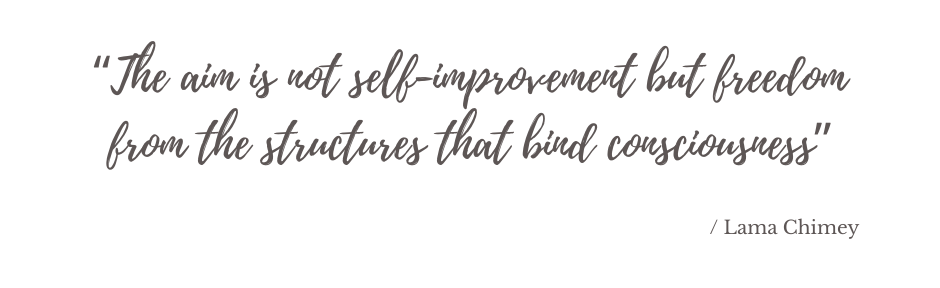
Namkha Nidra is not about healing or self-soothing. It focuses on loosening the identification with limited self-concepts. It involves shifting attention toward the space that is always available but usually unnoticed. The aim is not self-improvement. It is about gaining freedom from the structures that bind consciousness. These include attachment, aversion, and the mistaken belief in a fixed “I”.

This involves a fundamental shift in how we relate to experience. Rather than attempting to fix or fulfill the personal narrative as our main goal, we train in releasing its grip. (More on this topic in the live teacher conversation series, available as recordings on my Instagram feed.) The sense of “I” becomes more porous, and what remains is awareness itself — vivid, unbound, and naturally ethical. Tibetan Yoga is typically part of the curriculum in a traditional three-year retreat. It offers a precise and well-tested map for navigating this terrain, and Uma is central to that process.

Do you like what you are reading? Sign up below for more blog posts

The strength of Uma’s vertical channel supports our exploration of Namkha’s boundless space — they are not opposites but complementary. Together, they offer us a balanced approach to mental training. Uma aligns and stabilizes us. Namkha provides the expansive release of the structures that bind consciousness. In this way, both sitting up meditations and lying down practices like Yoga Nidra can serve the same purpose. They help us break free from conditioned patterns. We become more aligned with the open, unbound nature of mind.

These are not abstract ideas reserved for scholars, monastics or Himalayan yogis. Whether you’re new to these terms or have practiced for years, the logic of this system is experiential. You can explore it directly in your own body — but I strongly recommend doing so with proper guidance. The subtle nervous system should not be experimented with casually, especially not through an app or book alone. Seek out a teacher with authentic training who can guide you responsibly.

Do you like what you are reading? Sign up below for more blog posts

If you’re curious about what it means to align beyond the personal self, subscribe to the newsletter. It is a good place to start. It goes beyond reading this blog. I share grounded teachings, practice materials, and updates on upcoming sessions — always rooted in lived experience. I’d love to connect with those of you who are ready to go deeper. Get in touch here.


Together on the path,

Lama Chimey

Get Dharma Blog Posts straight to your device