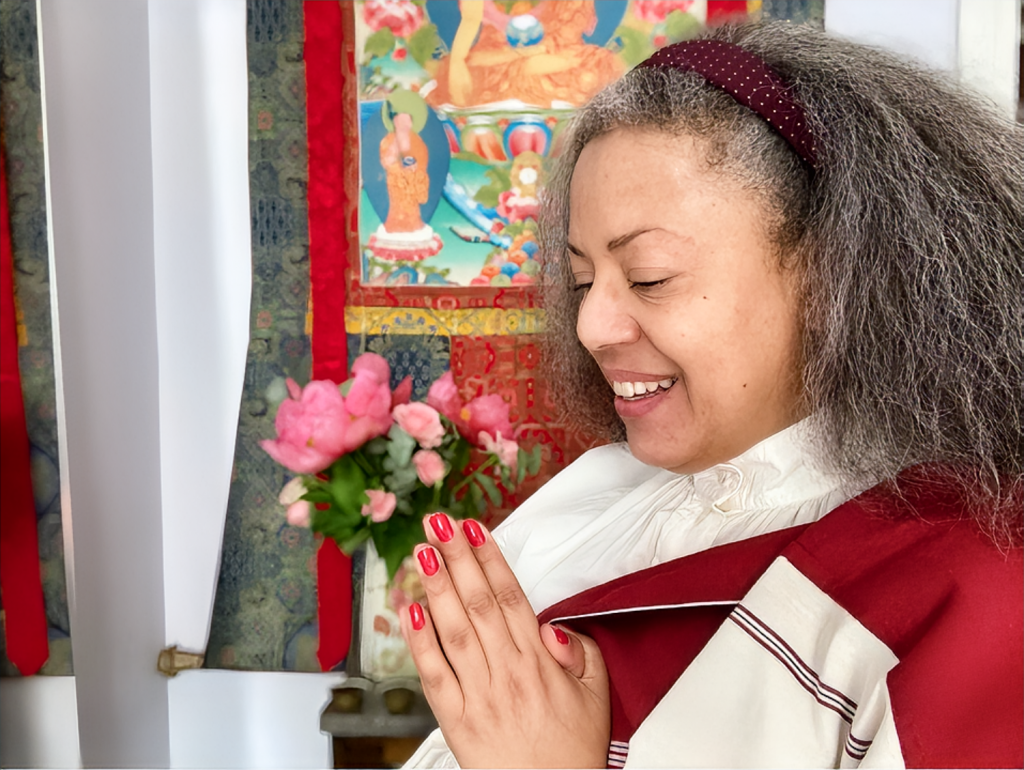
Mindfulness on the Mat: How to Teach Mindfulness Through Yoga

In our hyper-connected world, where distractions and constant busyness often pull us away from the present moment, the practice of mindfulness has become a powerful tool for cultivating inner peace and mental clarity. Rooted in the ancient Buddhist tradition, mindfulness—known as Sati in Sanskrit—originates from the Theravada school of Buddhism and means “remembering the now.” This concept of being fully aware of one’s thoughts, feelings, and surroundings is central to the practice of mindfulness, offering a path to deeper self-awareness and inner harmony.

Understanding Buddhist Mindfulness and Yoga

Before exploring how to teach mindfulness through yoga, it’s essential to understand the origins and essence of Sati. In Theravada Buddhism, Sati is a core element of the Noble Eightfold Path, emphasizing the importance of being fully present and aware in each moment. This practice of mindfulness is not only about observing the mind but also about remembering to return to the present whenever distractions arise.

Do you like what you are reading? Sign up below for more blog posts.

Yoga, with its roots in ancient Indian philosophy, aligns naturally with the practice of mindfulness. By combining physical postures (asanas), breathing techniques (pranayama), and meditation, yoga serves as a gateway to cultivating mindfulness in both body and mind. As someone who has journeyed through various roles— currently as a Buddhist minister, dharma and meditation teacher, program director for Triyana Meditation Instructor Certification Program, (TMICP), and a former yoga and CM – conscious movement teacher—I’ve found that the integration of mindfulness and yoga can be transformative for practitioners at all levels.

Why Teach Mindfulness Through Yoga?

Teaching mindfulness through yoga is about more than guiding students through physical postures; it’s about helping them cultivate a deep awareness of their inner experience. By integrating the principles of Sati into yoga, you offer students a pathway to greater self-awareness, emotional regulation, and inner peace. This approach helps students not only achieve physical benefits but also develop the mental clarity and resilience that come from living mindfully.

Strategies for Teaching Mindfulness Through Yoga

  1. Begin with Breath Awareness
    Breath awareness is foundational in both mindfulness and yoga. Starting each class with focused breathing exercises aligns with the practice of Ānāpānasati (mindfulness of breathing), which helps calm the mind and body. By grounding students in their breath, you guide them to anchor their awareness in the present moment, setting the tone for a mindful practice.
  2. Emphasize the Mind-Body Connection
    Throughout the practice, encourage students to synchronize their breath with their movements. This practice mirrors the interconnectedness of body and mind that is emphasized in both yoga and mindfulness. By noticing the sensations in their body and the quality of their thoughts without attachment, students can maintain a state of presence that enhances their overall experience on the mat.
  3. Cultivate Non-Judgmental Awareness
    A key aspect of mindfulness is observing thoughts, emotions, and sensations without judgment. Encourage students to approach their practice with curiosity and compassion, allowing them to observe their mind’s activity without getting caught up in it. This practice fosters a gentle awareness that can lead to greater self-compassion both on and off the mat.
  4. Incorporate Mindful Transitions
    Mindfulness isn’t just about the poses themselves; it’s also about how we move between them. Encourage students to move slowly and mindfully from one pose to the next, paying attention to the sensations in their body and the quality of their breath. This mindful approach to transitions reinforces the continuous thread of awareness that is central to both yoga and mindfulness practices.
  5. End with a Guided Meditation
    Conclude the class with a guided meditation that helps students integrate the mindfulness they’ve cultivated during the practice. Drawing on traditional Buddhist mindfulness techniques such as Ānāpānasati, body scan, or loving-kindness (Metta) meditation, this final period of stillness allows students to fully absorb the benefits of their practice. I offer guided meditation videos on some of these practices, which you can explore to deepen your understanding and experience of mindfulness.
  6. Encourage Reflection
    After the class, invite students to reflect on their experience. Reflection is a key component of Buddhist mindfulness, helping practitioners gain insight and wisdom. Ask students to consider how mindfulness affected their practice and how they can apply these insights in their daily lives. Reflection fosters a deeper integration of mindfulness principles, encouraging students to take their practice beyond the mat.

Bringing Mindfulness into Everyday Life

The ultimate goal of teaching mindfulness through yoga is to help students cultivate a continuous awareness that extends beyond the mat. Encourage them to practice mindfulness in their daily lives, using the tools and techniques they’ve learned in class. Whether it’s through mindful breathing during stressful situations or being fully present during everyday activities, mindfulness can help students cultivate a deeper sense of peace and presence.

Continuing Your Journey

As a Buddhist minister, dharma and meditation teacher, and program director for TMICP, I’ve dedicated my life to helping others cultivate mindfulness and inner peace. If you’re interested in deepening your practice or learning how to teach mindfulness to others, consider applying to the Triyana Meditation teacher training program. This comprehensive program includes mindfulness as one of its core components, providing you with the skills and knowledge needed to guide others on their mindfulness journey.

Do you like what you are reading? Sign up below for more blog posts.

Mindfulness on the mat is a profound practice that combines the ancient wisdom of Buddhist Sati with the physical and mental benefits of yoga. By teaching mindfulness through yoga, you’re not just guiding students through a series of poses—you’re offering them a pathway to greater awareness, compassion, and inner peace. Through mindful yoga practice, students can learn to cultivate this inner peace, both on and off the mat.

Stay grounded,

Lama Chimey

Get Dharma Blog Posts straight to your device
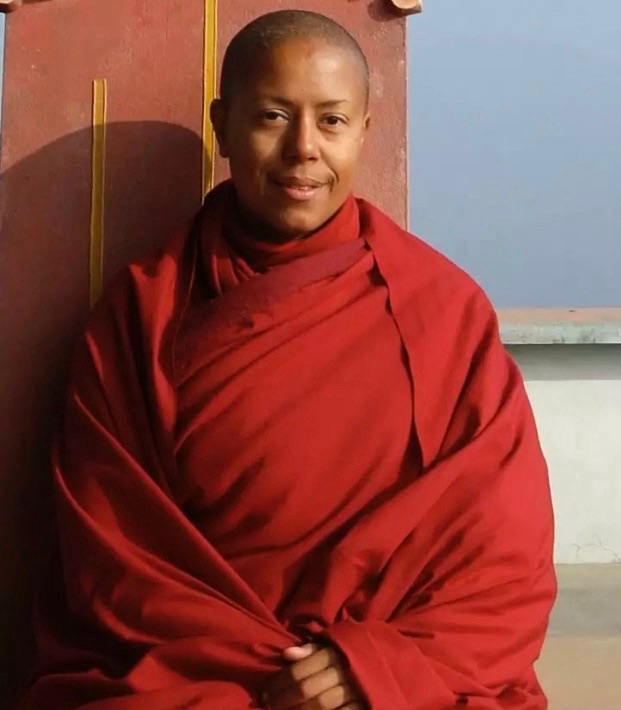
Preserving the Sacred: A Buddhist Reflection on the Westernization of Spiritual Practices

For me, Buddhism is not merely a philosophy but a living practice, an all-encompassing way of being that shapes our thoughts, actions, and interactions. It is a path that invites us to explore the depths of our minds, cultivate compassion, and awaken to the true nature of reality.

However, as I observe the world around me, I cannot help but notice a parallel between the commercial transformation of yoga in the West and the subtle, yet significant, shifts occurring in how Buddhist teachings are being adapted and presented. Just as yoga has been stripped of its spiritual essence and repackaged as a physical exercise for mass consumption, there is a growing trend to dilute the profound wisdom of Buddhism into bite-sized, marketable concepts.

Do you like what you are reading? Sign up below for more blog posts.

In this age of rapid commercialization, where ancient spiritual traditions are often reduced to mere commodities, the true essence of these teachings is at risk of being lost. The depth of mindfulness, the intricacies of Dream Yoga, and the transformative power of the Eightfold Path are overshadowed by the allure of quick fixes and instant gratification. The rich, multidimensional tapestry of Buddhist practice is at risk being flattened into a two-dimensional image, appealing to those seeking comfort rather than true awakening.

As a devoted practitioner and teacher, I find solace in the timeless wisdom of Buddhism and am committed to preserving its integrity in my teachings. This commitment has inspired me to create a space where the true spirit of the Dharma can flourish, jet reach beyond the confince of traditional dharma circles. In this space, we delve deeply into the teachings, not as a means to an end, but as a profound journey.

Do you like what you are reading? Sign up below for more blog posts.

This endeavor led to the creation of the Buddhist Triyana Meditation Teacher Training Program (TMICP), a comprehensive program designed to restore the sacredness of Buddhist practice in a modern context. TMICP is more than just a training course; it is a call to those who seek a complete path, who wish to engage with the Dharma in its fullness, and who are committed to the transformative power of Buddhist practice.

In the sacred space of TMICP , we engage with the teachings in their entirety, exploring not only the practices of mindfulness and meditation but also the ethical foundations and philosophical insights that underpin them. We study the interconnectedness of all life, the nature of suffering and liberation, and the importance of compassion and wisdom in our daily lives. The program emphasizes the necessity of integrating these teachings into every aspect of our existence, encouraging a holistic transformation that extends beyond the meditation cushion.

Do you like what you are reading? Sign up below for more blog posts.

As we journey through the various stages of Buddhist practice, we rediscover the lost art of mindful living. We engage with the traditional teachings on ethics, not as mere guidelines but as essential components of a life well-lived. We explore the profound insights of Buddhist philosophy, recognizing that true understanding comes not from intellectual study alone but from lived experience and inner reflection.

Beyond the classroom, TMICP encourages a deep and sustained engagement with the world. We learn to navigate the complexities of modern life with wisdom and compassion, applying the teachings to our relationships, work, and communities. This program is not about achieving personal enlightenment in isolation; it is about bringing the light of awakening into the world, making a positive impact on those around us.

The TMICP stands as a beacon for those who seek to preserve the true essence of Buddhism in a world that often prioritizes superficiality over depth. It is a call to all who are willing to embark on a journey of profound self-transformation, who wish to become torchbearers of the Dharma in their communities.

Do you like what you are reading? Sign up below for more blog posts.

Whether we choose to engage in Triyana Meditation Classes or online dharma communities such as the Skydancer tribe for our own sake or choose to go deeper and become Triyana Meditation Instructors we will all have an important part to full as beackons of light i a rather gloomy world. Together, we can rediscover the true essence of who we are and bring its transformative power into the fabric of our lives. In the spirit of the Buddha, may we all awaken to our true nature and share this awakening with the world.

May the light of the Dharma guide you on your path.

/ Lama Chimey

Get Dharma Blog Posts straight to your device

The Heart Revolution: A New Paradigm for Conscious Leadership

*Yes, this picture is AI generated.

In the journey of leadership, many seek answers through external means—technology, strategies, and complex systems. Yet, the true transformation we yearn for does not reside in these outward pursuits. The real change begins within, in the consciousness of the heart. As leaders, the essence of your power lies not in what you achieve, but in the compassion, joy, and appreciation that you embody and radiate. It is time to embrace a heart-centered approach to leadership.

The Heart as the True Leader

Leadership is often viewed as a function of the mind—planning, strategizing, making decisions. However, let us reflect more deeply. When you think of your own being and say “I,” where do you instinctively point? You do not point to the mind, but to the heart. This simple gesture reveals a profound truth: the heart is the true leader.

From the earliest moments of our existence, the heart is the center of our being. Long before the brain is fully formed, the heart begins its rhythmic pulse, setting the foundation for life itself. This is not mere symbolism; it is a reality. The heart, in its wisdom, sends more signals to the brain than the brain sends to the heart. This illustrates the heart’s deep influence on our thoughts, emotions, and decisions.

Do you like what you are reading? Sign up below for more blog posts.

The Power of Heart-Centered Leadership

In a world that often elevates logic above all else, leading from the heart may seem unconventional. Yet, it is this very approach that brings forth the most profound and meaningful change. When a leader guides from the heart, they create a deep connection with those they lead, fostering an environment of trust, loyalty, and true collaboration.

Heart-centered leadership goes beyond mere kindness or compassion. It acknowledges that love itself is a potent force in leadership. Love, in this context, is not simply an emotion; it is an entity—a living, binding force that unites individuals and creates harmony within a team. When leaders understand that their role is not just to manage tasks, but to nurture relationships, they cultivate an environment where all beings can thrive.

Do you like what you are reading? Sign up below for more blog posts.

Intuition and Inner Guidance

As leaders, you are often taught to rely on data, analysis, and external guidance. Yet, there is a deeper wisdom available to you—one that arises from within. In the film The Heart Revolution by Benedikt Just, a child learns to sense colors while blindfolded, a remarkable display of intuitive power. I, too, experienced such intuitive knowing as a child, and this inner guidance has illuminated my path throughout life.

This intuition is not a rejection of rational thought but a complement to it. It is about trusting the wisdom of the heart, which knows what is true and right, even when the way forward is unclear. As leaders, when you listen to this inner voice, you lead with clarity, purpose, and compassion.

Contributing to a Global Field of Change

Understand that your actions, thoughts, and emotions are not isolated; they contribute to the greater field of consciousness that envelops all beings. The rhythm of the heart is in harmony with the pulse of the Earth itself. Each day, as you lead from the heart, you are not only transforming your immediate environment but also contributing to a global shift in consciousness. What energy are you adding to this collective field?

When you lead from the heart, you do more than shape your organization; you help to shape a world where leadership is rooted in compassion, connection, and positive influence. This is the true revolution—one that begins within and radiates outwards, touching all beings.

Do you like what you are reading? Sign up below for more blog posts.

A Call to Heart-Centered Leadership

The challenges before us demand more than external solutions; they require a fundamental shift in how we lead. By embracing heart-centered leadership, you tap into a powerful source of transformation that can heal and uplift not only your organization but the entire world.

Remember, paradise is not a distant destination; it is a state of being. It is found in the heart, where true leadership begins. Let us move beyond the illusion that we are merely mechanical beings and recognize the vital force within us all. Together, we can cultivate a heart-centered world, leading with compassion, wisdom, and love.

With deep respect and compassion,

Lama Chimey

Get Dharma Blog Posts straight to your device

Coming Together for Meditation: A New Season of Growth and Community

Dear Friends,

I am filled with joy and excitement as I share this wonderful news with you. After many years away from teaching in my hometown Stockholm, I am thrilled to announce that I will be returning to guide you in meditation once more. This September, we will embark on a new journey together, delving deeper into the practice of Buddhist meditation and discovering the transformative power of Triyana.

For those of you who work nearby, especially around YogaShakti, we have something special in store. Starting the first week of September, I will be offering regular lunchtime Triyana meditation classes. there This is a wonderful opportunity to take a mindful pause in the middle of your busy day. Come and try out our first session on August 26th, and experience how a moment of stillness can rejuvenate your spirit and bring clarity to your mind.

In addition, I will be holding regular evening classes at YogaMana, beginning in September. To kick off this new season, I am hosting a special three-hour workshop on Saturday, August 31st, from 12-3 pm. This workshop, like the try-it-out class at YogaShakti, will provide a comprehensive introduction to Buddhist meditation, with a particular focus on the Triyana approach.

The Benefits of Buddhist Meditation and Triyanna

Buddhist meditation offers a multitude of benefits, both for the mind, speech and the body. It helps cultivate mindfulness, empathy, and a sense of inner peace. Through regular practice, we can develop a deeper understanding of ourselves and our place in the world, leading to greater compassion and joy in our daily lives.

The Triyana approach, which integrates elements from the three vehicles of Buddhism—Hinayana, Mahayana, and Vajrayana—offers a holistic path to enlightenment. Each class includes practices from all three yanas, allowing practitioners to start with foundational practices that build discipline and mindfulness, then move on to more advanced techniques that foster wisdom and compassion, ultimately guiding us toward a profound realization of our true nature.

A Personal Journey of Growth and Insight

Reflecting on my own journey, I am reminded of the countless lessons I have learned along the way. One of the most significant insights I have gained is the impermanence of all things. Each moment is fleeting, each opportunity unique. This understanding has deepened my commitment to live fully and mindfully, appreciating each day as a precious gift.

Recently, one of my revered teachers entered Paranirvana, the final passing beyond the cycle of death and rebirth. While his physical presence is no longer with us, his teachings and the impact he had on my life remain ever-present. I can only pray that we will meet again in another life, continuing our shared journey toward enlightenment.

Embracing Each Day

As we come together for these upcoming classes and workshops, I encourage you to embrace each day with mindfulness and gratitude. Remember that no one and no opportunity is forever. By nurturing our practice and supporting one another, we create a community of growth, compassion, and understanding.

I look forward to seeing many familiar faces and welcoming new friends into our practice. Let us come together to meditate, learn, and grow, fostering a spirit of unity and peace that extends beyond the meditation cushion and into our daily lives.

I will be taking a summer break and will return to writing for this blog in August. Until then, may you all find moments of peace and insight in your everyday lives.

Our classes will be guided in Swedish, but English will always be an option when needed.

With Metta (loving-kindness),

Lama Chimey

What is Buddhist Tantra – really?

Many people today are drawn to Tantra, but there are significant misconceptions about what this profound spiritual tradition entails. Contrary to popular belief, Tantra is not primarily about sexual practices. It is a comprehensive spiritual path that involves working with various aspects of our being to achieve enlightenment. In the context of Vajrayana Buddhism, Tantra’s foundational practice is known as Ngöndro. This practice is essential for anyone serious about embarking on the tantric path, serving as the gateway to deeper teachings and ensuring a well-grounded spiritual journey.

Do you like what you are reading? Sign up below for more blog posts.

Understanding Ngöndro: The Gateway to Vajrayana

Ngöndro, the foundational practice of Vajrayana Buddhism, is divided into four profound sections. These practices are powerful tools for deep purification and transformation of body, speech, and mind, preparing the practitioner for the profound path of Vajrayana. Beyond preparation, Ngöndro also guides practitioners toward enlightenment in a step-by-step manner, ensuring a grounded and progressive spiritual journey.

Without Ngöndro, beginners on the Vajrayana path risk straying from their intended course. Thus, it is rightly considered the essential portal to tantric practices. But what exactly is Tantra?

The Essence of Tantra in Vajrayana Buddhism

Tantra, which literally means “thread,” “loom,” or “warp,” seeks to weave together various strands of spiritual practice into a cohesive path toward enlightenment. Vajrayana Buddhism holds that tantras, like sutras, were taught by the historical Buddha in his tantric form, Vajradhara, or by other enlightened beings. While Theravada Buddhism considers the tantras to be later additions, Vajrayana integrates them deeply into its practices.

Historically, Buddhist tantras emerged in India and continued to evolve, spreading to many parts of Asia. Today, Buddhist tantra is primarily found in Tibetan lineages and Japanese Buddhism. Tantric texts and practices, with some resemblances to Buddhist versions, are also present in Hinduism.

Do you like what you are reading? Sign up below for more blog posts.

Practices and Principles of Tantra

Tantric practices are numerous and diverse, involving the use of sound through mantra (sacred words and phrases), gesture through mudra (ritualized sacred hand gestures), sight through visualizations and mandalas (diagrams of the universe), and vital energies through meditation and Tibetan yoga, ‘phrul ‘khor, pronounced “trul-khor.” Trul-khor is the generic name for Tibetan movement practices. These practices are sacred and secret, and aim to transform impure vision into pure vision, allowing practitioners to see reality as it truly is.

In Vajrayana, the core idea is that our suffering arises from misapprehending reality. We falsely perceive phenomena, which are empty of inherent existence, as objectively real and unchanging. Tantra seeks not only to reveal the nature of reality but also to manifest one’s intrinsic buddhanature, the potential to become a buddha.

Do you like what you are reading? Sign up below for more blog posts.

The Role of Visualizations and Rituals

Tantric practice often involves elaborate rituals and visualizations. For example, practitioners may engage in the practice of Tara, the female bodhisattva of compassion and action. This practice involves visualizing Tara as a figure made of light above one’s head, then visualizing oneself as Tara, thereby identifying one’s mind with the deity’s enlightened mind. This process, known as “taking the result as the path,” is central to tantric practice and culminates in the deity dissolving into emptiness, allowing the practitioner’s mind to rest in its own true nature.

The Importance of Guru Yoga and Ngöndro

Such practices require a nuanced and subtle understanding of oneself and the world. Thus, they are approached gradually, beginning with guru yoga. This involves forming a deep bond with a teacher and completing extensive Ngöndro practices. The teacher provides empowerment, authorizing the student to visualize themselves as the meditation deity and recite sacred texts. This bond, known as samaya, encourages maintaining a pure view of the teacher and fellow disciples while ultimately fostering an awareness of the true nature of one’s mind and surroundings. For any type of tantric practices, one needs initiation, teachings, and empowerment from a qualified teacher.

Do you like what you are reading? Sign up below for more blog posts.

Additionally, figures like Yeshe Tsogyal, (pictured above)an important female figure in Tibetan Buddhism, serve as inspiring examples of devotion and realization. Her life and accomplishments remind practitioners of the transformative power of these practices when approached with dedication and sincerity.

Embracing the Path of Tantra

The advanced nature of tantric practices demands a stable mind and a pure outlook. Without these, one can easily lose their way. This is why the gradual, step-by-step approach through Ngöndro is so strongly recommended. If the tantric path calls to you, proceed slowly, embrace each step fully, and seek guidance from trustworthy teachers.

Embarking on this journey with mindfulness and care will lead to profound transformation and deep spiritual growth.

Blessed be,

Lama Chimey

Do you like what you are reading? Sign up below for more blog posts.

Get Dharma Blog Posts straight to your device

Breaking the Spell of Leadership Loneliness

It is said that “heavy is the head that wears the crown.” In the realm of leadership, loneliness is a common companion. The burdens of decision-making, the pressure of responsibility, and the perceived need for infallibility often isolate you from those you lead. This sense of isolation can create a profound and enduring loneliness. However, I invite you to consider a different path, one illuminated by the wisdom of the Buddha across various traditions. Through a change in attitude and perspective, you can break the spell of leadership loneliness and foster a deeper connection with yourself and those around you.

Understanding Leadership Loneliness

First, let us acknowledge the nature of leadership loneliness. As leaders, you are entrusted with great responsibilities, making decisions that impact many lives. This role often necessitates a certain degree of separation to maintain authority and respect. Yet, this very separation can become a prison, fostering feelings of isolation and detachment. It is a paradox that the position intended to empower and connect can, instead, isolate.

Do you like what you are reading? Sign up below for more blog posts.

Embracing Interconnectedness

In Buddhism, we learn of the principle of interconnectedness, or rten-‘brel (Tibetan: རྟེན་འབྲེལ་). This principle teaches that all things arise in dependence upon multiple conditions and that nothing exists in isolation. As a leader, you are not an island but a part of a vast, interdependent web of relationships. Recognizing this interconnectedness can transform your leadership experience.

In the Mahayana tradition, this interconnectedness is often understood through the lens of stong-pa nyid (emptiness) (Tibetan: སྟོང་པ་ཉིད་). Emptiness does not signify nothingness but rather the absence of independent, inherent existence. Everything, including your role as a leader, is interdependent and interconnected. Understanding stong-pa nyid can dissolve the ego-driven barriers that contribute to loneliness, fostering a profound sense of unity and interconnection.

Do you like what you are reading? Sign up below for more blog posts.

Cultivating Compassion and Bodhicitta

The Buddha emphasized the importance of nying-rje (compassion) (Tibetan: སྙིང་རྗེ་) and byams-pa (loving-kindness) (Tibetan: བྱམས་པ་). These qualities are essential in overcoming loneliness. By cultivating compassion, you open your heart to the struggles and joys of others. Empathy bridges the gap between you and your team, creating a space where genuine connection can flourish.

In the Mahayana tradition, compassion is deepened through the aspiration of byang-chub kyi sems (bodhicitta) (Tibetan: བྱང་ཆུབ་ཀྱི་སེམས་), the wish to attain enlightenment for the benefit of all sentient beings. As a leader, cultivating byang-chub kyi sems means seeing your leadership as a means to serve and uplift others. This altruistic motivation transforms leadership into a path of selflessness and connection, alleviating loneliness by aligning your actions with the welfare of others.

Do you like what you are reading? Sign up below for more blog posts.

Embracing Vulnerability and Authenticity

Leadership often comes with a perceived need to be invulnerable, to always have the answers and never show weakness. This mindset reinforces isolation. In Buddhism, we recognize the power of mi-rtag-pa (impermanence) (Tibetan: མི་རྟག་པ་) and sdug-bsngal (suffering) (Tibetan: སྡུག་བསྔལ་) as universal truths. Embracing these truths allows you to accept your own vulnerabilities and imperfections.

In Vajrayana Buddhism, there is an emphasis on the inherent Buddha-nature within all beings. Recognizing your own Buddha-nature, even with its imperfections, empowers you to lead authentically. By sharing your struggles and uncertainties with your team, you create an environment of trust and openness. Vulnerability is not a weakness but a bridge that connects hearts. It invites others to share their own challenges, fostering a culture of mutual support and understanding.

Do you like what you are reading? Sign up below for more blog posts.

Practicing Mindfulness and Tantra

Mindfulness, or dran-pa (Tibetan: དྲན་པ་), is a cornerstone of Buddhist practice. It involves being fully present and aware of the moment. As a leader, mindfulness can help you remain grounded and connected to your true self and those around you. Through mindfulness, you can observe your thoughts and emotions without judgment, recognizing the transient nature of loneliness.

Incorporate mindfulness into your daily routine. Take moments to pause, breathe, and reconnect with your inner self. This practice will help you navigate the complexities of leadership with clarity and equanimity, reducing the feelings of isolation.

In Vajrayana Buddhism, the practice of tantra involves seeing the sacred in all aspects of life. This perspective can transform mundane leadership tasks into opportunities for spiritual growth and connection. By viewing your leadership role as a sacred duty, you can transcend the ordinary and engage with your responsibilities with a sense of reverence and purpose.

Do you like what you are reading? Sign up below for more blog posts.

Fostering Community and Collaboration

Lastly, remember the importance of dge-‘dun (the Buddhist community) (Tibetan: དགེ་འདུན་). In your organization, cultivate a sense of community and collaboration. Encourage teamwork and create opportunities for team members to connect on a personal level. Celebrate successes together and support one another through challenges.

By fostering a collaborative environment, you diminish the hierarchical divide and create a sense of belonging. This communal approach aligns with the Buddhist principle of harmony and collective well-being.

Do you like what you are reading? Sign up below for more blog posts.

Not a Solitary Journey

Leadership need not be a solitary journey. By embracing the principles of interconnectedness, compassion, bodhicitta, vulnerability, mindfulness, and community, you can break the spell of loneliness. These Buddhist teachings, drawn from Theravada, Mahayana, and Vajrayana traditions, offer a path to deeper connection, both within yourself and with those you lead. As you walk this path, may you find not only solace but also a profound sense of unity and fulfillment.

Remember, dear leaders, that you are never truly alone. You are part of an intricate web of life, bound by love and compassion. May your leadership be a beacon of connection and wisdom in the world.

May you be well.

Lama Chimey

Get Dharma Blog Posts straight to your device

Celebrating Love: A Personal Invitation to Your Buddhist-Inspired Wedding

The decision to marry is a bold step. It’s a declaration of commitment, a pledge to traverse life’s winding paths hand in hand, come what may. As a Buddhist Minister entrusted with the sacred duty of officiating weddings, I am deeply humbled by the opportunity to witness and support couples like you as you embark on this extraordinary journey. Guided by the wisdom passed down by one of my teachers, the late Khenpo Karthar Rinpoche, I endeavor to infuse each ceremony with compassion, inclusivity, and reverence for the profound bond of love.

Do you like what you are reading? Sign up below for more blog posts.

Your wedding ceremony is a unique tapestry, woven from the threads of your shared history, dreams, and aspirations. Through heartfelt conversations and collaborative planning, I look forward to working closely with you to craft a ceremony that authentically reflects your individuality and celebrates your love story.

In the spirit of inclusivity, I want you to know that all couples, regardless of gender, orientation, or belief system, are welcomed with open arms. Love knows no boundaries, and it is a privilege for me to stand witness to the diverse expressions of love within our community. It’s worth noting that as of 2023, Buddhist-inspired weddings have seen a steady rise in popularity globally, reflecting a growing appreciation for the values of mindfulness, compassion, and interconnectedness.

Do you like what you are reading? Sign up below for more blog posts.

Within the LGBTQ+ community, the journey towards marriage has been a hard-fought battle for recognition and equality. As your minister, I am committed to ensuring that you feel not only accepted but celebrated. It’s always heartwarming for me to witness the joy that couples like you experience as you exchange vows, surrounded by the love and support of your community.

The path to marriage is not without its challenges. It requires courage, resilience, and a willingness to embrace vulnerability. Preparing for marriage involves more than just planning a ceremony; it’s about laying a foundation for a strong and enduring partnership.

Do you like what you are reading? Sign up below for more blog posts.

My wedding ceremony service goes beyond the confines of the wedding day itself. It includes thorough preparations and two preparatory meetings. By investing time and attention into these aspects of your wedding day, you’ll be better equipped to savor the joys of the celebration that lie ahead.

On the day of your ceremony, I will hold space with joy and reverence, creating a sacred container where your love can flourish and bloom. Drawing upon Buddhist teachings and practices, I will offer a ceremony tailored to your journey together, invoking the qualities of love, compassion, and wisdom to guide you along the way.

Do you like what you are reading? Sign up below for more blog posts.

Love is a golden thread that binds us all together. May we honor it, cherish it, and celebrate it in all its myriad forms. And may the blessings of love, compassion, and wisdom accompany you as you embark on this sacred journey together, hand in hand, heart to heart.

Much love,

Lama Chimey

Get Dharma Blog Posts straight to your device

The Art of Mindful Rest and Renewal

As the warm embrace of summer envelops The Northern Hemisphere, we are invited to pause, to breathe deeply, and to immerse ourselves in the beauty that surrounds us. The arrival of summer is not just a change in weather; it is an invitation from nature to slow down, to savor each moment, and to connect deeply with the present. In the teachings of Buddhism, the importance of taking a break and gathering our energy before proceeding with our actions is profoundly emphasized. Let us explore this wisdom and how it harmonizes with the unfolding summer around us.

In our daily lives, it is easy to become caught up in the whirlwind of responsibilities, tasks, and ambitions. We rush from one commitment to another, rarely taking the time to pause and reflect. However, just as the earth requires seasons of rest to rejuvenate, so do we need moments of stillness to replenish our spirit. The teachings of the Buddha remind us that mindfulness and rest are not luxuries but necessities for a balanced and fulfilling life.

Do you like what you are reading? Sign up below for more blog posts.

As the days grow longer and the sun graces us with its warm and nurturing light, we have the perfect opportunity to practice the art of mindful rest. The scent of blooming flowers fills the air, a gentle reminder of the beauty that unfolds when we allow ourselves to be still. The vibrant colors of summer, from the lush greens of the forests to the brilliant blues of the lakes, invite us to step outside and connect with the natural world.

Imagine walking through a meadow, the soft earth beneath your feet, and the symphony of birds singing in the trees. Each step is a meditation, each breath a prayer of gratitude. The flowers, with their delicate petals and sweet fragrance, teach us to appreciate the simple joys of life. By taking the time to stop and smell the flowers, we cultivate a sense of presence and peace that nourishes our soul.

Do you like what you are reading? Sign up below for more blog posts.

In Buddhism, we learn that action without mindfulness can lead to suffering. When we act from a place of exhaustion and stress, our actions often lack clarity and compassion. However, when we take the time to rest and gather our energy, our actions become more intentional and harmonious. We become like the lotus, rising from the mud to blossom in the light, embodying purity and serenity.

The summer in Sweden, with its unique beauty and tranquility, offers us a sacred space to practice this mindful rest. Whether it is sitting by a serene lake, walking through a peaceful forest, or simply sitting in our gardens, we have countless opportunities to reconnect with ourselves and the world around us. These moments of stillness allow us to recharge, to gather our energy, and to return to our daily lives with a renewed sense of purpose and clarity.

Do you like what you are reading? Sign up below for more blog posts.

As we embrace the beauty of summer, let us remember the importance of taking breaks. Let us allow ourselves to unwind, to gather our energy, and to fully appreciate the present moment. In doing so, we not only honor ourselves but also the world around us. We become more attuned to the needs of others, more compassionate in our actions, and more mindful in our choices.

So, my dear friends, as you enjoy the summer days ahead, take the time to slow down and savor each moment. Let the beauty of the season fill your heart with joy and gratitude. Smell the flowers, feel the warmth of the sun, and listen to the whispers of nature. In these simple acts of mindfulness, you will find a profound sense of peace and rejuvenation, ready to take on the world with a calm and centered spirit.

May you find rest, may you gather your energy, and may you blossom like the summer flowers.

Get Dharma Blog Posts straight to your device

Learn a Buddhists secrets to transform your Business with wise Leadership

Starting today, I am merging this Dharma and meditation blog with my Buddhism for Leaders blog. From now on, you can find all content in one place. I will be posting biweekly on each subject—alternating between insights on Buddhism and meditation and applying Buddhist wisdom in leadership and organizational contexts.

Thank you for your continued support on this journey.

With metta,

Lama Chimey

In today’s dynamic and fast-paced business landscape, effective leadership is crucial for sustainable success. While various leadership theories and practices exist, one often overlooked source of wisdom lies in the teachings of Buddhism. Rooted in mindfulness, compassion, and self-awareness, Buddhist values can profoundly influence and enhance our approach to leadership. On this bi-weekly subject, we will explore the principles of wise leadership based on Buddhist values and how they can transform our mindset, decision-making, and overall impact as leaders.

Mindfulness in Leadership

At the core of Buddhist teachings is the practice of mindfulness—a state of being fully present and aware of the current moment. Wise leaders apply mindfulness to their leadership roles by cultivating a deep understanding of themselves, their team members, and the broader context in which they operate. By staying attuned to the present moment, leaders can make informed decisions, nurture authentic relationships, and foster a culture of trust and innovation.

Do you like what you are reading? Sign up below for more blog posts.

Compassionate Leadership

Compassion lies at the heart of Buddhism, emphasizing empathy, kindness, and the desire to alleviate suffering. Wise leaders integrate compassion into their leadership style by genuinely caring for the well-being and growth of their employees. They actively listen, provide support, and create an inclusive environment where individuals feel valued and motivated. By fostering a compassionate culture, leaders cultivate stronger teams, higher employee engagement, and ultimately drive better business outcomes.

Servant Leadership

Buddhist teachings also highlight the concept of servant leadership—the idea that true leadership lies in serving others selflessly. Wise leaders embody this principle by prioritizing the needs and development of their team members above their own. They empower others, delegate effectively, and encourage collaboration, creating a sense of ownership and shared purpose within the organization. By embracing servant leadership, wise leaders unlock the full potential of their teams, driving innovation and achieving long-term success.

Do you like what you are reading? Sign up below for more blog posts.

Ethical Decision-making

Ethics and morality hold significant importance in Buddhism, and wise leaders integrate these values into their decision-making processes. They prioritize integrity, transparency, and accountability, ensuring their actions align with the greater good and long-term sustainability. By adopting ethical decision-making practices, leaders build trust with stakeholders, enhance their reputation, and foster a culture of integrity within their organization.

Continuous Learning and Adaptability

Buddhist philosophy encourages a lifelong pursuit of knowledge and personal growth. Wise leaders embrace this mindset by fostering a culture of continuous learning and adaptability within their organization. They encourage open-mindedness, embrace diverse perspectives, and actively seek feedback. By nurturing a learning-oriented environment, leaders create opportunities for innovation, resilience, and sustained success in an ever-changing business landscape.

Do you like what you are reading? Sign up below for more blog posts.

Incorporating Buddhist values into leadership practices can bring about a profound transformation in how we lead and influence others. By cultivating mindfulness, compassion, servant leadership, ethical decision-making, and a commitment to continuous learning, wise leaders can create thriving organizations that positively impact individuals, society, and the bottom line. Let us embrace these timeless principles and embark on a journey towards wise leadership that transcends conventional boundaries and fosters holistic growth.

Your guide on the path,

Lama Chimey

Get Dharma Blog Posts straight to your device

A Vegetarians Contribution to Compassionate Awareness during the sacred month of Saga Dawa

In the tranquil embrace of Saga Dawa, a sacred month in the Buddhist calendar, communities worldwide unite to honor traditions that transcend the ordinary. This auspicious time, commemorating the birth, enlightenment, and parinirvana of Gautama Buddha, serves as a profound reminder of the values that underpin Buddhist philosophy. Among these values, compassion reigns supreme, guiding practitioners to cultivate empathy and kindness towards all sentient beings.

Do you like what you are reading? Sign up below for more blog posts.

At the heart of Saga Dawa lies the principle of compassion – the cornerstone of Buddhist philosophy. It is a reminder to extend kindness and empathy not only to fellow humans but to all sentient beings. One way to embody this spirit of compassion is through conscious dietary choices, particularly by embracing vegetarianism.

Vegetarianism aligns perfectly with the values of Saga Dawa, as it reflects a commitment to non-violence and reverence for all life forms. By abstaining from consuming meat, individuals not only reduce harm to animals but also contribute to environmental sustainability and personal well-being.

Do you like what you are reading? Sign up below for more blog posts.

As a devout Buddhist and animal lover, I always find deep resonance in the practice of vegetarianism, and especially during Saga Dawa. My love for dogs and cats, companions who have brought immense joy and companionship into my life, reinforces my dedication to living in harmony with all creatures. Just as I cherish the well-being of animals, I extend that same care and compassion to all sentient beings by choosing a plant-based diet.

Moreover, embracing vegetarianism during Saga Dawa can have profound spiritual benefits. By purifying our bodies and minds through wholesome food choices, we create the conditions for greater clarity, compassion, and inner peace. This, in turn, allows us to deepen our spiritual practice and develop a more profound understanding of the interconnected nature of existence.

Do you like what you are reading? Sign up below for more blog posts.

As we embark on this sacred journey of self-discovery and compassion, let us remember that our actions have far-reaching consequences. By choosing to be vegetarian during Saga Dawa, I believe that we not only honor the teachings of the Buddha but also contribute to a more compassionate and sustainable world for future generations.

Saga Dawa presents us with a unique opportunity to embody the principles of compassion, mindfulness, and awareness in our daily lives. By embracing vegetarianism during this sacred month, we not only pay homage to the wisdom of the Buddha but also sow the seeds of a more compassionate and enlightened world.

Do you like what you are reading? Sign up below for more blog posts.

Let us seize this moment to make a difference – for the benefit of all beings, for the health of our planet, and for the evolution of our own hearts and minds. Together we can expand our circles of compassion, one mindful meal at a time.

May this Saga Dawa be a time of reflection, growth, and profound awakening for all. May our actions be guided by love, compassion, and wisdom, now and always.

Wishing you a blessed and compassionate Saga Dawa!

Lama Chimey 🦙 💕

Get Dharma Blog Posts straight to your device