The Joy of Cooperation Through The Power of Interdependence


In a world increasingly marked by fragmentation, learning how to truly work together may be one of the most urgent and liberating practices we can undertake. Not just for productivity, but for peace. Not just for efficiency, but for awakening.

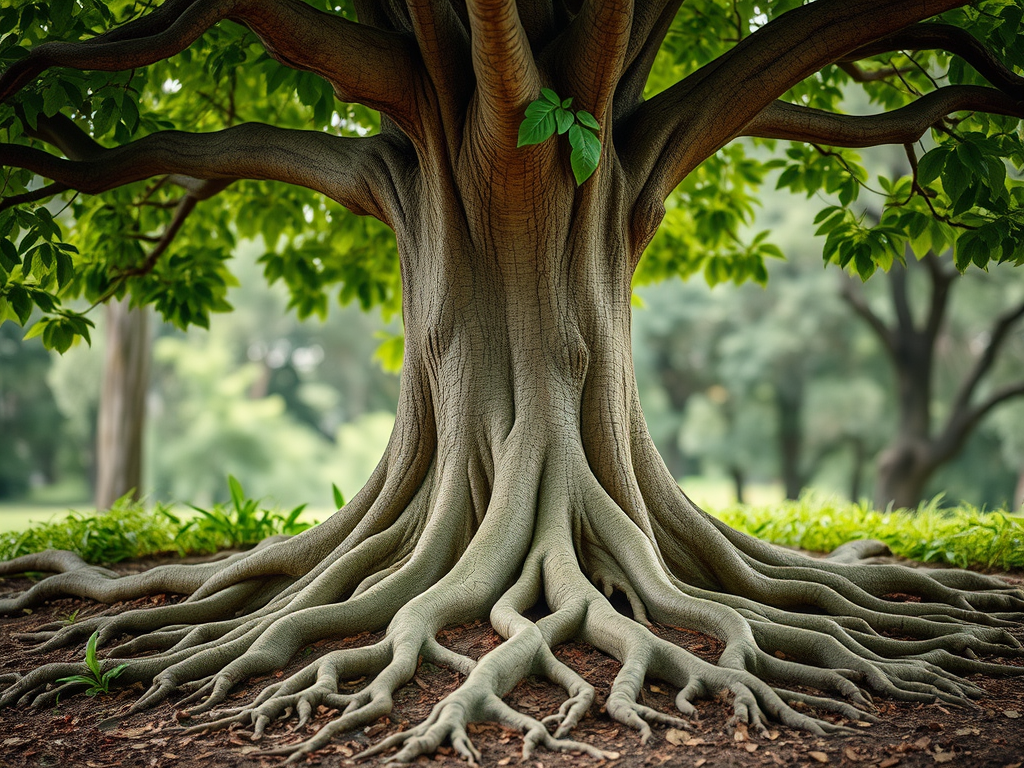
Cooperation isn’t just a practical skill—it’s a spiritual one. It’s the act of remembering we belong to each other. Like the roots beneath the forest floor that support and feed the trees, our lives are deeply and invisibly connected.

Do you like what you are reading? Sign up below for more blog posts

Sometimes, when I’m teaching a group for the first time, there’s a certain tension in the room. Not conflict—but the edges are firm. People may lean back with arms crossed. They’re waiting to see how much they can trust. Some have come because they’re searching for something, others because they promised someone else they’d give it a try. Still others have read enough to know the terminology of Buddhism but are unsure how to feel any of it.

This is how we often arrive to newness, with uncertainty—separate, unsure, carrying hidden histories and armour of defence. And yet, when we begin to share authentically, something shifts. A quiet nod here, a laugh there. The warmth seldom rushes in like an immediate flood. It trickles. It tests the stones in the river before it starts to flow.

Do you like what you are reading? Sign up below for more blog posts

One of the most beautiful truths in the Dharma is that nothing exists in isolation. The teaching of pratītyasamutpāda—dependent arising—reminds us that everything comes into being in dependence on conditions. This isn’t just philosophy. It’s permeating our every step through life. Dependent arising is a blueprint applicable to existence itself. It gives us a lens to see through and realize that our relationships, our communities, and even our internal lives are woven together in a profound tapestry of cause and effect.

The 12 links of dependent origination (Sanskrit: dvādaśāṅga-pratītyasamutpāda, Tibetan: tendrel yun tan chu nyi, Pāli: dvādasanidāna) can seem abstract at first glance. But stay with me—even a basic reflection on them can open a deep well of insight into how we relate to one another, and why we often struggle to do so skillfully. When we understand how our habits arise—and this is a big one—how perception colors reaction, and how craving feeds cycles of suffering, we begin to soften. We begin to see ourselves and others with more clarity, more compassion. And from that, real cooperation can emerge—not from obligation, but from recognition.

Do you like what you are reading? Sign up below for more blog posts

Let’s look briefly at just a few of the links in this chain:

  • Ignorance (Sanskrit: avidyā) – not a failing, but a kind of forgetting. A fog that tells us we are islands. That the others are competitors or strangers. That we have to defend our place, our idea, our worth.
  • Formation (Sanskrit: saṃskāra) – those unseen scripts written by years of repetition, habit, and reaction. They’re not set in stone. They’re wet ink. Which means we can rewrite. And when we rewrite them together, the act becomes sacred.
  • Craving (Sanskrit: tṛṣṇā) and Clinging (Sanskrit: upādāna) – they sound dramatic until you see how quietly they move. A tightening of the jaw. A sentence you can’t let go of. A vision of how things should be that won’t make room for how they are.

I’ve found that when I’m introducing the 12 links in a team or sangha—not as doctrine, but as a mirror—people begin to recognize their own patterns. It’s not always comfortable. But it’s real. And real has a power that no motivational strategy can match. Because when we understand that our thoughts and behaviors are conditioned—and that everyone else’s are too—we stop expecting perfection. We start practicing patience. Motivation becomes less about trying to win, and more about wanting to participate in something true.

Do you like what you are reading? Sign up below for more blog posts

When people begin to glimpse how their thoughts, actions, and speech arise from conditioned tendencies—and how those in turn affect the entire dynamic—there’s an opening. Less blame. More curiosity. A willingness to slow down, to listen, to take individual responsibility. And motivation becomes less about chasing reward and more about showing up authentically.

Engagement can’t be forced. It emerges. Like breath. Like dawn. When people feel seen, when they sense they matter—not in theory, but here, now—they start leaning in. They ask questions. They offer help. They begin to cooperate not because they’ve been told to, but because they’ve remembered something essential: they’re part of something.

True engagement doesn’t come from pressure or performance. It comes from connection. And connection arises naturally when we realize: we’re not separate. We never were. Your breath is not only yours. Your mood ripples outward. Your joy strengthens the whole. And when it does, so does everyone’s.

Do you like what you are reading? Sign up below for more blog posts

So, the next time you sit in a meeting, step into a sangha gathering, or simply pause in the quiet of your own mind, remember this: cooperation is not just a practical solution—it’s an expression of wisdom in action. We walk this path together.

May we meet each other with openness.
May we support each other with care.
And may we always remember the profound joy of cooperation based on the truth of interdependence.

Lama Chimey

Get Dharma Blog Posts straight to your device


Light the Fire for the Leadership You Actually Want to Embody

Image generated by AI.

In Sweden, spring arrives with fire.

Each year on Valborg, bonfires blaze across hillsides and town squares — ancient rituals meant to chase away darkness, to clear space for new growth. It’s not just tradition. It’s a deep, bodily knowing: that the old must be offered up before the new can arrive.

And maybe you’ve felt it too. A quiet restlessness. The sense that what once carried you no longer fits. That the polished surfaces of leadership have started to crack. The clever talk. The performance of certainty. The unsustainable sprint toward results, metrics, and outcomes that don’t quite touch the core.

The fire is not destruction. It’s truth.

Do you like what you are reading? Sign up below for more blog posts

This is your season to let go. To lead from somewhere real — not from muscle memory or protocol, but from presence. From trust. From courage. Not the kind that bites its lip and pushes through, but the kind that breathes deeper. That knows when to pause. That listens.

In Buddhist tradition, fire is a purifier. A revealer. It strips away illusion. It brings clarity, often uncomfortably so. But it leaves you with what’s essential: the part of you that cannot be undone.

Leadership is not meant to be sterile. You’re not here to manage your humanity out of the room. You’re here to bring it in.

Soft values aren’t soft. They’re revolutionary.

Do you like what you are reading? Sign up below for more blog posts

Stillness isn’t passive — it’s precise.
Compassion isn’t sentimental — it’s strategic.
Joy isn’t naive — it’s your birthright, and your power.
And responsibility? It isn’t blame. It’s the freedom to choose how you show up — again and again. To own your words, your thoughts, your actions.

These are the values rooted in Buddhist practice — not as dogma, but as living, breathing capacities. The same ones you admire in the wisest leaders you’ve known. We don’t leave our insights on the meditation cushion — we carry them into our everyday lives. We weave them in. We embody our truth.

Do you like what you are reading? Sign up below for more blog posts

If this resonates with you, I also write a personal email that weaves together Buddhist wisdom, meditation, dharma reflections, and news about upcoming events and offerings. It’s less polished than the blog — more like a candlelit note of inspiration and invitation. If you’d like to receive it, just visit my contact page and send a message with the word NEWSLETTER — and I’ll add you to the list by hand. As a welcome gift, you’ll receive a short excerpt from my eBook Triyana Meditation – Keys to Sustainable Transformation, titled Metta – Loving Kindness. Think of it as a gentle spark to begin with.

So, if you too feel the widening crackle beneath the surface — if something in you is ready to break free from the template you once were given and finally lead from the inside out — I’m here.

🜂 1:1 Leadership Coaching — created for women who want to lead with integrity, depth, and clarity. Grounded in Buddhist awareness practices and practical tools for inner and outer transformation.
🜂 Inspirational Speaking — for organizations ready to hear something real. Not more noise, but a voice that reminds people of what matters.

You don’t need to wait for permission.

The old model won’t melt by itself. It burns. And something more alive rises in its place.

You’re not here to fit in.
You’re here to ignite.

With courage and clarity,

Here when you’re ready.

Lama Chimey

Get Dharma Blog Posts straight to your device

Triyana: From Quiet Stirring to Powerful Transformation

It began, as so many things do, not with a plan, but with a loud stirring — the kind that hums beneath the surface until it can no longer be ignored.
A bold inner call that rang out with the knowing that something essential must be shared.

And so, Triyana was born from that knowing.

The word Triyana means Three Vehicles, a term from ancient Buddhist teachings, and here it carries something tender: a path spacious enough to hold your contradictions, your doubts, and your yearning for both stillness and transformation. It is a space where ancient wisdom meets modern hearts and minds. It’s also a tribute to my teacher’s main monastery in the west: Karma Triyana Dharmachakra.

Do you like what you are reading? Sign up below for more blog posts

I started Triyana to offer a space for you to grow on an accelerated path.
A space where your direct development matters more than any belief.
Where consistentcy and dedication is the teacher, and silence speaks more than a thousand truths.

After decades spent in monasteries, on stages, in classrooms, and on the road — between performance and devotion — I knew that the most powerful shifts doesn’t come from knowledge, but from intimacy:
Intimacy with presence, stillness and insights. 

With sound.
With the body – and beyond.
With what we usually run from — our own minds.

Do you like what you are reading? Sign up below for more blog posts

Triyana became a doorway. Not for escape, but for return.
Return to now.
Return to yourself and your unlimited being.

Today, we sit in quiet rooms in Sweden and sometimes online — together yet alone — exploring the landscapes within. We breathe, we sense, we remember.
We meditate not to become someone new, but to soften into who we already are beneath the noise, and maybe get a glimpse of our Buddhanature – the inherent goodness within.


In that softening, I encourage everyone to apply Upekkha — equanimity — the quiet balance that neither grasps nor resists.
We practice radical acceptance, not as resignation, but as the doorway to profound peace through insight.

Do you like what you are reading? Sign up below for more blog posts

This matters.
Because togetherness is the word of our times — and remembering now is sacred work. In a distracted world, attention is an act of love, and silence, our temple.

Triyana is growing. What began as a path of meditation is now becoming something broader — a living toolbox for inner leadership, where the ability to stay present, respond with clarity, and lead with empathy become your greatest strengths.
Imagine facing challenges with a clear mind, not reacting, but responding from a place of balance and wisdom.

So if you’ve felt the pull to sit, to listen, to explore who you are when no one is watching — Triyana is here.
Not as a destination, but as a practice.
A breath at a time. A moment at a time.
A path of many ways.
And you are welcome.

Do you like what you are reading? Sign up below for more blog posts

Seek out what resonates most with where you’re at right now and how Triyana can serve you in your life by exploring the main site, www.skydancerworld.com

Much love to all of you, my Triyana Sangha.
With warmth and gratitude,
Lama Chimey

Get Dharma Blog Posts straight to your device
Uma: The Subtle Axis of Tibetan Yoga — and Why We Sit Up to Break Free

The Hollywood actress Uma Thurman is actually named after the central channel in the subtle nervous system — Uma (དུམ་མ།). Her parents are Vajrayana Buddhists, and her name reflects this deep symbolic lineage. So next time you hear her name, remember it’s not just Hollywood — it’s also inner wisdom!

In my two latest workshops, we’ve examined the central axis within the subtle nervous system. This axis is known in Tibetan as Uma. This channel runs vertically through the center of the body. It connects with a complex network of thousands of subtle nerves, or nadis. That’s why we sit upright when meditating. We only lie down for specific relaxation or Nidra practices. In Tibetan Yoga, these structures form the foundation for many of our energy-body techniques.

Do you like what you are reading? Sign up below for more blog posts

Uma is not about inner stillness or comfort. It’s the highway to the path of awakening. This path is a way to access our full human potential. We do this by aligning ourselves with our most refined internal structure. When the central channel is activated, we start to move beyond the distorted states of mind. These are linked with the so-called “lower realms” — patterns of hatred, greed, jealousy, and habitual reactivity.

In traditional teachings, Uma is the channel for the wisdom winds (rlung) to rise. This happens when the mind is stable and directed. This rising allows for clarity and lucidity. It provides the ability to break free from the emotional conditioning. Such conditioning keeps us locked into worldly concerns and samsaric cycles. Without access to Uma, the winds stay trapped in the left and right channels, reinforcing dualistic perception and mental confusion.

One of the ways I work with these teachings is through a practice I’ve developed called Namkha Nidra. It draws from traditional Yoga Nidra and integrates core principles from the Tibetan understanding of mind and subtle anatomy. The word Namkha (ནམ་མཁ།) means “sky” or “space.” It refers not only to the physical sky but also to the open, boundless quality of consciousness. Namkha is also used in Tibetan ritual. It involves art and energetic symbolism. These are part of a geometric form representing the five elements and their interdependence.

Do you like what you are reading? Sign up below for more blog posts

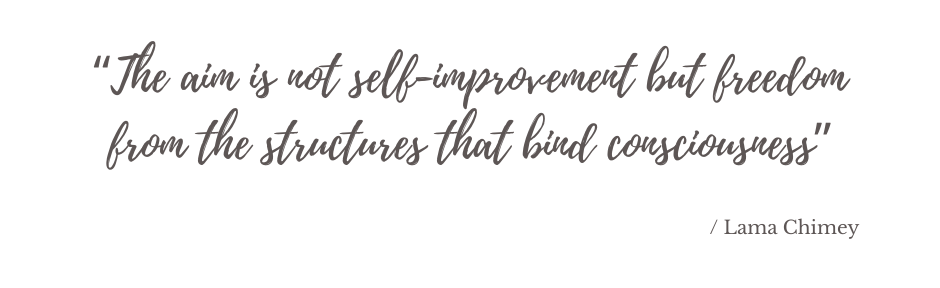
Namkha Nidra is not about healing or self-soothing. It focuses on loosening the identification with limited self-concepts. It involves shifting attention toward the space that is always available but usually unnoticed. The aim is not self-improvement. It is about gaining freedom from the structures that bind consciousness. These include attachment, aversion, and the mistaken belief in a fixed “I”.

This involves a fundamental shift in how we relate to experience. Rather than attempting to fix or fulfill the personal narrative as our main goal, we train in releasing its grip. (More on this topic in the live teacher conversation series, available as recordings on my Instagram feed.) The sense of “I” becomes more porous, and what remains is awareness itself — vivid, unbound, and naturally ethical. Tibetan Yoga is typically part of the curriculum in a traditional three-year retreat. It offers a precise and well-tested map for navigating this terrain, and Uma is central to that process.

Do you like what you are reading? Sign up below for more blog posts

The strength of Uma’s vertical channel supports our exploration of Namkha’s boundless space — they are not opposites but complementary. Together, they offer us a balanced approach to mental training. Uma aligns and stabilizes us. Namkha provides the expansive release of the structures that bind consciousness. In this way, both sitting up meditations and lying down practices like Yoga Nidra can serve the same purpose. They help us break free from conditioned patterns. We become more aligned with the open, unbound nature of mind.

These are not abstract ideas reserved for scholars, monastics or Himalayan yogis. Whether you’re new to these terms or have practiced for years, the logic of this system is experiential. You can explore it directly in your own body — but I strongly recommend doing so with proper guidance. The subtle nervous system should not be experimented with casually, especially not through an app or book alone. Seek out a teacher with authentic training who can guide you responsibly.

Do you like what you are reading? Sign up below for more blog posts

If you’re curious about what it means to align beyond the personal self, subscribe to the newsletter. It is a good place to start. It goes beyond reading this blog. I share grounded teachings, practice materials, and updates on upcoming sessions — always rooted in lived experience. I’d love to connect with those of you who are ready to go deeper. Get in touch here.


Together on the path,

Lama Chimey

Get Dharma Blog Posts straight to your device
The Role of Mentorship in Conscious Leadership: Why You Need a Guide

Leadership is often framed as a role that demands relentless drive, sharp decision-making, and an unwavering focus on results. For women in leadership, these demands frequently come with additional pressures—balancing expectations, navigating biases, and holding space for both professional excellence and personal integrity.

Yet, the most powerful leaders are not those who sacrifice their wellbeing for success, but those who integrate self-awareness, balance, and presence into their leadership. This is where the Triyana Mentorship Program comes in—a space where leadership and inner mastery meet.

Do you like what you are reading? Sign up below for more blog posts


The Power of Conscious Leadership

Conscious leadership is about leading with awareness—of oneself, of others, and of the greater impact of one’s choices. It requires presence, clarity, and the ability to act from a place of inner stability rather than reactivity. The Buddhist teachings remind us that all things arise from mind—our actions, our speech, and our leadership. Without knowing the mind, how can we trust it to lead?

Women in leadership often find themselves carrying not only their own responsibilities but also the emotional labor of teams, family, and community. Conscious leadership invites us to shift from carrying the weight of others to creating a space where people feel empowered to carry themselves.

Do you like what you are reading? Sign up below for more blog posts

But before we can transform an organization, we must transform the one leading it. That begins with a deep, unflinching look at ourselves. And if that sounds terrifying, good—it should. Real leadership isn’t about comfort, it’s about truth. And truth isn’t always gentle.

If you’re ready to go deeper and work with me, the Triyana Mentorship Program offers personal leadership coaching that cuts through illusion and gets to the core of how you lead and why.


Wellbeing as a Leadership Practice

Sustainable leadership requires sustainable energy. If our minds are restless, our nervous systems overstimulated, and our bodies exhausted, our ability to lead effectively diminishes. Wellbeing is not a luxury or an afterthought—it is foundational to leading with clarity and strength.

Buddhism has never been about soft, comfortable spirituality. It is about waking up. And waking up means no longer deceiving ourselves with the story that exhaustion is the price of success.

Do you like what you are reading? Sign up below for more blog posts

Meditation, self-reflection, and mindfulness practices are not just self-care gimmicks; they are surgical tools for cutting through the noise. A few minutes of intentional stillness each day recalibrates the nervous system, sharpens intuition, and strengthens our capacity to hold space without depletion.

Conscious breathing, body awareness, and daily pauses for self-check-in can transform the way we show up in leadership and in life. But let’s be clear—lasting transformation doesn’t come from an intense week or weekend of self-work every now and then. It comes from consistency, from daily engagement with our own mind and habits. Leadership is shaped in the small, repeated actions, not the occasional grand effort.

And just as an athlete needs a coach to refine their technique, a leader needs someone outside of their comfort zone to mirror back their progress, challenge their blind spots, and push them further. This is why mentorship matters—why it’s essential. The Triyana Mentorship Program exists for those who are ready to step into this kind of deep, committed work.

Do you like what you are reading? Sign up below for more blog posts

And yet, discipline is required. A lone wolf doesn’t last long. This is why having a mentor matters. The Triyana Mentorship Program is designed to push leaders beyond the comfortable and into the profound. Because the world doesn’t need more leaders who are just managing—it needs leaders who are awake.


Bringing It All Together

When personal wellbeing and leadership are aligned, we lead with presence rather than pressure, clarity rather than overwhelm. We create cultures that value depth over speed, wisdom over urgency, and presence over productivity for its own sake. And in doing so, we give others permission to do the same.

Do you like what you are reading? Sign up below for more blog posts

Leadership is not just about what we achieve but about how we show up. When we lead consciously, we transform not only our own experience but the collective experience of those we serve.

So I ask you—how will you lead yourself today? And are you willing to step into something deeper?

If you are, let’s talk. The Triyana Mentorship Program is here for those ready to lead from the inside out.

Here for you,

Lama Chimey

Get Dharma Blog Posts straight to your device

The Benefits of Combining Buddhism and Psychology without Blending Them

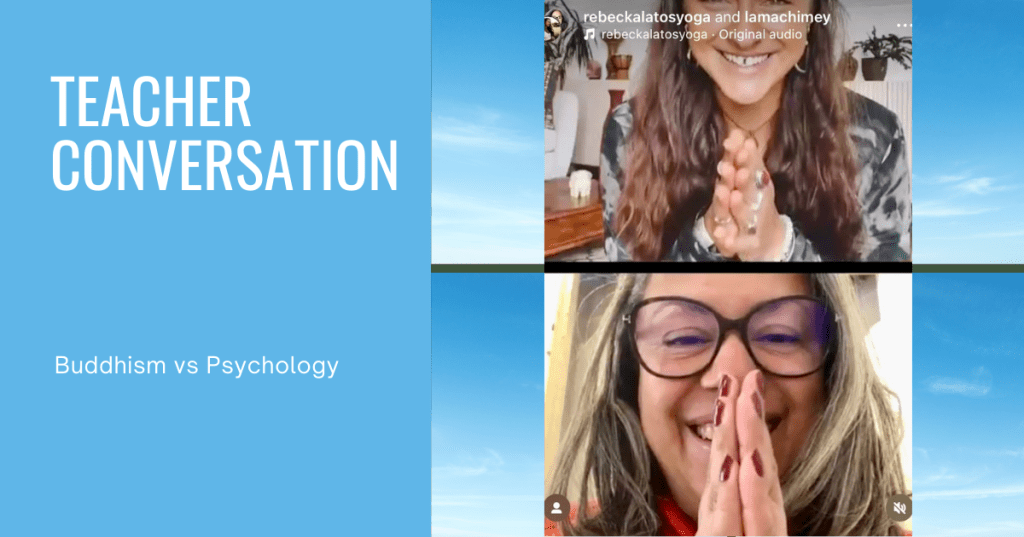
Today, I had the pleasure of sharing a live conversation on Instagram with yoga teacher and healthcare practitioner Rebecka Latoś. It was the final session in our teacher series, and we dove into a topic that’s both relevant and thought-provoking: the relationship between psychology and Buddhism. We explored how these two fields, often seen as separate or even contradictory, can actually complement each other beautifully. You can watch the full conversation on our feeds, and if you’ve been following my work here on The Dharma Blog, you know that this is a topic I’ve delved into before.

Complementary Paths

Buddhism and psychology are not opposites, nor are they rivals. They are complementary paths, each offering profound tools for cultivating compassion, clarity, and personal growth. Psychology often focuses on stabilizing and soothing the ego, promoting mental well-being and emotional resilience. Buddhism, on the other hand, challenges the very notion of a fixed self, guiding us to see through the illusion of permanence and identity.

Do you like what you are reading? Sign up below for more blog posts.

Yet, these approaches don’t have to be at odds. When used with discernment and clarity, they can coexist and even enhance one another. Rather than seeing them as competing philosophies, we can view them as interconnected practices that support and strengthen our inner transformation.


Letting Go of Self-Fixation

One of the core teachings of Buddhism is learning to loosen the grip of our attachment to a fixed self. Clinging to a rigid sense of identity only deepens our suffering, especially when reality challenges that perception. Building resilience and maintaining stability in our sense of self is essential, but it’s equally important to understand that this self is not permanent or unchanging.

Do you like what you are reading? Sign up below for more blog posts.

Psychology helps us soothe and stabilize the ego, making us more prepared to face difficult truths without succumbing to despair. By nurturing emotional health and gaining insight into our behavioral patterns, we create a solid foundation for deeper spiritual practices. This way, when we encounter challenging insights or transformative experiences, we are not overwhelmed but instead prepared to integrate and process them.


Preparation and Guidance

Deep spiritual practices require both preparation and maturity. Authentic guidance is crucial in navigating these profound inner journeys. A skilled teacher serves as a mirror, reflecting our progress and helping us move beyond mere conceptual understanding to direct experience. Without this guidance, it’s easy to become entangled in abstract ideas or misconceptions, mistaking intellectual knowledge for genuine insight.


Meditation vs. Relaxation

One of the most common misconceptions in modern wellness culture is equating meditation with relaxation. While traditional Buddhist meditation can result in a sense of calm, its true purpose is far deeper. Meditation is about realizing your limitless potential and directly experiencing the nature of mind. Relaxation may be a byproduct, but it is not the goal.

Do you like what you are reading? Sign up below for more blog posts.

This distinction becomes crucial when blending Buddhist practices with therapeutic techniques. While relaxation exercises can ease stress, meditation challenges us to look beyond comfort, confronting the raw reality of our thoughts and emotions. Integrating both approaches mindfully can help maintain balance between well-being and transformative insight.


A Holistic Human Experience

Buddhism and psychology together form a holistic map of the human experience. Psychology acknowledges the messiness of being human—our fears, desires, insecurities, and vulnerabilities—while Buddhism points toward the vast potential for liberation beyond these entanglements. Embracing both perspectives allows us to honor our humanity while also aspiring to wisdom and compassion.


Ego Care and Letting Go

Caring for the ego doesn’t mean indulging it, nor does letting go mean dismissing our emotional needs. There is a dynamic balance to be struck. Soothe your ego when it hurts, offer it compassion, but be ready to release it when the time comes. Both acts are expressions of love—one tending to our humanity, the other honoring our potential for liberation.

Do you like what you are reading? Sign up below for more blog posts.

In practice, this means being gentle with yourself during moments of emotional pain while also holding the intention to release clinging. It’s not an either-or situation, but a balanced dance between self-compassion and letting go.


Buddhist Teachings in Modern Psychology

Many modern therapeutic approaches draw directly from Buddhist teachings. Techniques like Mindfulness-Based Stress Reduction (MBSR) and certain cognitive therapies are grounded in foundational Buddhist principles. Early Buddhist texts even outline theories of perception and cognition that align with modern psychology.

For example, the concept of ayatanas (sense bases) explains how perception arises, while conceptual proliferation distorts direct experience. Understanding this process helps us become aware of how our thoughts shape our reality.


The Illusion of Self

One of the most transformative teachings in Buddhist psychology is the concept of anatta—no fixed self. The illusion of a permanent, unchanging identity is a root cause of suffering. By exploring the five aggregates—form, sensations, perception, mental formations, and consciousness—we can see how our sense of identity is constructed. Realizing the impermanence of these elements leads to wisdom and liberation.


Intention and Ethical Conduct

Our intentions shape the outcomes of our actions. Whether in meditation or in daily life, setting a clear and compassionate intention guides our journey toward inner peace. However, meditation alone is not enough to sustain transformation. Ethical conduct is essential for building a stable foundation, providing the integrity needed for deeper insights to take root and flourish.


Embracing Both Paths

Buddhism and psychology don’t need to compete or contradict each other. When approached with clarity and intention, they form a balanced approach to healing and transformation. Both help us navigate the complexities of human experience while pointing to our potential for liberation. To get book recommendations about similar topics, or listen to guided meditations and dharma talks for free, visit my free resources here.

Do you like what you are reading? Sign up below for more blog posts.

Let me know your thoughts on this conversation, and feel free to share your reflections in the comments!

Much Love,
Lama Chimey

Get Dharma Blog Posts straight to your device

The Time is Now: How Meditation Builds Resilience in Uncertain Times

Together, we share this moment—not just as individuals walking separate paths but as interconnected beings in a world that is shifting faster than ever. Uncertainty looms, and many feel the weight of change pressing heavily upon them. Some fear what might be coming, others hesitate, waiting for clarity. But waiting is an illusion.

Time is now. Not tomorrow, not when circumstances are perfect, not when the world feels stable. Now is the only reality we have. This moment is where healing begins, where choices are made, where awareness can shift. If we delay presence, we deny ourselves the fullness of life. When we choose to be here, in this moment, we reclaim our power.

Do you like what you are reading? Sign up below for more blog posts.

To meet these times with strength, we need resilience, honesty, and compassion. Resilience does not mean forcefully enduring but learning to bend with the winds of change without breaking—like bamboo, which sways with the storm yet remains firmly rooted. It is about meeting life as it is—uncertain, unpredictable, impermanent—without resistance. The more we soften into the ongoing stream of now—allowing thoughts, emotions, and external circumstances to come and go without resistance—the stronger we become. This is the practice of presence, of meeting each moment with acceptance rather than tension. What you cultivate on the cushion becomes embodied in your daily life. 

Honesty is the mirror that reflects the truth of who we are. When we turn inward with sincerity, we see our fears, our attachments, our limitations. And yet, within that same mirror, we also see our innate wisdom, courage, and boundless potential. Truth liberates, even when it is uncomfortable.

Compassion is what holds it all together. Without it, resilience becomes cold endurance, and honesty becomes sharp and cutting. Compassion reminds us that we, like everyone else, are learning, growing, and finding our way. When we extend kindness to ourselves, it naturally flows outward to others, creating a space where transformation can happen.

Do you like what you are reading? Sign up below for more blog posts.

The world will not wait for us to feel ready. It is calling for us to act, to center ourselves in mutual goodness, leaning into the core of the unshakable. This is why inner work is NOT a luxury—it is a necessity. Triyana® Buddhist Meditation offers a way to cultivate this grounded presence, to navigate life’s uncertainties with clarity, and to step into an authentic path of awakening. Rooted in an integrated system that bridges traditional Buddhist wisdom with modern understanding, Triyana Meditation provides structured levels of practice, making deep transformation accessible and practical for everyday life.

For those who are ready to take the next step, an upcoming opportunity awaits. In my in person three hour Triyana Meditation workshop in Stockholm April 5th, we will explore meditation postures and their impact on the subtle nervous system. We will dive into the five foundational levels of the Triyana Meditation system, and the four invaluable qualities that inspire the positive traits necessary for deep transformation—both in meditation and in life. The workshop will culminate in a long, guided Triyana Meditation session, offering a profound opportunity to connect, experience, and embody this path. 

Do you like what you are reading? Sign up below for more blog posts.

Together, we reconnect with the present moment, embracing its depth and clarity. Together, we choose to be present, to be courageous, to be kind and honest.

This moment is our opportunity. The time is now.

With so much love,

Lama Chimey

Get Dharma Blog Posts straight to your device
How to Lead Beyond Your Title: The Key to Authentic Leadership

A true leader is not appointed by an organization’s management team. Leadership is not defined by titles, positions, or authority—it is defined by presence, influence, and alignment with shared values. People naturally follow those who inspire them, guide them, and reflect the qualities they admire. Whether they hold an official title or not, a real leader is someone who others trust and willingly turn to for direction.

The Dynamics of True Leadership

If you have the title but not the trust of your team, someone else will naturally fill that space. That is how group dynamics work. People instinctively follow those who embody leadership qualities—clarity, presence, and integrity. This can be both a challenge and an opportunity. Instead of seeing informal leaders as a threat, recognize them as a valuable force within your team.

Do you like what you are reading? Sign up below for more blog posts.

In Buddhist philosophy, we understand that leadership is not about possession but about interdependence. A wise leader does not suppress natural leadership in others but nurtures it. True leadership is about serving the greater good, not reinforcing ego. If someone else has influence, invite them into the conversation, listen to their insights, and lead in collaboration rather than competition. Your role is not to demand leadership but to embody it.

Navigating Leadership in a Team Setting

What happens when there is someone in your team whom others look to for guidance, even if they do not hold a formal leadership role? This is not an obstacle; it is an opportunity to strengthen the group. Rather than competing for authority, the key is to foster a leadership culture based on mutual respect and shared purpose.

  • Observe with Awareness: Notice who people naturally turn to in times of uncertainty. This person is already fulfilling a leadership role, whether acknowledged or not.
  • Engage, Don’t Exclude: Instead of feeling undermined, invite them to contribute to discussions, recognizing their influence.
  • Lead with Service: True leadership is not about control, but about enabling others to bring out their best. If someone else in your team holds influence, see how you can work together to support the overall mission.

Leadership as Presence and Influence

A leader’s true power does not come from their position but from their ability to inspire and uplift others. In Buddhist practice, presence is key. Mindfulness (Sati) teaches us that true leadership is not about control but about deep listening and understanding. When we cultivate presence, we lead with clarity rather than reactivity, with wisdom rather than impulse.

This means:

  • Speaking with intention rather than dominance.
  • Leading through example rather than instruction alone.
  • Creating space for others to step into their own leadership potential.

The Ripple Effect of Purposeful Leadership

A leader who is aligned with their values creates a culture of trust and inspiration. Employees feel seen and valued. Teams become more engaged. Challenges are met with curiosity rather than fear. In contrast, when leaders operate from a place of obligation rather than purpose, burnout and disengagement become inevitable.

Do you like what you are reading? Sign up below for more blog posts.

The way you show up as a leader directly influences your team and organization. Your calm confidence fosters stability. Your self-awareness promotes emotional intelligence. Your clarity in purpose encourages alignment and motivation in others. Leadership is not about perfection—it is about intention and conscious action.

Cultivating Inner Leadership

To sustain your presence as a leader, regular self-reflection and mindfulness practices are essential. Consider integrating these habits into your leadership journey:

  • Morning Reflection: Before diving into work, take five minutes to reconnect with your purpose. Ask yourself, How can I lead with intention today?
  • Mindful Communication: In meetings and conversations, listen with full presence. Notice when your mind drifts and gently return to the present moment. Do not fixate on what you are going to respond. Listen with presence, an open mind, and warm attention.
  • Energy Renewal: Leadership requires sustained energy. Take a few minutes to recharge with a simple mindfulness practice. If you need support, I invite you to join my guided Immune Boost Relaxation session to regain clarity and energy.

Step Into Your True Leadership Potential

True leadership is not a status granted from above; it is earned through presence, trust, and alignment with shared values. It is a dynamic process of guiding and being guided, of teaching and learning. When you lead with awareness, integrity, and service, you create an environment where leadership is not about control, but about empowerment.

Do you like what you are reading? Sign up below for more blog posts.

If you are ready to deepen your leadership journey, I invite you to reach out to me directly about my leadership and mentoring programs. Together, we can cultivate the qualities that make leadership truly impactful—not just for your team, but for yourself as well.

/ Lama Chimey

Get Dharma Blog Posts straight to your device
The Feminine Qualities That Lead the World to Strength & Interconnectedness

Tomorrow, March 8 is a day to celebrate women, but in truth, every day is an opportunity to recognize the immeasurable strength, wisdom, and compassion we bring into the world. From a Buddhist perspective, the feminine principle represents deep wisdom—prajñā—that cuts through illusion and nurtures all beings with boundless compassion. In my meditation classes I always encourage my students to expand their view into the unborn, spacious, inclusive mind. Being guided makes it easier to focus and actually get in to a regular practice. And those who have attended my workshops say that the classes afterwards are something entirely different.

The feminine qualities, beyond gender identity, include the qualities of patience, resilience, and emotional wisdom, showing the world how true strength arises not from domination but from understanding and interconnectedness.

Across time and traditions, we have embodied this wisdom in countless ways. The great female practitioners of the past—Mahapajapati Gotami, the first Buddhist nun and foster mother of the Buddha; Yeshe Tsogyal, the mother of Tibetan Buddhism; Machig Labdrön, who pioneered the profound Chöd practice—stood as beacons of resilience and realization. These women transcended societal limitations, demonstrating that the path to awakening is open to all, regardless of gender or status. They remind us that spiritual accomplishment is not about external recognition but the depth of realization cultivated within.

Do you like what you are reading? Sign up below for more blog posts.

We are often the unseen force of transformation in families, communities, and societies. Our ability to hold space, to listen deeply, and to act from a place of wisdom shapes the world in ways often overlooked. Whether as caregivers, teachers, healers, or leaders, we weave together the fabric of our collective existence. In Buddhist teachings, the path of the bodhisattva—one who dedicates their life to the benefit of all beings—is often embodied by those who selflessly serve, offering compassion without seeking acknowledgment.

Do you like what you are reading? Sign up below for more blog posts.

Despite historical and cultural challenges, we have continually risen to lead, teach, and inspire. In many Buddhist traditions, female monastics and lay practitioners have had to push against barriers to gain recognition. In the aftermath of having jumped ship and entered new territory as a Buddhist nun, I was facing cold facts concerning what can be expected in our day and age for a life as a western Buddhist monastic. We take ordination for life, only to realize that the social context needed for growth and learning is often absent. The structures that should support us are lacking, leaving us to navigate our path with limited guidance. We are all of course on individual journeys, with different ups and downs. Still, in general, we share the inevitable cultural clashes, gender inequality, the lack of sufficient support, home base, and many times even a basic monastic training.

Do you like what you are reading? Sign up below for more blog posts.

Many lives run parallel to mine, who can bear witness to this occurrence. Most of us come to live on the edge of all societies and institutions, where we have to sustain ourselves on all levels very creatively. At the same time, our own, as well as others expectations of what we are supposed to both absorb and uphold concerning the Buddha’s wisdom teachings, become both too high and too low. It surely is a noble pursuit, but one that currently finds itself badly limping in countries that lack a settled presence of Buddhist culture. Today, more of us are stepping into roles of spiritual leadership, reclaiming our rightful place as teachers and lineage holders. This shift is not only necessary but vital for a more balanced and compassionate world.

Do you like what you are reading? Sign up below for more blog posts.

May this day serve as a reminder of the sacred feminine in all of us, regardless of gender. May we honor the wisdom and compassion that we bring, not just today, but always. And may we continue to support, uplift, and celebrate each other in our shared journey toward awakening. The more we recognize and empower the feminine qualities of wisdom and compassion, the more we cultivate a world rooted in genuine harmony and understanding vs one in domination.

Yours in the Dharma,

Lama Chimey

Get Dharma Blog Posts straight to your device

Celebrating Losar Today: Embrace Change, Wisdom, and New Beginnings

Losar, the Tibetan New Year, is a time of fresh beginnings, reflection, and renewal. Rooted in ancient traditions, this celebration marks not just the start of a new year but an opportunity for deep spiritual transformation. As we step into this new cycle today, we are reminded of the impermanence and ever-changing nature of life. Each year carries its own unique energy, inviting us to release what no longer serves us and embrace wisdom, clarity, and compassion.

As I prepare for Losar, I find myself cleaning out my home and moving things around, reflecting on what I want to bring with me into the new year and what has served its purpose and can be left behind. This process feels both symbolic and deeply personal—letting go of the unnecessary to create space for new opportunities and clarity. It is a reminder that renewal isn’t just about external change but an inner shift as well.

Do you like what you are reading? Sign up below for more blog posts.

Today, families and communities around the world are coming together to celebrate Losar. Traditionally, it is observed over several days, with rituals that cleanse, purify, and prepare the mind and environment for a new beginning. Homes are thoroughly cleaned, symbolizing the clearing away of obstacles and stagnant energy. Families are making offerings, reciting prayers, and engaging in ceremonies that invoke blessings for the year ahead. Special foods are being prepared and shared, bringing a sense of joy and community.

This year, we take inspiration from the qualities associated with the cycle ahead. Just as a snake sheds its skin, we too can let go of old habits, thoughts, and attachments that may be holding us back. The practice of reflection, mindfulness and meditation is particularly important during this time, as it helps us cultivate clarity and presence. By turning inward, we can connect with the deeper aspects of our being, and aspire to recognizing the luminous nature of mind that is always present beneath the distractions of daily life.

Do you like what you are reading? Sign up below for more blog posts.

Beyond personal reflection, Losar is a time to extend well-wishes and generosity to others. It is an opportunity to renew our commitment to kindness and compassion. I encourage you to be generous, not only in material ways but in your warmth, patience, and understanding. A kind word, a helping hand, or a heartfelt smile can uplift those around you. May you take this opportunity to spread joy and light to others, knowing that your kindness has a ripple effect far beyond what you can see. When we give selflessly, we align ourselves with the natural flow of abundance and interconnectedness, reinforcing the values of love and harmony.

Setting positive intentions for the new year is also a central aspect of Losar. This goes beyond simple resolutions; it is about making a heartfelt commitment to deepen our practice, cultivate wisdom, and contribute to the well-being of all beings. Like I tell my regular students, to deepen their practice and gain a better understanding of the Buddhist philosophy behind the Triyana meditation system, I always encourage taking the opportunity to explore further by attending my workshops. Through prayer, meditation, and conscious action, we align ourselves with the greater good and strengthen our connection to the path of awakening.

Do you like what you are reading? Sign up below for more blog posts.

As we welcome this new year today, may we do so with open hearts and clear minds. May this new cycle bring deeper understanding, unshakable joy, and a heart full of loving-kindness. May your practice flourish, and may the light of your realization bring benefit to the world.

Wishing you a joyful, peaceful, and auspicious Losar!

ལོ་གསར་བཀྲ་ཤིས་བདེ་ལགས།

Lama Chimey

Get Dharma Blog Posts straight to your device