Expanding Our Circles of Loving-Kindness in a World of Cries

Loving-Kindness in a World That Feels Too Restricted

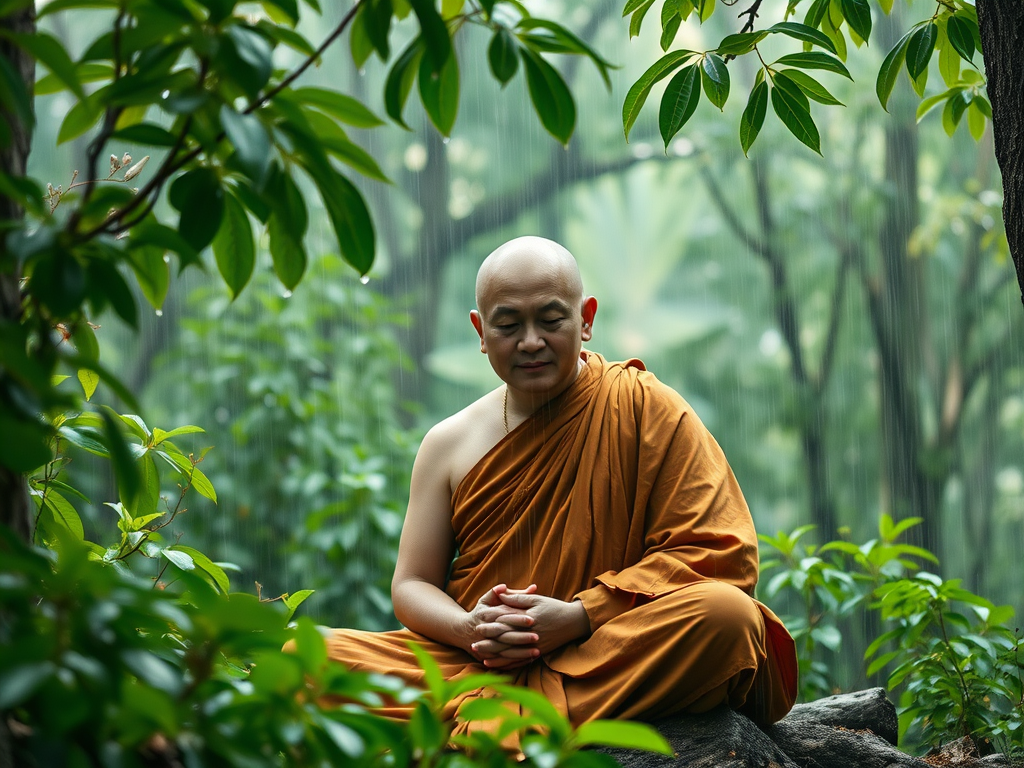
Love is rarely as simple as we might want it to be. It arrives quietly, insistently, sometimes in forms we do not recognize. We celebrate romance, cherish those closest to us, and yet often glance past the vast, unfolding field of beings who share this world with us. Buddhism teaches that love need not be limited, nor should it be. Metta, or loving-kindness, is a practice that stretches the heart beyond desire, preference, and attachment. It is not the flutter of butterflies nor the spark of passion. It is steadiness, warmth, and a quiet resilience. When we cultivate it, we discover that expanding care is not only possible—it is practical, restorative, and profoundly stabilizing.

The Four Doors to Compassion

Loving-kindness opens through what Buddhism calls the four objects of compassion, each a doorway into the world and into ourselves.

Ourselves – Begin with the self, often the hardest and most necessary door. To offer ourselves patience, ease, and clarity is not indulgence; it is foundation. It may take a quiet morning, a deep breath, a gentle acknowledgment of exhaustion or pain. Each act of self-kindness softens the edges of the mind and builds a heart capable of holding more than it imagined.

Those We Care For – Friends, family, mentors—those whose presence feels familiar and comforting. To them, we offer not obligation, but attention. Listening fully, speaking gently, offering patience when irritation rises—these small, repeated gestures weave threads of connection and trust. The brain itself begins to respond, learning that warmth, not expectation, is the language of belonging.

Strangers – The brief encounters, the glances, the lives we touch lightly. Recognizing their shared humanity, even in passing, reminds us that the world is far larger than our immediate circles. A nod, a smile, a pause to notice someone’s struggle—these tiny gestures echo quietly in the mind, strengthening empathy, softening judgment, opening space for care to flow where it is not demanded but offered freely.

Do you like what you are reading? Sign up below for more blog posts.

Those We Find Challenging – The hardest doorway of all. Difficult colleagues, neighbors, even strangers who provoke irritation. To extend care here is to strengthen the heart and steady the mind. It does not excuse harmful behavior, nor does it require engagement; it simply cultivates freedom. Remember always: you have the choice to step away from conversations or spaces that feel toxic, online or in person, while maintaining a measure of inner generosity. In this choice lies the essence of loving-kindness.

In my digital course, Introduction to Triyana Meditation, I guide students through practices that cultivate this expansive care. For those curious to explore gently, a mini, bite-sized course will soon be available, an invitation to experience the practice before committing to the full journey. Link to full course here.

Practical Ways to Cultivate Loving-Kindness

Even without formal meditation, there are countless ways to practice loving-kindness, small and practical, yet transformative.

  • Small Daily Actions: Listen fully. Offer patience. Notice small needs and respond with attention. A cup of tea shared, a door held open, a smile given freely—these gestures ripple far beyond the moment, altering the texture of our interactions and quietly rewiring the mind toward care.
  • Awareness of Reactions: Observe irritation, judgment, or aversion as they arise. Let these feelings be noticed without forcing them away. Your response is a choice, and in that choice lies freedom. Each moment of deliberate kindness, even inwardly, strengthens the capacity to respond with gentleness.
  • Digital Mindfulness: Step back from heated conversations online, or any exchange that drains or unsettles you. Protecting your energy is itself a form of care—both for yourself and for the conversation. Choosing not to engage is not withdrawal, but an intentional act of loving-kindness in action.

Through repeated attention to these practices, the heart gradually expands. What once felt like a finite circle grows, quietly and insistently, capable of holding more, noticing more, responding more with patience, warmth, and care.

Choosing a Heart That Expands

Loving-kindness is not romantic love, though it may feel warmer than desire. It is not possession, though it holds the world softly in the hand. It is immediate, practical, and transformative. Through everyday choices, subtle gestures, and awareness of where we place our attention, the heart can stretch farther than we often believe.

Do you like what you are reading? Sign up below for more blog posts.

If you are ready to expand your loving-kindness through beginning or deepening this practice, Introduction to Triyana Meditation offers guided loving-kindness meditations and much more. Read about it and sign up here. And for a gentle first step, the mini, bite-sized course will soon be available, perfect for exploring the practice before committing to the full journey.

Each moment spent wishing ease, extending care, or choosing mindful engagement strengthens the heart. Start small, notice the shift, and remember: every act of loving-kindness ripples farther than the eye can see. If you can’t wait to step further into the practice, and commit to making it a priority in your life, the full course provides deeper guidance and structure. I’m here to guide you. Are you ready? If so, start now, the world needs your loving-kindness!

Do you like what you are reading? Sign up below for more blog posts.

You know, the world softens where care is offered. It widens quietly, imperceptibly, until the boundaries we once assumed were fixed begin to dissolve. And in that space, the heart discovers its remarkable capacity to expand—beyond preference, beyond habit, beyond expectation.

Go love the world,

Lama Chimey

Get Dharma Blog Posts straight to your device
Brytningstid: Embracing Change and Letting Go with Autumn’s Grace


There’s a hush that arrives before the leaves surrender their green. A pause so small it’s almost imaginary—like the breath before someone speaks a truth they’ve kept hidden for too long. The sun’s angle grows tender, the shadows lengthen and hesitate. This threshold between seasons—what in Swedish we call brytningstid—is not a clean cut but a gradual tilting of the light.

Do you like what you are reading? Sign up below for more blog posts.

I’ve learned that the heart recognizes this shift long before the mind does. It’s not a melancholy so much as a summons: a call to look at the way all things slip from one form into another. In Buddhism, we do not see this as loss. It is the river of becoming, the same river that has carried us from breath to breath, birth to birth, leaf to leaf.


The Silence Before the Turning

In the Jātaka tales there is one story I return to each autumn, perhaps because it, too, carries the weight of the season’s hush. It tells of a Bodhisattva—the one who in a later life would be born as the Buddha Shakyamuni—wandering in the high mountains as summer was giving way to cold winds. There he encountered a starving tigress and her five cubs, all too weak to draw breath. Moved by compassion so complete it made no calculation, he laid down his body as nourishment for her and her young.
(Scholars refer to this as the “Hungry Tigress Jātaka,” where the Bodhisattva sacrifices himself to feed a tigress who, in her desperation, might devour her cubs.)

What brings that scene to mind is what unfolded lifetimes later: when he was reborn as the Buddha. Those same beings—the tigress and her five cubs—reappeared as five wandering ascetic practitioners. They were his old companions from the years he had spent in severe yogic austerities, practices he eventually left behind after realizing that physical practices alone could not lead to liberation.

Do you like what you are reading? Sign up below for more blog posts.

When the newly awakened Buddha met them again near Deer Park, they were skeptical—seeing him as one who had strayed from their path of discipline. But as they listened to what he had realized under the Bodhi tree, their minds, already ripened by long practice and past karma, opened. Some of them came to realization during that very first teaching, known as the First Turning of the Wheel of Dharma. What had once been an act of sacrifice returned as the blossoming of wisdom. The circle closed, quietly, with a tenderness that autumn seems to understand.


The Autumn Lesson

Now, when I walk beneath thinning branches, I notice the way each leaf lets go—gently, without bitterness. They drift down in spirals, soft as the memory of a promise fulfilled. There’s no argument with the wind, no bargaining with the tree. I am inspired—reminded—what it means to fall with grace.

I reflect also on the words of His Holiness the 17th Karmapa, Ogyen Trinley Dorje, who says:

“Once we realize that our personalities are not fixed and that we can decide to actively change them … compassion and other inner qualities … need to be cultivated gradually, over time, and in concert with other qualities.”
—from Interconnected: Embracing Life in Our Global Society

That insight speaks well to our seasons of transformation: change is not a wound but a slow unfolding. We do not lose something essential; rather, we permit ourselves to evolve.

Autumn teaches this lesson better than any sermon. The tree does not weep for the leaves it loses. It does not believe it has been diminished. It trusts the bare branches to hold through winter, trusts the sap still running quietly within, trusts that the emptying is part of a larger rhythm.

Do you like what you are reading? Sign up below for more blog posts.

As a Buddhist priest, Lama, and as a fellow human being, I find this trust—this willingness to release what we cannot keep—may be the deepest practice we can learn. To lean into the breaking point of a season, of a chapter in life, without turning away or clinging to what once was. To let the shedding be a blessing, not a defeat.


Letting Go with Grace

Dear reader, you might be standing somewhere in your own brytningstid. Perhaps it is not autumn outside your window, but you know the feeling: that subtle tilt of light in your life, the quiet suggestion that something is ready to be released.

You have known the weight of holding on. You have known the ache of things changing against your will. And yet, as you look more closely, perhaps you can sense that what feels like breaking is also an opening.

Do you like what you are reading? Sign up below for more blog posts.

May you, in this season or the next, listen for the wisdom in the falling leaves. May you see that change need not be feared as loss, that release can be its own kind of nourishment. The trees will stand through winter’s silence; so will you.

When the time comes, may you, too, fall with grace—and trust that the ground will receive you gently, ready to nourish what will rise again.

Yours through change,

Lama Chimey

Get Dharma Blog Posts straight to your device
How Convenience Turned Us into Birds Flying Into a Clear Glass Window

We live inside a paradox. The modern world has gifted us more convenience than any era before. Food arrives with a tap. Conversations happen across continents in seconds. Knowledge, once preserved in monasteries and libraries, now rests in our pockets. It should feel like liberation. Instead, many of you, leaders not the least – tell me they feel trapped—by stress, distraction, and the smallest of obstacles.

The truth is that convenience has not freed us. It has made us fragile. And in the absence of real challenge, we often manufacture friction to fill the void. This is where Vajrayana Buddhism offers a different lens: what if the obstacles we avoid are the very raw material of leadership and transformation?


The Trap of Endless Comfort

Convenience is not the enemy. In Buddhist practice, we deliberately simplify our lives so that we can pay attention to what matters most. A meditation cushion is a convenience compared to the bare ground. A text handed down from a teacher is a convenience compared to figuring it out alone.

Do you like what you are reading? Sign up below for more blog posts.

But there is a tipping point. Too much comfort dulls our edge. The mind, unchallenged, becomes impatient and brittle. The smallest disruption—a delayed email, a misinterpreted comment, a system glitch—sparks outsized frustration. In organizations, I see this ripple outward: teams get frustrated not because the problem is catastrophic, but because their capacity to work with discomfort has been quietly ruined.

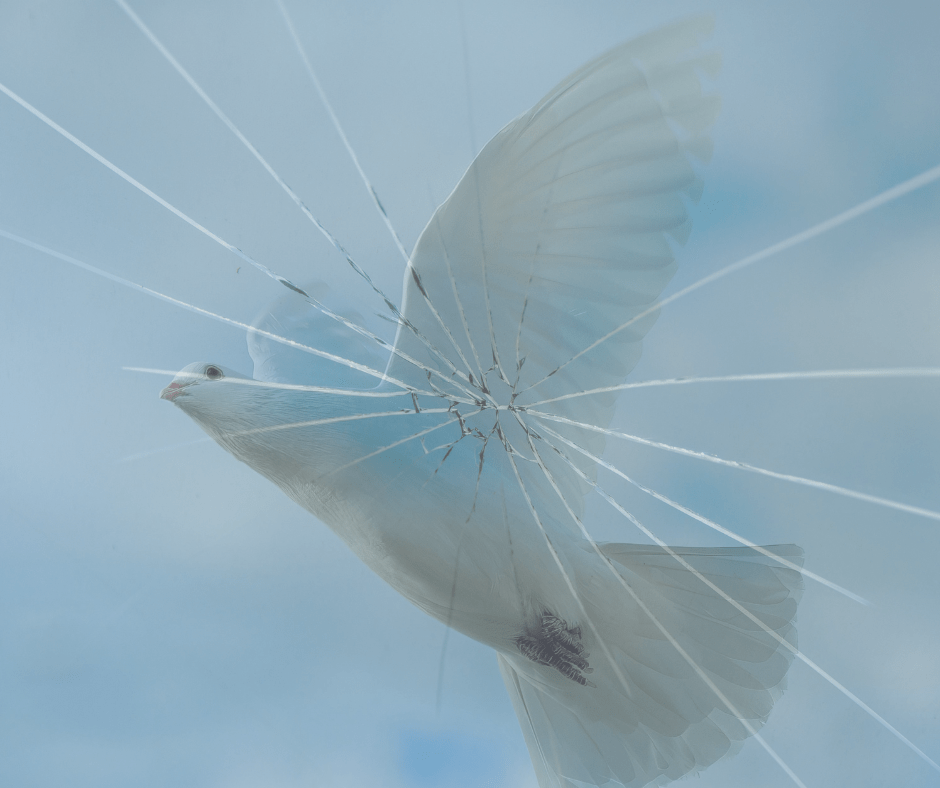
This is not weakness. It is habit. We have trained ourselves to expect ease, and so we are startled by friction, like a bird flying into a clear glass window.


Turning Poison into Medicine

Vajrayana Buddhism teaches a radical view: nothing is wasted. Even the poisons—anger, fear, doubt—can be transmuted into clear wisdom. Obstacles are not interruptions on the path. They are the path.

This principle is vital for leadership. A leader who embodies this way of seeing does not try to eliminate all difficulty from the workplace. That is neither possible nor desirable. Instead, they show how to meet resistance with awareness and clarity. Friction is not denied or smoothed over. It is acknowledged, worked with, and ultimately transformed.

Do you like what you are reading? Sign up below for more blog posts.

Think of it as alchemy of the mind. The raw heat of frustration can be refined into the clarity of problem-solving. The heaviness of fear can be reshaped into the solidity of courage. The restless energy of doubt can be redirected into inquiry and innovation.

But this does not happen automatically. It requires training, discipline, and what I call Wise Inner Leadership—the capacity to lead oneself before attempting to lead others.


Leaders and the Myth of Seamlessness

Modern leadership often obsesses over efficiency, productivity, and seamlessness. But seamlessness is an illusion. Life is inherently uneven, unpredictable, sometimes sharp-edged. Leaders who try to create perfectly smooth systems end up with brittle cultures: one unexpected challenge, and everything splinters.

Vajrayana leadership is different. It does not ask: “How do we remove all friction?” It asks: “How do we relate to friction when it inevitably arises?” This shift changes everything. Instead of reacting with blame, acting out or avoidance, leaders can cultivate resilience in themselves and their teams. They can normalize discomfort as part of growth, not as a failure.

Do you like what you are reading? Sign up below for more blog posts..

Convenience has its place—it clears unnecessary noise so that our attention is free. But when convenience becomes the goal itself, it weakens the very capacities leaders need most: patience, resilience, and the courage to transform the unknown.


Choosing the Path of Wise Inner Leadership

So here is the invitation. Do not allow convenience to dull you. Use it wisely, but do not let it define you either. Welcome friction not as punishment, but as training. In organizations, this might mean creating spaces where challenges are named openly, where teams are guided not to panic but to pause, reflect, and transform.

Do you like what you are reading? Sign up below for more blog posts.

This is the work of Wise Inner Leadership. It is the core of my guidance program for leaders—and very soon, I will open an exclusive try-it-out for a limited group of leaders, for a limited time. If you feel called to explore how Vajrayana wisdom can strengthen your leadership, you will find more details here: The Inner Wisdom Program. Guided in Swedish or English.

Convenience can smooth the surface of life, but it is clear presence that gives us sustainability. Presence that meets difficulty without shrinking and without lashing out. Presence that can hold an organization steady when everything around it shifts. This is the leadership our times are asking for: awake, resilient, and unafraid.

Your guide to integrating the Dharma into your everyday life,

Lama Chimey

Get Dharma Blog Posts straight to your device

Why are you acting like a Robot? Reclaim Your Humaness Through the Power of Sati

The Morning Begins with Awareness of Your First Breath

The first breath of the morning is a doorway. On one side lies sleep, on the other, the day. What we do in that threshold matters. If the first thing we reach for is a glowing screen, we lose control of our mind. This happens before we even know where we stand. But if we begin with presence—with a pause, with breath, with awareness—we reclaim that fragile space between dream and duty. In Buddhist practice, this is the essence of sati: remembering now.


Start Your Day Off-Screen and On-Purpose

When we speak of sati—mindfulness—we mean more than simply paying attention. It is the power to remember this moment, to meet it without distraction.

Do you like what you are reading? Sign up below for more blog posts.

Our phones train us to forget. Online, we are constantly asked to prove we are not robots: Click here to verify. Select all the images with bicycles. The irony is that by living automatically—rising, scrolling, reacting—we risk becoming robotic. We forget that we are incarnated beings, tender and raw, living in the flesh.


Remember Now: Reclaim Your Humanness from Autopilot

The body is not who we are, but it reminds us. To incarnate—in carne (Spanish)—is to dwell in the flesh. The warmth of a cup between your palms, the stretch of muscle, the cool air of morning on your skin—all of these are invitations to remember our true essence.

Do you like what you are reading? Sign up below for more blog posts.

Without judgment, with upekkhā—equanimity—we can simply allow what is here, neither clinging nor pushing away. This is how I guide my live meditation classes, always returning to the steadiness of equanimity.


Anchoring Your Morning Practice

Try beginning your day with just ten minutes of this remembering. Direct your awareness towards your breath as it is, without changing anything. Just be with what is. Make a warm drink and notice the weight of the cup in your hands. Stretch gently, as though greeting your body anew.

Do you like what you are reading? Sign up below for more blog posts.

Then step outside. Feel the elements on your skin—the touch of wind, the smell of rain, the warmth of sunlight. These are not trivial sensations. They are reminders that you are alive, that you are connected to the fabric of the earth itself.


Your Steady Morning Rituals Shapes Your Mind

Write down the first things that come to mind without judging it. Write in a journal: a dream, a thought, or one clear intention. Let it be one sentence you can remember and repeat every morning. Not as yet another robotlike sure, but as a vow springing from kindness.

Examples:

  • I vow to bring patience into this day.
  • I shall care for my own heart so I may care for others.
  • Today I wish to do no harm.

When such a sentence arises, it becomes both anchor and compass. Journaling is not just a quaint practice; it is a powerful way of meeting your own mind. In my digital courses, writing is an integral part of meditation training, because it deepens awareness and gives shape to what otherwise slips away. Explore my courses here →

This simple ritual is not only where Buddhist practice may begin, but also how it is sustained. Remembering now, through our thoughts, words and actions. Like water dripping steadily on stone, each morning of mindful presence wears a path deeper into the mountain of our habitual mind. Over time, what seems immovable—the stone of distraction, restlessness, and reactivity—yields. Practice makes its way to the core.


Let Presence Be Your Compass

So tonight, make a small preparation. Put your phone somewhere other than your nightstand. Place a notebook there instead. When you wake, write, stretch, breathe. Remember now.

Do you like what you are reading? Sign up below for more blog posts.

This is not self-improvement; it is remembering to live. Not as a performance, but a return to humanness. Begin your day not as a machine proving you are human. Instead, start as a being who has incarnated tender and raw. You have the chance—every single morning—to touch the essence of who you truly are.

Yours on the path,
Lama Chimey

Get Dharma Blog Posts straight to your device

What does Buddhism Say About Love, Trust, and Partnership?

In Buddhism, love is not an object you stumble upon, clutch tightly, and fear losing. It is not a trophy for the fortunate, nor a prize for the deserving. Love is metta—loving kindness—an essence already present within every living being, though often buried beneath layers of fear, desire, and misunderstanding.

When the Buddha spoke of love, he paired it inseparably with compassion. To love someone is not only to feel warmth toward them, but to wish—truly wish—for their freedom from suffering. It is a discipline as much as a feeling, and a practice as much as a gift.


Love Beyond One Shape

The world likes neat boxes: one partner, one story, one ending. But Buddhism does not insist on one singular shape for love. Monogamy, polyamory, or other forms of committed relationship are not judged by their outlines, but by their substance.

What matters is trust, what matters is respect. These are the ground on which love flourishes. Without them, any form of relationship becomes fragile. With them, love becomes a steady force, capable of holding the complexities of life without collapsing under the weight of them.

Do you like what you are reading? Sign up below for more blog posts.

Love, in this sense, is less about possession and more about stewardship: tending to the fragile ground of another’s wellbeing, watching your own steps so as not to trample the roots.


Vows, Choices, and Sacred Rites

For monks and nuns, celibacy is not a casual choice but a vow. During my years as a nun, I understood it not as repression but as discipline—supporting practice by leaving behind the distractions of desire and attachment. It is a path that clears space for awakening.

Now, as a priest, my life is different. Not all lamas conduct weddings, but I have chosen to integrate the Dharma into daily Western life. This is why I hold a marriage license and am authorized to perform weddings and other rites of passage. In these ceremonies, I witness how love can be sanctified not by dogma, but by intention— people standing side by side, promising to meet life’s changes with kindness.

Do you like what you are reading? Sign up below for more blog posts.

Marriage, then, is not ownership, but a vow to practice compassion together. It is a spiritual training ground in its own right, whether blessed in a temple, a garden, or a windswept beach. You can read more about the weddings and other ceremonies that I conduct here.


The Heart of Loving-Kindness

If compassion is the body, loving kindness is the heartbeat. Metta is not sentimental, not sugar-coated. It is steady, fierce, sometimes difficult. It is the willingness to extend care even when the easier option is to turn away.

In Buddhist practice, metta meditation is the cultivation of this quality. We begin with ourselves, because a withered heart cannot give. Then we extend it to those we love, those we struggle with, strangers on the street, and even to those we might call enemies. The practice reshapes us, widening the circle of compassion until it encompasses all beings.

Do you like what you are reading? Sign up below for more blog posts.

And yet, it also returns us to the most intimate relationships we know. To love one person with metta is to love them not with clinging, but with spaciousness. It is to recognize that they are not ours, but themselves—free, luminous, impermanent.


A Buddhist View of Love

A Buddhist view of love is not about formulas or laws. It is not fragile, though it may feel delicate. It is resilient because it is rooted not in control but in compassion.

The question we return to, again and again, is simple: Does this bring harm, or does it nurture freedom? In every form of relationship—whether in partnership, in marriage, or in the vow of celibacy—that question is the compass.

Do you like what you are reading? Sign up below for more blog posts.

To live with love in this way is to walk a path guided by kindness, shaped by compassion, and strengthened by honesty. It is to choose, moment by moment, to make of love not a possession but a practice. And in that practice, we return to what was always there: the quiet, inexhaustible essence of loving kindness itself.

With Metta,

Lama Chimey

Get Dharma Blog Posts straight to your device

Living the Bardo: Continuity and Presence

Photo © Photographer

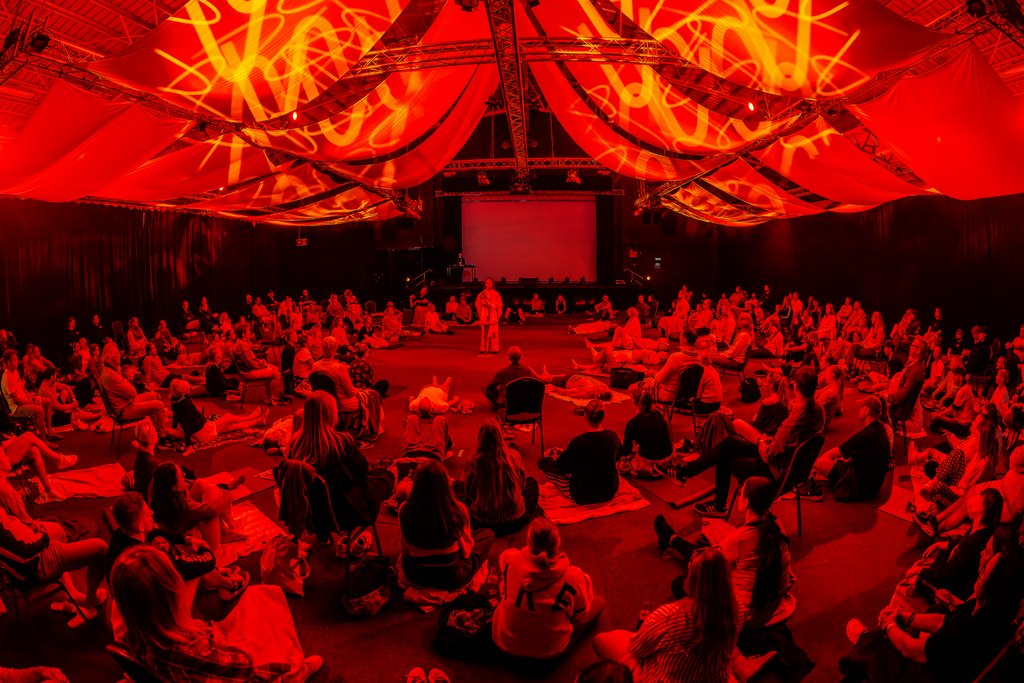
Recently, I was asked to hold space at a great gathering. The theme: transitions. Bardos. The rawness of impermanence.

Hundreds of people came.
Rows of bodies, breathing.
Eyes open, eyes closed.
Hands resting, hands folded.

The room hummed quietly, with the weight of expectation, of curiosity, of searching.

Do you like what you are reading? Sign up below for more blog posts.

It was not fear that moved them. Not grief. Not despair.
It was recognition. Continuity.
That even as forms dissolve, presence does not.
That even when life shifts, the thread is unbroken.

I realized, in that room, my mission made tangible:
to weave the sacred into the everyday.
To make the teaching of the bardo close as breath. Immediate. Intimate.
The Karmapas embody this kind of work on a master level in their returns.
Life continues. Awakening continues. Compassion continues.
Death is not the end.


The Gathering

I guided their presence carefully.
From sight to listening.
From the surface of things to the deep stillness beneath.
The lights dimmed.
Dimmer.
Darkness.

Silence grew.
Not heavy. Not oppressive.
A silence that held attention like a lantern in shadow.

I asked them:
“Why. Why are you here? In this body. At this time?”

Do you like what you are reading? Sign up below for more blog posts.

Some whispered inwardly.
Some let the question rest on the surface of their mind.
Some felt it in the body, a pulse, a tremor, a recognition.

They moved together through reflection.
They felt the bardo as reality, not as theory.
The space between breaths became passage.
The pause between words became doorway.

And I watched.
Hundreds of people, each touching continuity.
Not learning it. Living it.


Continuity and Choice

The bardo of death is universal. Everyone moves through it.
Most are carried by the winds of their habits, scattered without direction.
Ordinary beings are tossed, blown, driven.

Awakened masters move differently.
The Karmapas step with clarity.
They return, life after life.
By vow. By compassion. By choice.

In that room, this was reflected.
I spoke of the red thread of mind, unbroken across centuries.
Of teachers returning.
Of vows persisting, like rivers cutting through stone.
In their faces, some people recognized it.
Recognition not of the mind, but of awareness itself.
Immediate. Bodily. Felt.

Do you like what you are reading? Sign up below for more blog posts.

Some closed their eyes.
Some looked around.
Some simply breathed, letting continuity settle.
The sacred, woven into the ordinary, became visible.
The teaching was not abstract. It was present, alive.


Embodied Presence

I was reminded as I held the space, how living this teaching is.
The sacred is not distant.
It is the space between breaths.
The pause after a thought dies.
The silence after a word.
The presence of one human being facing another.

Hundreds of people, sitting quietly, felt it.
They did not leave with theory.
They left with a lived experience: presence is continuous.
Life is not ended by change.
The mindstream flows onward, through every passage.

Do you like what you are reading? Sign up below for more blog posts

The Karmapas have done this work for centuries.
Returning again and again.
Showing that awakening continues.
That compassion is unbroken.
That the sacred can be woven into every ordinary moment.


The teaching of the Bardo

The gathering ended.
The room emptied.
Presence lingered.
People now carries this imprint with them — a living reflection of continuity, a mirror of the Bodhisattvas’ vow.

The teaching of the bardo was no longer distant.
It was as close as breath.
As real as the pulse beneath their hands.
As immediate as the awareness that flows through each moment.

Do you like what you are reading? Sign up below for more blog posts

Life continues. Awakening continues. Compassion continues.
The red thread of presence runs unbroken.
Through centuries. Through this gathering. Through every moment we notice.

I give thanks to all of you for trusting me to hold the space.

Lama Chimey


Get Dharma Blog Posts straight to your device
Leading with Balance:Buddhist Tools Every Modern Leader Needs

Leadership today requires more than strategic thinking; it demands inner stability. In Vajrayāna Buddhism, wellbeing is not separate from leadership — it is the ground that allows wise, compassionate, and transformative action. Rather than being another task to manage, wellbeing arises naturally when leaders embody timeless values: ethical clarity , mindful awareness, and compassion. These qualities help leaders remain steady in uncertainty, responsive rather than reactive, and connected to the humanity of those they serve.

Do you like what you are reading? Sign up below for more blog posts

The Ground of Ethical Conduct

True authority rests on trust. In Buddhism, ethical conduct; śīla, means living with integrity and ethical responsibility. For leaders, this is not only about avoiding harm but about cultivating an environment of respect, fairness, and transparency. When actions are aligned with values, the leader’s mind becomes lighter, free from inner contradiction, and more able to focus on what matters.

Do you like what you are reading? Sign up below for more blog posts

Practice: Before making a decision, pause and ask: “Will this choice support both the vision and the wellbeing of those affected?” This reflection strengthens both clarity and credibility.

The Practice of Mindful Awareness

In Vajrayāna, awareness is seen as the natural radiance of mind itself. Yet in daily leadership, constant distractions can obscure that clarity. Smṛti means remembrance — the capacity to remember the presence moment by moment. A leader who cultivates mindful awareness can step out of reactivity, listen with full attention, and hold the larger perspective even in times of pressure.

Do you like what you are reading? Sign up below for more blog posts

Practice: At the start of a meeting, dim the lights, set aside phones, laptops, and pens, and allow one minute of silence. This small ritual helps everyone arrive fully, lets the mind settle, and creates a shared atmosphere of focus and presence. We did this at a kik-off event for hundreds of people recently, and it was perceived as. one of the most magical moments of the event.

Cultivating Compassion

In Vajrayāna, compassion is not sentimentality but the courageous willingness to meet the suffering of others with wisdom and care. Compassion; Karuṇā, softens the tendency to treat leadership as a purely strategic exercise. It reminds us that every colleague, client, or team member carries hopes and struggles just like our own. A compassionate leader fosters loyalty, creativity, and resilience in those around them.

Do you like what you are reading? Sign up below for more blog posts

Practice: In moments of conflict, silently remind yourself: “Just like me, this person longs for respect, safety, and meaning.” This shifts the inner stance from opposition to connection, even when firmness is needed.

Sustainable Inner Leadership

Leadership that integrates śīla, smṛti, and karuṇā is sustainable leadership. These Vajrayāna values are not abstract ideals but practical tools for navigating complexity with steadiness and care. As wellbeing deepens, leaders find themselves more capable of acting decisively without losing empathy, and more able to inspire without burning out. True leadership strength is not control, but the union of clarity, compassion, and integrity.

Do you like what you are reading? Sign up below for more blog posts

👉 I am now opening up one new spot for my 3-month 1:1 process program, designed for leaders who want to cultivate inner leadership — grounding in Buddhist wisdom while developing clarity, resilience, and presence. If this speaks to you, you can explore the program here .

Yours on the Path,

Lama Chimey

Get Dharma Blog Posts straight to your device

Devotion to the Buddhist Path: Reflections from an X-Nun’s Life

To become a Buddhist nun—or monk—is to step into a life that unravels everything familiar.

It is not a change of clothes but a vow that shapes every detail of existence. Before I was ordained, I sought the guidance of several masters. Two questions followed me everywhere: Where are you going to live? and How are you going to support yourself? These were not small, practical details; they carried the weight of survival itself. To enter monastic life in the West, or even as a Westerner in the East, is to step forward without the nets that have held others for centuries.

Do you like what you are reading? Sign up below for more blog posts

In the Himalayan valleys, monasteries rise like timeless guardians of the Dharma, and tradition still stands strong. Yet as Westerners, we are seldom held inside those institutions. We may be welcomed, but not cared for in the same way as those born into the monastic culture. Even there, in the very heart of Buddhist life, I—like many other Western nuns and monks—had to find my own way. It was a continual patching together of circumstance and creating a fragile but living container for the vows I had taken.


The Western Nun’s Challenges

The masters knew. They saw us Western monastics struggling to carve out a path where no structures had been prepared for us. They understood our difficulties, and yet there was no easy solution. We lived among the ordained, yes, but without the same safety net. The patriarchal hierarchy was heavy, and it shaped how doors opened—or stayed closed. Even within supportive communities, the weight of that hierarchy pressed down, making it clear where we stood.

Do you like what you are reading? Sign up below for more blog posts

Resources came and went. Sometimes a donation arrived, sometimes a little support was given, but it was rarely steady, rarely enough to lean on. A bag of rice, an envelope with a few bills, a place to sleep for a while—these small kindnesses were lifelines, but seldom reliable or structured. And so we learned to live inside uncertainty, carrying our vows without practical shelter of tradition. Devotion had to stand in for stability.


Walking the Path No Matter What

I was able, by blessings and persistence, to remain on this path for nearly a decade and a half. Step by step, year by year, the path unfolded. There were times of luminous clarity, when the Dharma felt as close as my own breath, and the teachings seemed to flow through me as naturally as water. There were also times of raw struggle, when even the question of how to eat or where to stay became part of my practice. In those moments, survival itself was the teaching.

Do you like what you are reading? Sign up below for more blog posts

Still, devotion was the thread that carried me through. It was never about comfort or ease, never about waiting for circumstances to align. It was about saying yes to the path, again and again, even when every outer sign might have suggested giving up. To keep walking, robe wrapped around me, was to live that yes in body and spirit. The difficulties were real, but so was the unshakable sense that this was the life I was meant to live.


One of the Lessons That Remains

Hardship, in the end, is not something to be avoided—it becomes part of the path itself. That is one of the lessons my years in robes gave me. We do not get to choose the shape of the obstacles, only how we meet them. In the Himalayas, it might be the weight of hierarchy and cold nights; in the West, it might be the loneliness of practicing without structures to hold you. Obstacles will come, no matter where you are.

Do you like what you are reading? Sign up below for more blog posts

Some days bring beauty, others bring struggle. Devotion is not about escaping this, but about staying with it. It is about holding steady in the midst of uncertainty and letting those very conditions shape you into something truer than you were before. What once felt like unbearable hardship can, over time, become the ground of deeper resilience. That is not a romantic idea, but a lived truth.


Tending the Flame of Devotion

If there is something I want to leave with you, it is this: the path may not give back what you thought you would receive. The fantasies and ideals we carry at the beginning will not all be met. But the path does give something. Sometimes it gives only a small flame in the darkness, but that flame is real. And if you tend it, protect it, breathe with it, it can carry you further than you ever imagined you could go.

Do you like what you are reading? Sign up below for more blog posts

That flame may not be bright enough to banish all darkness, but it is enough to see the next step, and then the next. It is enough to remind you that the practice, and the devotion are alive within you, no matter the outer circumstances.


With warmth & strength on the path,
Lama Chimey

Get Dharma Blog Posts straight to your device

Remembering Now — The Hidden Depth of Mindfulness

Mindfulness — the word rolls off the tongue like a diet soda: light, mildly flavored, unassuming. Behind it, however, lies something far richer, subtle, and enduring. In Buddha Shakyamuni’s original instruction, the Pāli term Sati doesn’t nudge you to “stop and smell the roses.” It means to remember now — to hold this living moment in your heart. Translated into English in the 19th century by T. W. Rhys Davids and the Pāli Text Society, Sati became “mindfulness,” a term that stuck — but not without losing some of its ancient resonance.

Do you like what you are reading? Sign up below for more blog posts

In Triyana Meditation, Sati has always been part of the greater tapestry of the Eightfold Path — and it is still so today. It’s deeply embedded in the route to liberation, not a freestanding technique, but part of an integrated journey that has guided practitioners for over 2,600 years.


The Veil and Our True Default

Far from being our default, the state of mental wandering is a habit — but our actual default state is something much more luminous: clear, spacious knowing. This innate clarity is dimmed by a veil of ignorance, a habitual forgetting of the present. Sati isn’t nudging us to “be”; it is the act of staying awake, of remembering to stay truly present rather than spacing out.

As one practitioner reflected:

“Sati means to remember, to recollect, the state of non-forgetting.”

Another observed:

“Mindfulness… means to hold a mental hold on a cognitive object… not be lost.”

These reflections remind us that Sati is not just idle presence or passive awareness — it is care, memory, vigilance, and ethical attention rolled into one. It is the steady thread that keeps the mind from slipping away into distraction or unconsciousness.

Do you like what you are reading? Sign up below for more blog posts


Sati in Context: Not Alone, But Interwoven

In the Eightfold Path, Sati — Right Mindfulness — is one of eight spokes, each essential for the wheel to turn. These spokes are: Right View (seeing reality clearly), Right Intention (commitment to kindness and non-harming), Right Speech (truthful, beneficial words), Right Action (ethical conduct), Right Livelihood (earning in ways that support life), Right Effort (nourishing wholesome states and letting go of harmful ones), Right Mindfulness (Sati — remembering now), and Right Concentration (steady meditation, unified attention).

Do you like what you are reading? Sign up below for more blog posts

A single spoke can’t carry the wheel; it needs the tension and balance of the others. Sati shines most brightly when held by the strength of Right View and Right Intention, when supported by the steadiness of Right Effort and Right Concentration, and when rooted in the ethical ground of Right Speech, Action, and Livelihood. In Triyana Meditation, this weaving remains seamless. Sati isn’t a stand-alone trick or a technique plucked from its roots. It’s a living thread, stitched through the whole pattern of awakening, binding wisdom, ethics, and meditative stability into one fabric.


Interdependence, Not Hierarchy

When the path is whole, each element moves with the others like breath in the body — quiet, constant, necessary. Ethics steadies the mind; concentration deepens insight; insight guides effort; and mindfulness holds it all in the palm of the present. Pull one away, and the weave slackens. Keep them together, and the fabric can bear the weight of joy, loss, confusion, and clarity alike.

Do you like what you are reading? Sign up below for more blog posts

Then something subtle happens: the mind begins to turn toward itself. The outlines of past and future grow pale, and in their place — a clean, unadorned moment. The mind, a room lit only by the window-outline of now. Without Sati, the room fills with the muffled furniture of memory and anticipation. With it, the light persists — not blinding, not grand, but steady enough to see by.


What We Are Is Clear Knowing

We are not born into confusion. Confusion is acquired, layered, repeated until it feels like the ground we walk on. Beneath it lies what we are: a clear, spacious knowing. Sati — remembering now — is not the act of finding something new, but of returning to the open clarity that has never left. It isn’t mere being; it’s the vigilance of being fully awake inside this moment.

Do you like what you are reading? Sign up below for more blog posts

If you want to explore Sati in its full, embodied context — not as a stripped-down self-help technique, but as a thread in the living tapestry of awakening — join me for meditation classes, retreats, and events. Together, we can remember now, deeply, vividly, awake to the richness of life.

Yours in the Dharma,

Lama Chimey

Get Dharma Blog Posts straight to your device
What Life as a Buddhist Nun Taught Me About Living with Bare Minimum

© Photographer

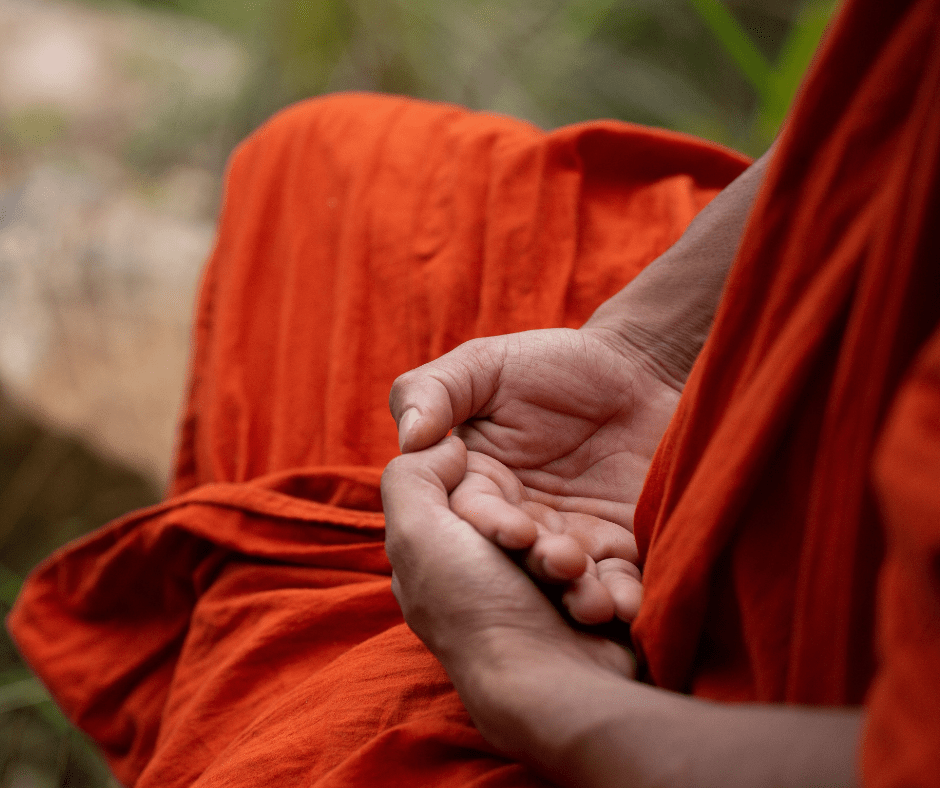
I once owned only two sets of clothes. One set was on my body. The other was dripping on a line. I washed them in cold water, in a plastic bucket. No sun to help them dry. Just wind, time, and the bite of Himalayan air.

I wore my outer robes for weeks at a time, only changing what was closest to the body. There was no wardrobe, no fresh set waiting. Just a rhythm of wear, wash, and wait.

Do you like what you are reading? Sign up below for more blog posts

It wasn’t a lifestyle choice. It was commitment and devotion. And in that devotion, something precious began to emerge—space, clarity, and the quiet depth of contentment.

The Stillness of Waiting

In winter, wet clothes stiffened overnight. On the rooftop, wind tugged at the fabric with the steady indifference of mountain weather—neither cruel nor kind, simply present. Drying took days. So I waited.

And in that waiting, I learned something. Not from books, not from ideas, but from the slow movement of time itself. Everything ripens when it’s ready. Your robes. Your thoughts. Your practice.

Do you like what you are reading? Sign up below for more blog posts

It was in those simple acts. These included scrubbing robes, waiting for them to dry, and breathing into discomfort. That is how the six Pāramitās began to take root.

Generosity, discipline, patience, joyful effort, meditation, and wisdom are not abstract concepts. They are living qualities. These qualities are cultivated one ordinary moment at a time.

Mold and the Quiet Kingdom

I spent three months on a solo retreat. During that time, I lived in a secluded old stone house. This house had once belonged to the village Maharaja. It was monsoon season. I didn’t go outside at all. The rain fell endlessly. I chanted, played instruments, meditated, studied, and let the world recede into mist and memory.

One day, I walked out into the hallway and noticed my only pair of rubber sandals—completely overtaken by mold. Softened and spotted green. Three months of silence from me, and the world had gone on with its quiet transformations.

Do you like what you are reading? Sign up below for more blog posts

I hadn’t worn the shoes, so I hadn’t noticed. I hadn’t needed them.

Retreat was a return to the essentials. To rhythm. To depth. And to the subtle joy that comes when nothing worldly is distracting.

The Invisible Wealth

That retreat didn’t leave me with more things. It left me with a foundation. What I practiced there—day by day, rain by rain—wasn’t austerity. It was the slow cultivation of inner wealth.

Generosity in offering full attention to each act.
Patience in letting the robe dry on its own terms.
Discipline in getting up before dawn, even when no one else would know.
Joyful effort in showing up again and again.
Meditation as a thread through every breath.
Wisdom in remembering that none of this is separate.


The Path Opens Today

Today, I open the doors to Introduction to Triyana Meditation—a course grounded in Buddhist teachings but shaped for modern lives.

This isn’t just a course in technique. It’s an invitation to a meaningful way of being. This approach supports the gradual cultivation of clarity, stability, and compassion through steady practice.

Do you like what you are reading? Sign up below for more blog posts

You don’t need to retreat to the mountains or strip down your life to bare essentials. You can start cultivating these timeless qualities where you are. These qualities are generosity, patience, stillness, compassion and joy. You can do this with the life you already have.

I created this course based on direct experience. I spent years in retreat and engaged in daily practice and philosophical studies. I have lived the teachings for decades in both seclusion and society. What I offer here is a pathway that’s simple, grounded, and possible to integrate in your every day life.

Doors are now open.
👉 Join the course here →

Get Dharma Blog Posts straight to your device