It was one of those rare Swedish summer days when the sun actually stays and the sky feels like it might never let go of the light. I took the boat out to one of the islands in the Stockholm archipelago. The sea was full of movement—waves catching light, wind skimming the surface.
Later that evening, I found myself sitting in a small, candlelit wooden church listening to Lise & Gertrud perform. The space was simple, old, loved and full of presence.
They performed a carefully selected mix of songs, arranged in their own unmistakable tone—both dynamic and humorous, yet deeply grounded. What struck me was how relevant this particular setlist was: the lyrics spoke directly to the world we live in now —songs that resonated with what matters most.
Do you like what you are reading? Sign up below for more blog posts
I sat there and cried together with others. It touched something real and it reminded me of what I work with every day: the power of sound, and especially of mantra.
Mantra Explained: Mind, Sound, and Transmission
The word mantra comes from Sanskrit: man means “mind,” and tra means “tool” or “vehicle.” But mantras aren’t tools in the ordinary sense. There’s a reason we don’t translate mantras the way we do other texts. Their power lies in the sound itself—in the breath, the vibration, the repetition. When chanted with sincerity, they shape the mind without requiring the intellect. They are sound that carries power through repetition, breath, and lineage. Mantras protect the mind.
In the Tibetan Buddhist tradition, mantras are considered living syllables. They’re not recited to produce a feeling, or to decorate silence. They’re practiced to align body, breath and awareness with qualities that go far beyond personal emotion.
Do you like what you are reading? Sign up below for more blog posts
Some mantras are gentle. Others are fierce. All are transformative. Mantras move through you like sound shaped into lightning—sometimes soft, sometimes blazing, always alive. They don’t require belief. But they do ask for presence in the here and now. And while anyone can technically repeat a mantra, it’s good to receive transmission from an authentic teacher if you feel drawn to one. Transmission doesn’t make it “more real”—but it connects you to the source, the lineage, the intention. Whether or not you use a mala, it helps the practice settle more deeply. The mala can support rhythm and focus, but the mantra itself does the work—chanted with intention, it carries its effect regardless of props.
One of the mantras I’ve practiced is:
OM AH HUNG BENZA GURU PEMA SIDDHI HUNG
It’s the mantra of Padmasambhava, who is regarded as the Second Buddha in Tibet. He brought the tantric teachings to Tibet in the 8th century, and his presence is invoked in this mantra for protection, insight and unwavering clarity.
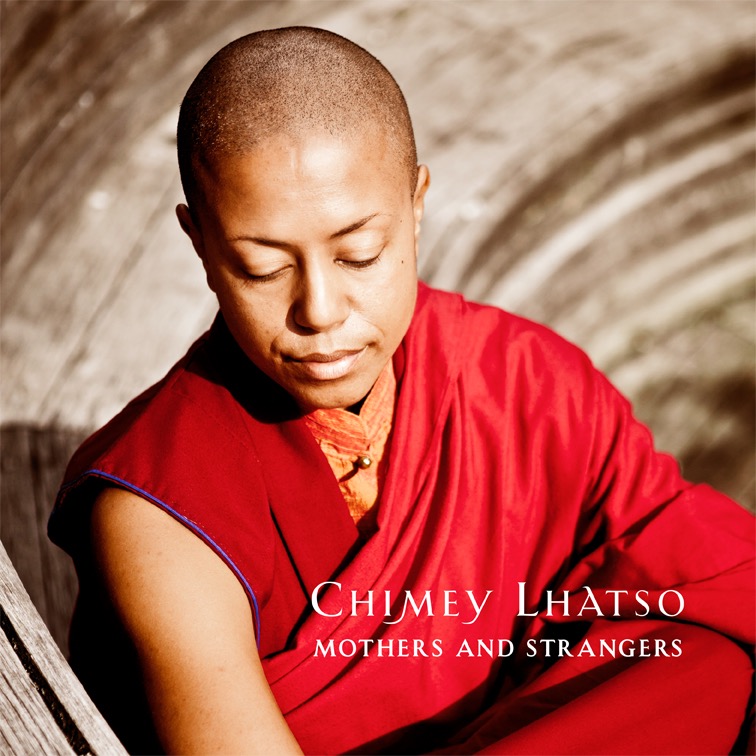
I chant this mantra in many different ways—softly, melodiously, with full voice, or quietly under my breath. My recorded version is arranged as a bolero, with a full rock’n’roll drumset. This was never about making music in the traditional sense—it was about entering into relationship with sacred sound. Offering something real. You can listen to it here:
👉 Listen to my recording of the song Padmasambhava on Amazon
Do you like what you are reading? Sign up below for more blog posts
It’s not a traditional version. But it’s true to my practice and blessed by the masters. Mantra doesn’t need to be performed. It needs to be practiced, embodied, and offered.
Belonging Through Sound
Mantras are not concepts. They are not there to be explained or understood in the usual way. They are patterns of sound, passed on through living traditions, and practiced for their direct effect. Mantras are highways to the divine—cutting through layers of thinking and touching our essence.
Over time, mantra becomes less about doing something and more about resting in the moment. Not because it’s always peaceful, but because it’s real. As with all true practices, it’s not about forcing anything. It’s about showing up—again and again—until something shifts.
Do you like what you are reading? Sign up below for more blog posts
And sometimes, in a small church, far out in the archipelago, that shift begins with tears and ends with a strong sense of belonging.
With waves still in the body, lyrics still in the chest, moonlight spilling over the trees—what rises in me is a deep sense of grounding into the essence of being.
Not to a category.
Not to a belief.
But to sound itself.
Lama Chimey
Buddhist Minister | Founder of Triyana Meditation
Get Dharma Blog Posts straight to your device
 Lama Chimey
I love what i am reading my dear ❤️ cousin. Always do
LikeLiked by 1 person