
As a leader, you are not merely guiding others—you are shaping the world through your being. Vajrayana Buddhism teaches that to truly lead, you must embody the qualities you wish to see in the world. Leadership is not about reacting to challenges; it is about being the change itself. Embodying wisdom as a leader in a turbulent world is the essence of the bodhisattva path: transforming yourself so that you can transform the environment around you.
Interdependence: Understanding the Web of Life
In Tibetan Buddhism, the principle of tendrel (རྟེན་འབྲེལ་)—dependent arising—reveals that all phenomena are interconnected. Nothing exists independently; every action, thought, and intention shapes the whole. Leadership is not separate from this truth. When you lead with awareness, your very presence becomes a cause for harmony and growth.
Do you like what you are reading? Sign up below for more blog posts.
Imagine yourself as a jewel in Indra’s Net, infinitely reflecting and being reflected by others. In this web, your state of being—your clarity, compassion, and wisdom—creates ripples that touch everything around you. If you lead from a place of fear or self-centeredness, those qualities will manifest in your environment. But when you embody lhakthong (ལྷག་མཐོང་)—profound insight—better known in the west as vipassana, you naturally align with the interdependent nature of reality and lead in a way that benefits all beings.
Ask yourself: How can I embody interconnection in my leadership? What qualities am I reflecting to the world?
Impermanence: Letting Go to Become the Change
The Vajrayana path emphasizes mi rtag pa (མི་རྟག་པ་)—impermanence—as a profound truth to live by. To be the change, you must let go of what no longer serves. Clinging to outdated identities, roles, or ways of thinking keeps you bound to the past. Instead, embrace the dynamism of impermanence as an opportunity for growth and renewal. Engage with me, Lama Chimey, in a powerful inspirational speech that dives deeper into this transformative wisdom, igniting courage and clarity to navigate life’s transitions with purpose and grace.
Do you like what you are reading? Sign up below for more blog posts.
Just as a river flows continuously, never holding onto a single drop of water, so too must a leader flow with the ever-changing circumstances of life. Vajrayana practice teaches us to see change not as a threat but as the very essence of potential. This is the meaning of transformation, recognizing that within every moment lies the power to shape a new reality.
Reflect: What am I holding onto that prevents me from fully becoming the change I wish to see? How can I release it with grace and courage?
The Present Moment: Where Change Begins
In Buddhism, the present moment is sacred. It is through resting in awareness—that we discover the true nature of mind and reality. To lead with authenticity and wisdom, you must first be fully present. Leadership is not something you do; it is something you are.
Do you like what you are reading? Sign up below for more blog posts.
When you are grounded in the present, your very being becomes a source of stability for others. This is not a passive state but one of active awareness, where you meet each moment with an open heart and a clear mind. In this way, you embody the union of skillful action and profound insight.
Contemplate: Am I truly present? How can I anchor myself in this moment so that my leadership arises from clarity and compassion?
Leadership as an Act of Being
In Mahayana Buddhism, the path of the bodhisattva is not about achieving external goals but about transforming one’s being for the benefit of others. Leadership, in this context, is a mandala—a sacred space in which all elements are in harmony. At the center of this mandala is your mind and heart, the seat of awareness.
Do you like what you are reading? Sign up below for more blog posts.
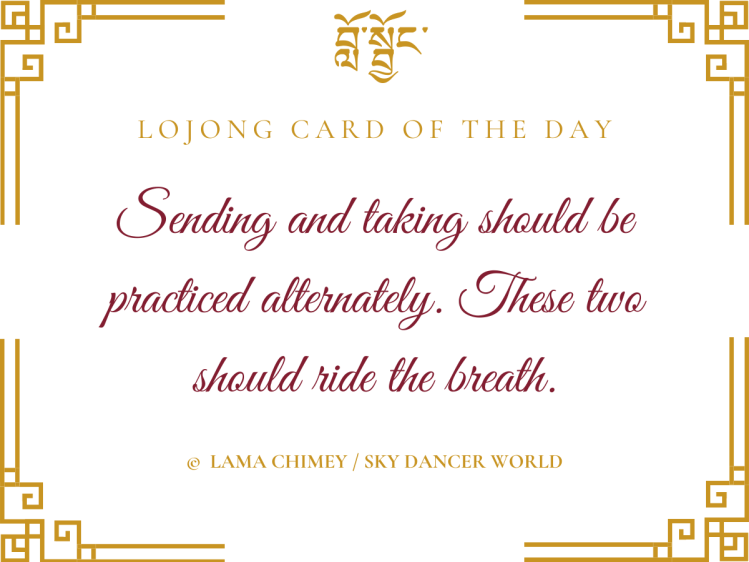
When you lead from this center, your presence becomes an offering. You no longer see leadership as a role to play but as a natural expression of your embodied wisdom. The teachings of lojong (བློ་སྦྱོང་)—training the mind—encourage us to embody the qualities of wisdom (yeshe, ཡེ་ཤེས་) and compassion (nyingje, སྙིང་རྗེ་). These are not abstract ideals but lived realities that arise when we align with the nature of mind. To support this practice, I am currently creating a full set of lojong cards designed to inspire and deepen your journey, which will soon be available.
Ask yourself: How can my leadership become an offering of wisdom and compassion? What qualities am I cultivating in my mind that will shape the world around me?
Facing Tomorrow as the Change
The Vajrayana teaching on shunyata (གཞུང་སྟེ་)—emptiness—reminds us that the future is not fixed. It is a field of infinite potential, shaped by our intentions and actions in this very moment. To be the change means to live in alignment with this truth, letting go of fear and doubt, and stepping forward with courage and a vision that benefits all beings.
Do you like what you are reading? Sign up below for more blog posts.
Leadership is not about controlling the outcome but about embodying the qualities that create the conditions for positive change. By being present, embracing impermanence, and living in harmony with interdependence, you become the change you wish to see.
Take a breath, feel the sacredness of this moment, and lead from the depth of your being. This is how transformation happens—not through force, but through the luminous example of one who is the change.
Now is the time,
Lama Chimey
Get Dharma Blog Posts straight to your device
 Lama Chimey
Be the change🧘
LikeLiked by 1 person