Devotion is one of those words that tends to arrive with baggage. In a secular context it is often heard as belief without evidence, loyalty without discernment, or submission disguised as virtue. It can sound like something that belongs to another era, another psychology, another world.
And yet, within Vajrayana Buddhism, devotion is not an idea to defend. It is an experience—intimate, physical, and quietly transformative. Devotion, here, is not about believing in something extraordinary. It is about recognizing something larger than the habitual self and allowing that recognition to matter.
Something bigger than the self
What stayed with me was the simple act of bowing. Recognizing something larger than a small sense of self did not feel heavy or symbolic. It felt like relief. Like discovering that the world was wider than I was, and kind enough to hold me.
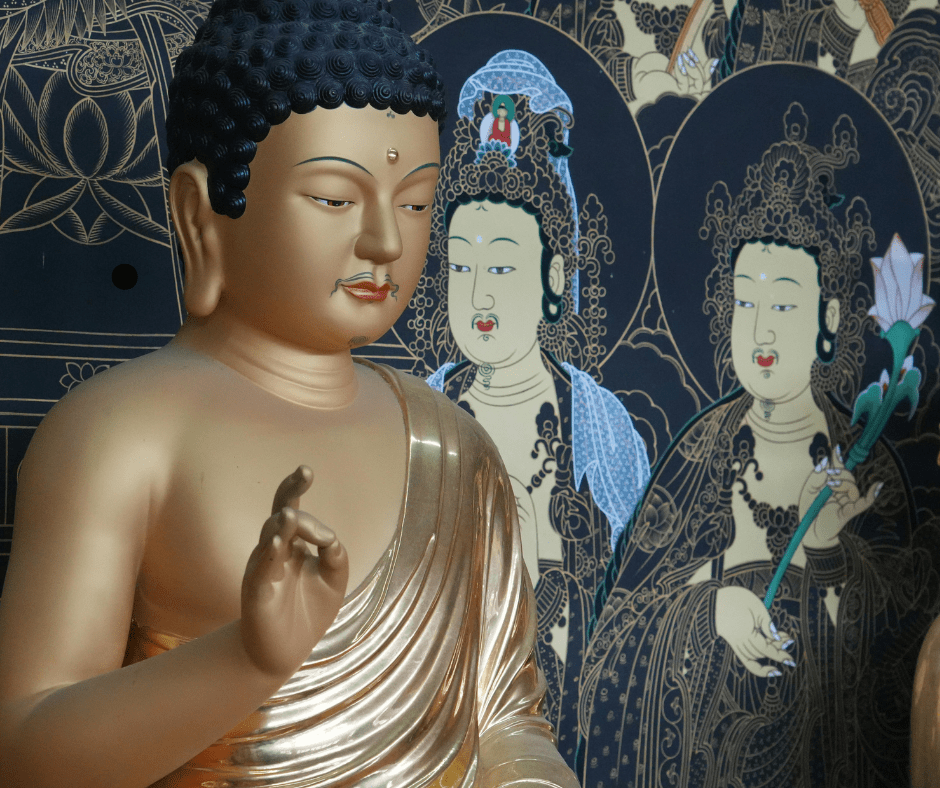
Bowing to an image of the Buddha was my way of acknowledging this. Not as worship. Not as submission. Simply as a gentle admission: I am not the center of reality. There was relief in that—delicate, almost joyful—as if a curtain had been drawn aside, opening onto a larger world, if only briefly.
Bowing as orientation
From the outside, bowing can look like obedience. From the inside, it feels more like orientation. A physical reminder of direction.
In Vajrayana Buddhism, devotion often takes form—images, gestures, chants, teachers. These forms can seem unfamiliar or even unnecessary in a secular world that prefers concepts to rituals and explanations to symbols. But devotion itself is not symbolic. It is pragmatic. It is the act of aligning the body, speech, and mind toward something that is not governed by ego maintenance.
Bowing says: I am willing to be shaped by something other than my habits.
Not belief, not surrender to outer symbols
Devotion is frequently confused with faith, but they are not the same. Faith asks for belief. Devotion asks for participation with an open heart.
It does not require certainty. It does not ask us to suspend intelligence. On the contrary, it demands a kind of honesty that is often uncomfortable: an ongoing recognition of how limited, repetitive, and self-protective the mind can be.
Devotion is not surrendering responsibility It is relinquishing the fantasy that the ego knows best. This distinction matters, especially in a secular world that rightly values autonomy and critical thought. Vajrayana devotion does not undermine these values—it places them in a larger context.
The role of form and relationship
In Vajrayana, devotion is often relational, and this is where discomfort can arise. Teachers, lineages, rituals—all of it can seem risky, even regressive, when viewed through the lens of modern skepticism. But devotion, properly understood, is never about idealizing a person. It is about recognizing something through form, not mistaking the form for the essence. The teacher is not the object of devotion as a person, but as a mirror reflecting the path. When devotion turns into personality attachment, something essential has already been lost. Genuine devotion sharpens discernment; it does not replace it.
Why devotion persists
In a world organized around speed, choice, and constant self-definition, devotion offers something quietly countercultural: a deeper sense of alignment.
Devotion is what remains when inspiration fades. When meditation is ordinary. When insight dismantles identity rather than confirming it. When practice becomes inconvenient, unproductive, or invisible. It is the decision—made again and again—to stay oriented toward clarity rather than comfort.
This is not dramatic. It does not announce itself. It works slowly, like erosion.
A secular intimacy
You do not need a name for it. You do not need rituals or belief. Devotion can live quietly in gestures, in attention, in the simple act of returning—again and again—to something that matters beyond immediate comfort. It is the decision to listen when the mind wants to argue, to stay when the ego wants to exit, to allow yourself to be shaped by something larger than preference. It asks nothing of you but presence, and in that presence, even the ordinary world can feel a little wider, a little more generous.
Why devotion still matters is not because the world needs more belief, but because it needs more willingness to be changed—quietly, gradually, without spectacle.
And perhaps that is enough.
These days, I haven’t been posting as regularly. My life is about to take a new shape and form, and I’m riding the wave of change. Stay with me here in the Dharma Post, and subscribe so you don’t miss the reflections and stories that are rolling out.
Yours in the Dharma,
Lama Chimey
 Lama Chimey